
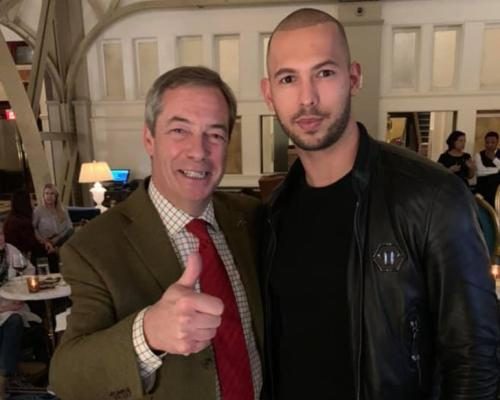
Insiders within the Reform Party are expressing growing concern over the party's connections to controversial figures like Andrew Tate, fearing that such associations could alienate mainstream voters crucial for their electoral success. As the party ramps up efforts to secure a foothold in UK politics, the leadership is considering strategies to distance itself from these extreme personalities whose views are deemed too toxic for a broader audience.
Andrew Tate, a polarizing influencer known for his misogynistic rhetoric, has recently garnered attention following serious legal allegations, including 21 charges related to human trafficking. His notoriety has escalated, especially after featuring in Louis Theroux's Netflix documentary, Inside the Manosphere, which examines toxic masculinity and its online manifestations. Nigel Farage, the party leader, previously described Tate as an "important voice" for young men, asserting that he provided a sense of confidence for boys facing challenges at school. However, this endorsement has come under scrutiny as Tate's public image continues to deteriorate. Originally reported by The Guardian.
Concerns Over Female Voter Appeal
The party's ties to figures like Tate have led to internal discussions about their potential impact on female voter appeal. With public sentiment against Tate growing, some Reform insiders warn that the party's image could suffer significantly among women and more moderate voters. A source within the party stated, "Yes, I have advised Nigel and others to be more careful about who we associate with - if we are to win over a broader section of British society, we cannot be linked to unpopular characters or people who have made unsavoury comments about women." This sentiment reflects a clear recognition that courting extreme figures may not align with Reform's ambitions to broaden its electoral base.
Polling data underscores this concern. Luke Tryl, who runs the polling organization More in Common, noted that their research indicates stark differences between the approval ratings of traditional Reform supporters and newer voters. While Tommy Robinson, another controversial figure, holds a +15 approval rating among 2024 Reform voters, new voters view him negatively, with a staggering -11 approval rating, which drops to -15 among women. The same trend is evident with Andrew Tate, who bears a -34 approval rating among 2024 Reform voters but sees that number plunge to -46 among new voters and -51 among women.
Struggling to Shake Off Controversial Endorsements
Reform's challenges aren't limited to its association with Tate. The party has also grappled with its connections to Stephen Yaxley-Lennon, better known as Tommy Robinson, a right-wing agitator and convicted criminal. Although the party has made it clear that Robinson is not welcome, he recently endorsed Matthew Goodwin, a Reform Candidate In the Gorton and Denton by-election. Goodwin's failure to publicly disavow Robinson has raised eyebrows, prompting a Reform UK spokesperson to reiterate, "We have consistently been clear on this issue. He isn't welcome in the party." This lack of clarity in messaging could further complicate Reform's efforts to appeal to a broader electorate.
Moreover, figures like Lady Victoria Hervey, who has been increasingly present at Reform events, have added to the party's controversial image. Hervey, a former associate of Andrew Mountbatten-Windsor, has made headlines for her extreme views, including dismissing the victims of Jeffrey Epstein as "liars and prostitutes." Her presence at events alongside Farage has raised questions about the party's commitment to distancing itself from problematic associations.
The Challenge of Navigating Online Popularity
As Reform seeks to capitalize on its recent surge in the polls, the challenge lies in balancing online popularity with mainstream acceptability. Figures like Holly Valance, a former soap star and vocal supporter of Reform, have also drawn attention for provocative remarks, including disparaging climate activist Greta Thunberg. Valance's association with Robinson further complicates the party's image, positioning it amidst a network of controversial figures that may deter potential supporters.
Ultimately, the Reform Party stands at a crossroads. While it aims to position itself as a viable alternative in a disenchanted political landscape, its associations with extreme personalities pose risks that could undermine its ambitions. The party must carefully navigate its public image, particularly as it seeks to attract a diverse coalition of voters, including women who may feel alienated by the rhetoric of figures like Tate and Robinson. The upcoming electoral battles will test the party's ability to distance itself from these associations, all while trying to maintain a foothold in the increasingly competitive UK political arena.
Originally reported by The Guardian. View original.