
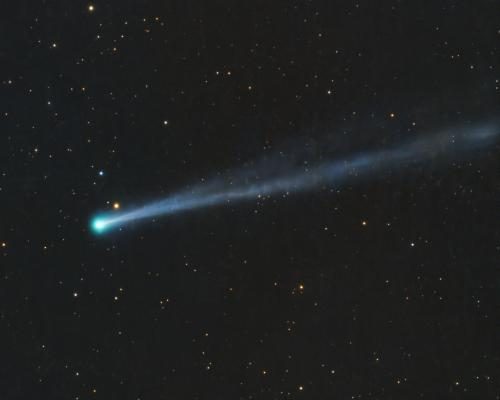
A rare celestial event is set to unfold in the southern hemisphere as the comet C/2025 R3 PanSTARRS makes its way across New Zealand's night sky over the next two weeks. This remarkable sight offers stargazers a unique opportunity to witness a comet that won't return for another 170,000 years. The comet, which originated from the Oort Cloud, has recently swung around the sun and is now visible to observers in the southern regions.
Viewing Opportunities for Stargazers
According to astronomer Josh Aoraki from Te Whatu Stardome in Auckland, New Zealand, the comet is currently traveling into southern skies after its journey through the northern hemisphere. Although it shines with a notable brightness, viewers will likely need binoculars, a telescope, or a camera to fully appreciate its beauty. "It's not naked-eye brightness.. [but] this one is a decently easy one to photograph, which is always nice," Aoraki stated. Originally reported by The Guardian.
As the comet passes, it is expected to gradually decrease in brightness over the next fortnight, making it essential for interested viewers in New Zealand, Australia, South Africa, and the Pacific to seize the moment. The best time for viewing will be shortly after sunset, when observers can find a clear view of the western horizon. During this time, the comet will be positioned low in the sky and most visible during the hour following sunset.
What to Expect: A Celestial Spectacle
For those fortunate enough to spot C/2025 R3 PanSTARRS, a stunning visual awaits. Stargazers can expect to see a blue-green orb, which is the temporary gas surrounding the nucleus of the comet, known as a coma. Additionally, a smudgy tail will extend from the comet, creating a captivating sight. "You get the coma and the tail looking like a little fuzzy meteor in the sky," Aoraki described, emphasizing the unique appearance of this rare comet.
The comet's journey through the solar system is not just a visual treat; it also provides scientists with crucial data about the formation of our solar system. C/2025 R3 PanSTARRS, a long-period comet, takes roughly 170,000 years to complete its orbit around the sun. However, its trajectory remains uncertain due to the nature of comets losing mass as they approach the sun. Aoraki explained, "It's really hard to predict the trajectory of them, because as they do go around the sun, they're losing mass, and that can change the path." This unpredictability adds an element of excitement to the comet's appearance.
Understanding the Oort Cloud Origins
The Oort Cloud, a vast expanse of icy objects located at the far reaches of the solar system, is believed to be the birthplace of C/2025 R3 PanSTARRS. This region houses countless comet-like bodies, remnants from the early solar system that occasionally venture into the inner solar system. The current appearance of C/2025 R3 PanSTARRS serves as a reminder of the dynamic nature of our celestial neighborhood.
While many comets can be short-lived, with some being ejected from the solar system entirely, C/2025 R3 PanSTARRS may not return to our skies for another 170,000 years if it survives its solar encounter. As it continues its journey, astronomers will be keenly observing its path to gather insights into the behaviors and characteristics of long-period comets.
Preparing for the Spectacle
Stargazing enthusiasts are encouraged to prepare for the comet's appearance by finding locations with minimal light pollution and unobstructed views of the horizon. The experience promises to be a memorable one, not just for amateur astronomers but for anyone interested in the wonders of the universe. Capturing photographs of C/2025 R3 PanSTARRS will not only serve as a personal keepsake but also contribute to the ongoing study of cometary behavior.
As the comet begins to fade from view in the coming weeks, those lucky enough to witness this celestial event will carry with them a sense of awe and wonder. The appearance of C/2025 R3 PanSTARRS is a reminder of the vastness of space and the fleeting moments that connect us to the cosmic ballet unfolding above.
Originally reported by The Guardian. View original.