
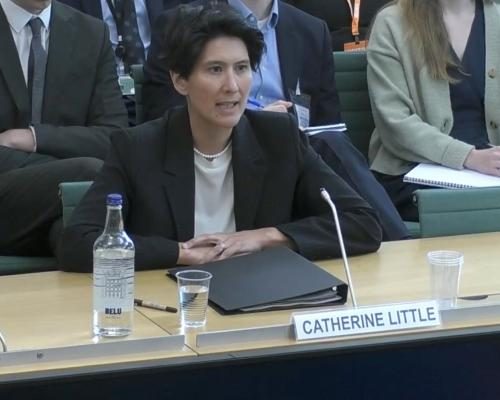
In a heated session with the Commons foreign affairs committee, Cat Little, the permanent secretary of the Cabinet Office, revealed that Olly Robbins, the recently dismissed head of the Foreign Office, had refused to provide Peter Mandelson's vetting summary to her department. This summary reportedly indicated that Robbins had granted Mandelson security clearance despite warnings from security officials. Instead, Little obtained the document directly from UK Security Vetting (UKSV).
Robbins' Refusal Sparks Controversy
During her testimony, Little detailed how Robbins resisted sharing crucial vetting documents related to Mandelson's appointment as the UK ambassador to the United States. This appointment came under scrutiny after it emerged that Downing Street had not been informed that Mandelson had initially been denied security clearance. According to Little, Robbins' refusal to hand over the vetting summary raised significant concerns within the Cabinet Office. Originally reported by The Guardian.
Little stated, "There was lots of debate and discussion about how to treat vetting information," which included a mid-March meeting with Robbins and his team following the revelation of the summary. She emphasized her insistence on reviewing the document, saying, "I specifically asked to see this document in any decision-making audit trail around those judgments." However, Robbins' team made it clear that the information would not be made available.
Internal Disputes Over Vetting Procedures
The inquiry into Robbins' actions intensified when Little confirmed that the Foreign Office had proposed the idea that Mandelson might not need to undergo vetting, considering his status as a member of the House of Lords. "Citing a number of emails," Little stated that the Foreign Office had engaged in discussions with security officials to clarify whether Mandelson required security vetting.
Little explained, "Emails I had seen.. set out a very reasonable policy conversation between security officials." The correspondence indicated that the presumption had been that Mandelson, as a member of the House of Lords, might not need comprehensive vetting. However, the security officials clarified that the decision ultimately rested with the Foreign Office, and vetting was indeed necessary.
Delays in Communication Under Fire
Questioned about the timeline of events, particularly the gap between Little's initial awareness in late March of Mandelson's security situation and the notification to Keir Starmer on April 14, she defended her actions. Little insisted there was no undue delay, stating, "I believe I have a responsibility to handle that sensitive information within the framework of both the law and the guidance that I am subject to."
She elaborated, "It took the time between 25 March and telling the prime minister on 14 April, and I truly believe that I acted as swiftly, effectively, and appropriately as I could." This highlights the importance of adhering to both legal and procedural guidelines when dealing with sensitive issues related to national security.
Legal Advice and Compliance Efforts
Little's testimony emphasized her commitment to compliance with the Commons motion, which demanded the release of documents pertinent to Mandelson's appointment. To ensure thoroughness, she took the unusual step of directly contacting UKSV, the agency responsible for security vetting, to acquire the necessary documentation. She stated, "I felt that I needed to see some relevant documentation so that I could advise the prime minister as to whether we had fully complied."
This proactive approach underscores her role in navigating the complexities surrounding security clearance in high-profile appointments. Little also mentioned that she sought legal advice to ascertain the relevance of the vetting summary to the Commons motion, demonstrating her diligence in handling the situation.
As the inquiry continues, the implications of Robbins' actions and the Cabinet Office's handling of Mandelson's vetting process remain critical points of discussion. The fallout from this controversy could have lasting effects on how security vetting is managed in the future, particularly for prominent political figures.
Originally reported by The Guardian. View original.