
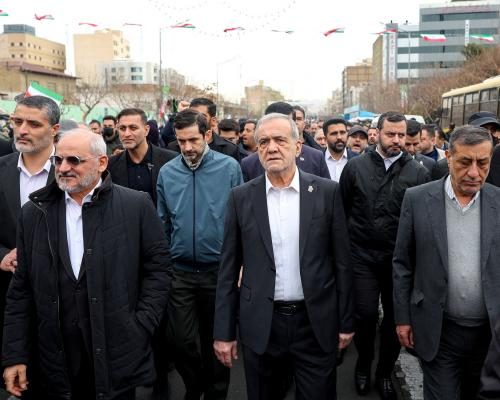
In an unprecedented glimpse into the personal thoughts of a political figure's family member, Yousef Pezeshkian, the son of Iranian President Masoud Pezeshkian, has been sharing a candid diary on social media. His reflections capture the emotional turmoil and complex sentiments of ordinary Iranians amid the ongoing war, showcasing not just his loyalty to his father but also his deep concerns for the nation's future.
Yousef Pezeshkian, a 45-year-old assistant professor of physics, has not seen his father since the war began. His writings provide a unique perspective on the conflict's impact on citizens, detailing everything from personal fears to broader discussions on the war's potential outcomes. One poignant entry describes the juxtaposition of a peaceful Tehran day with the sounds of missile strikes echoing in the background. He writes: "Noon, the sound of missiles was heard, and it was raining. The weather in Tehran had become pleasant and spring-like. I wished I had a camera to take pictures of the beautiful city views. I wished there was no war and I could bring my wife and children to walk in the city streets." Originally reported by The Guardian.
Reflections on War and Its Impact
In his diary, Pezeshkian does not shy away from discussing the harsh realities of life during war. He expresses frustration over government-imposed internet blackouts, which restrict information flow, and reflects on the emotional toll of the conflict. He recounts a chilling conversation with a friend whose house was destroyed after he dreamt of a missile strike nearby. "While telling the story, his hands were shaking. I said: 'Ask your dream tomorrow what will be the fate of the war.' We laugh. Even amid worries, one can find an excuse to laugh," Pezeshkian writes.
His entries reveal a mix of hope and anxiety as he navigates the complexities of the war. He questions the decision-making processes and the strategies being employed: "What is seriously disputed is how long we should fight? For ever? Until the complete destruction of Israel and the withdrawal of the US? Until the complete destruction or surrender of Iran?" Pezeshkian urges for a reassessment of war strategies, contemplating the durability of Iran's resources against its adversaries.
Contemplating Leadership and Accountability
Pezeshkian's writings don't shy away from addressing the contentious political environment. He defends his father's leadership against criticism, especially regarding a recent apology to Gulf states for missile attacks. He calls it an "ethical duty," emphasizing the importance of regional relations post-conflict. "How bitter it is that to defend ourselves we have to strike US bases in our friendly countries. I do not know if they understand our situation," he reflects.
Yet, he also acknowledges the flaws within the government, admitting, "Yes, we have faults. We have made mistakes. We are not infallible." He asserts that while the Iranian leadership has made errors, they do not warrant the level of hostility the nation currently faces. He questions the narrative presented by external adversaries, asking, "Which side lies? Was Iran seeking a nuclear bomb? Did Iran want to attack America?"
The Emotional Toll of Conflict
Writing in the midst of chaos has proven to be a challenging endeavor for Pezeshkian. He describes the struggle to articulate his thoughts, comparing it to "a mosquito buzzing around my head; when I reach out to catch them, they fly away." His reflections also capture the psychological impact of the war, especially when he hears disturbing news reports about casualties. "From 3 o'clock, news of the martyrdom of Ali Larijani, his son, some of his deputies, and the Basij commander spread on social media. I really didn't want to believe it," he noted, emphasizing the gravity of the situation.
Pezeshkian's writings underscore a belief that national unity and resilience are crucial for Iran's survival. He insists that, despite the Ongoing Conflict, the nation is not on the verge of losing morale. "We must estimate our weapons supply capability. 1- How many months of fighting can our missile stockpile and missile production capacity support?" he questions, revealing the underlying tension about the future of the war.
As the conflict continues to unfold, Yousef Pezeshkian's diary serves as an essential window into the psyche of a nation grappling with war. His reflections blend personal narrative and political insight, capturing the hopes and fears of ordinary Iranians navigating an uncertain future.
Originally reported by The Guardian. View original.