
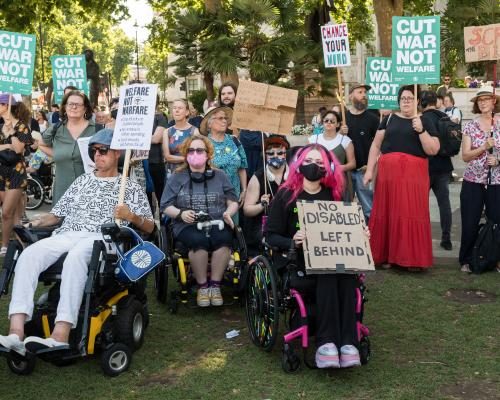
Hundreds of thousands of severely ill and disabled individuals in the UK face significant cuts to their benefits under new government reforms. Starting in April, the health element of universal credit, an additional payment designed for those unable to work due to their health conditions, will be halved to just £50 per week for new claimants. The reduction will apply unless the claimant's condition is classified as terminal, severely disabling, and deemed lifelong with no chance of improvement. Charities and disabled people's organizations have raised alarms about this policy shift, fearing it will exacerbate poverty among already vulnerable groups.
Charities Raise Concerns Over Eligibility Criteria
The impending changes to universal credit have drawn sharp criticism from advocates for disabled individuals. Under the revised guidelines, only those whose conditions are categorized as severe and lifelong will qualify for the higher payment of £97 per week. This has raised concerns that many debilitating conditions, such as multiple sclerosis, learning disabilities, bipolar disorder, Parkinson's disease, myalgic encephalomyelitis (ME), and long Covid, may not meet the stringent criteria, despite leaving individuals unable to work. Samuel Thomas, a senior policy adviser at the anti-poverty charity Z2K, emphasized the harsh implications of these cuts, stating, "Cuts to universal credit's health element threaten to push some of the most seriously ill and disabled people in the country to the brink." Originally reported by The Guardian.
Thomas pointed out that the strict eligibility tests could exclude individuals recovering from strokes or heart attacks, or those battling cancer or schizophrenia. The risk here is significant: individuals facing long-term health challenges may find themselves relegated to a lower payment tier simply because their condition does not fit the rigid definitions imposed by the new rules.
Two-Tier System Raises Equity Concerns
The changes are set to create a two-tier structure within universal credit, according to James Taylor, the director of strategy at Scope. He noted, "Essentially, we'll have a two-tier universal credit system. Two people with a similar condition and similar extra costs will get different amounts." While existing claimants can continue receiving £97 a week irrespective of their conditions, new applicants may face financial hardship due to the narrow definitions of severe health issues.
This two-tier system introduces a new layer of uncertainty for disabled individuals, as assessments of what constitutes a "severe" condition can vary widely. Taylor warned of the potential for inconsistent interpretations of the new criteria by assessors, which could lead to further inequities in support access. The situation is compounded by the requirement for new claimants to submit extensive medical evidence to qualify for the higher payment, a process that can be particularly challenging for those suffering from conditions that lack clear diagnostic pathways, such as learning disabilities.
Long Wait Times Complicate Medical Evidence Submission
Hannah Nicholls-Harrison, a policy manager at Mencap, highlighted the additional hurdles faced by individuals with learning disabilities. She stated, "Many people struggle to achieve a formal diagnosis of learning disability due to the lack of a clear pathway in the NHS." Without formal documentation, many individuals may find themselves ineligible for the higher payment, leading to significant financial losses. Some could miss out on thousands of pounds annually.
The practicalities of navigating the NHS, particularly given the current long waiting lists, further complicate the situation for new claimants. The added pressure of securing medical verification could deter individuals from applying for benefits altogether, worsening their financial situation. Many disabled people already live on the edge of poverty, and these changes threaten to push them further into destitution.
Impacts on Mental Health and Poverty
Tom Pollard, head of policy at Mind, expressed concern that the new rules disproportionately affect those with severe mental health conditions. He noted that diagnoses such as bipolar disorder or schizophrenia might not meet the stringent criteria for the higher payment, even though they can severely hinder an individual's ability to work. Pollard stated, "Protecting a higher rate of payment for people meeting the severe conditions criteria is recognition that the reduced rate is not sufficient for people who are out of work for longer periods of time."
As these reforms roll out, many advocates worry about the broader implications for society. Families losing out on essential income may face eviction, food insecurity, and loss of critical care services. The government's commitment to support vulnerable populations is now under scrutiny as the reality of these changes becomes clearer.
With an estimated 730,000 future recipients poised to miss out on the higher payment, averaging losses of £3,000 per year, the impact of these changes is poised to resonate across communities. The ongoing conversations among charities and policymakers underscore the urgent need for a more compassionate approach to disability benefits that truly meets the needs of those it aims to support.
Originally reported by The Guardian. View original.