
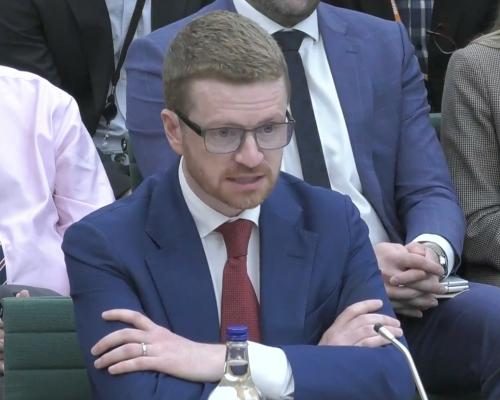
In a tense session at Westminster, Morgan McSweeney, former chief of staff to Labour leader Keir Starmer, faced scrutiny from the Foreign Affairs Select Committee over his recommendation of Peter Mandelson as the United States ambassador. This significant appearance on Tuesday morning was marked by palpable tension and a history of animosity between McSweeney and committee chair Emily Thornberry.
McSweeney's Reluctant Public Debut
For many in British politics, Morgan McSweeney is a figure cloaked in myth and intrigue. Often described as a shadowy presence, he has been characterized as the mastermind behind Starmer's leadership, with whispers suggesting he was molded by the influential Peter Mandelson. However, on Tuesday, he was thrust into the spotlight, summoned to provide evidence regarding Mandelson's potential appointment as ambassador to the U.S. Originally reported by The Guardian.
McSweeney appeared visibly uneasy, avoiding eye contact and keeping a low profile as he navigated the corridors of Westminster. At 49, he looked notably youthful, perhaps thanks to his years spent away from the public eye. In his opening remarks, he acknowledged the victims and survivors of Jeffrey Epstein and expressed regret over his recommendation of Mandelson, who has long been linked to Epstein's dark legacy.
A History of Hostility
The exchanges between McSweeney and Thornberry were laced with venom, reflecting their fraught history. Their mutual disdain was evident as Thornberry, representing the Labour left, aimed to expose McSweeney as little more than Mandelson's puppet. She insinuated that he lacked independent judgment and was merely keen to please his political mentor.
Thornberry's probing questions sought to illustrate that McSweeney had acted out of blind loyalty rather than sound political judgment. The tension escalated as she pressed him on the rationale behind recommending Mandelson, questioning whether he was truly unaware of the implications of associating with someone so closely connected to Epstein. McSweeney, in response, claimed he hardly knew Mandelson and that any suggestion of a deeper relationship was exaggerated.
Defending Starmer's Decisions
Throughout the two-and-a-half-hour session, McSweeney maintained a defensive posture, reiterating that he had acted in accordance with party protocols. He avoided directly implicating Starmer in any wrongdoing, insisting that the Labour leader possessed free will and made decisions independently. However, this assertion stretched credibility, given the well-documented ties between McSweeney and the inner workings of Starmer's office.
Despite his efforts to downplay his influence, McSweeney struggled to articulate why he felt it was appropriate to recommend Mandelson, a man known for his controversial friendships. He likened his shock at discovering Mandelson's connections to Epstein to a "knife to the heart," although many observers found this defense unconvincing. The session raised more questions than it answered, leaving the public wondering about the true nature of McSweeney's judgment.
Political Ramifications and Future Implications
The fallout from McSweeney's appearance could have significant implications for both him and Starmer. Thornberry's relentless questioning highlighted the fragility of Starmer's leadership and the potential vulnerabilities within his administration. With the Labour Party gearing up for the next election, any misstep could be viewed as a liability in the eyes of the public.
As McSweeney left the committee room, it was clear that the hearing had not only exposed the tension within the Labour Party but also raised broader questions about accountability in political appointments. The committee's examination of the vetting process for ambassadorial positions will likely reverberate throughout Westminster as scrutiny of political relationships continues.
Moving forward, the Labour Party will have to navigate the complexities of party loyalty and public perception as they prepare for upcoming challenges. McSweeney's testimony may serve as a cautionary tale about the importance of transparency and the potential pitfalls of political patronage. Only time will tell how this episode will affect the party's standing as they approach a critical electoral period.
Originally reported by The Guardian. View original.