
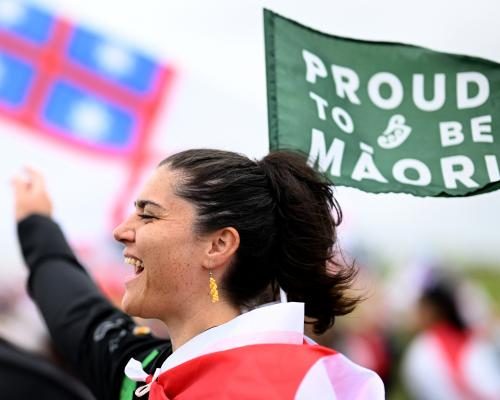
As New Zealand gears up for an upcoming election, new data reveals a significant increase in the number of young voters registering for Māori electorates. According to the Electoral Commission, 58% of eligible 18- to 24-year-olds have signed up for the Māori roll, a marked rise from 50% in 2023. This trend emerges amid a backdrop of strained relations between Indigenous communities and the current centre-right coalition government.
Understanding Māori Electorates
Māori electorates, a unique feature of New Zealand's political landscape, consist of seven designated seats within the country's 120-seat parliament. These electorates are specifically for Māori voters, but any candidate can contest these seats, regardless of their ethnicity. Geographically, these electorates are expansive, often encompassing multiple tribes and regions. For instance, Te Tai Tonga, one of the Māori electorates, spans the entire South Island, Rakiura/Stewart Island, and a substantial portion of Wellington city, covering approximately 151,723 square kilometers (58,580 square miles). Originally reported by The Guardian.
Eligible voters of Māori descent can choose to register on either the Māori roll or the general roll. As of March, 54% of eligible voters opted for the Māori roll, up from 51% during the last election cycle in 2023. Just like other voters, those on the Māori roll are entitled to two votes: one for a preferred political party and another for their local constituency MP. However, they cannot vote for general electorate MPs, which reinforces the distinctiveness of the Māori electoral system.
The Historical Context of Māori Electorates
The inception of Māori electorates dates back to 1867 when New Zealand first introduced special seats to accommodate Māori voters, who were largely excluded from the electoral process due to communal land ownership. Initially, four Māori seats were established, and this number remained unchanged until the mid-1990s when it increased to five and then to seven in 2002. During the electoral reform discussions in the 1980s, a royal commission proposed abolishing these seats should New Zealand transition to a proportional representation system. However, following strong advocacy from Māori organizations, the electorates were preserved when the mixed-member proportional representation (MMP) system was adopted in the 1990s.
Despite arguments from parties like New Zealand First advocating for the abolition of the Māori electorates, proponents argue that the current parliament has a record number of Māori representation, with 33 MPs of Māori descent. This debate highlights the complexities surrounding the Māori seats and their role in New Zealand's political framework.
Electoral Trends and Party Dynamics
The voting patterns within Māori electorates have historically skewed towards left-wing parties, particularly Labour. However, this doesn't mean these electorates are a guaranteed stronghold for Labour. The passage of contentious land legislation in the early 2000s prompted significant backlash from Māori communities, leading to the formation of the Māori Party, Te Pāti Māori, in 2005. This party later allied with the National government after 2008 but saw its influence wane, culminating in a complete absence from parliament by 2017, when Labour captured all Māori seats.
In recent years, the political landscape has shifted with the Māori electorates becoming a battleground primarily between Te Pāti Māori and Labour. Meanwhile, the National Party has traditionally avoided contesting these seats, a stance it is reconsidering for the upcoming elections, signaling a potential change in strategy.
The Debate Surrounding Māori Representation
The existence of Māori electorates remains a contentious issue, often igniting passionate discussions during election cycles. With Māori comprising less than 20% of New Zealand's population, any referendum on the future of these electorates would likely be determined by a non-Māori majority. This raises critical questions about minority rights and representation, reminiscent of debates surrounding the Voice referendum in Australia.
Former Prime Minister John Key characterized the issue as one best left untouched, asserting, "Do you really want to rip a country apart?" Meanwhile, Winston Peters of NZ First, who has long been associated with the Māori electorates, has shifted his stance, now advocating for their abolition, citing that current Māori representation in parliament is at an all-time high.
As New Zealand approaches its election, the future of the Māori electorates remains uncertain. The ongoing dialogue reflects not just political maneuvering but also the evolving relationship between the government and Indigenous communities. With youth engagement on the rise, the upcoming election may serve as a critical juncture for both Māori representation and broader political dynamics in New Zealand.
Originally reported by The Guardian. View original.