
The UK government's promises of massive investments in artificial intelligence (AI) have come under scrutiny in a recent investigation by The Guardian. Key players, including Nscale and CoreWeave-backed by chipmaker Nvidia-have been central to these AI initiatives. However, the investigation reveals a troubling disconnect between what was pledged and what has been delivered, raising questions about the actual impact on the UK economy.
Unfinished Supercomputer Site Raises Red Flags
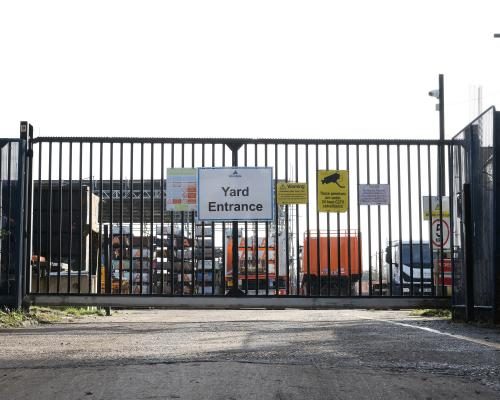
The investigation highlights a site in Loughton, Essex, where a supercomputer center, touted as one of the most powerful AI computing facilities ever constructed, was supposed to be built by Nscale by the end of this year. Instead, the location remains a scaffolding yard operated by another company. Although Nscale claimed over a year ago to have purchased the land, records indicate they aren't registered as the property owner. Given the current state of the site, it appears unlikely that the construction of a fully operational supercomputer will be completed by the promised deadline. Originally reported by The Guardian.
Furthermore, when The Guardian inquired about the supposed investments from Nscale and CoreWeave, the UK government disclosed that these figures originated from the companies themselves and that no auditing mechanisms were in place to verify them. When pressed about a contract for the Loughton supercomputer, the government clarified that the $2.5 billion investment was merely an intention to commit capital rather than a formal agreement, further complicating the narrative surrounding these investments.
Questionable Definitions of Investment
Interestingly, a significant portion of what is being labeled as investment may not actually involve cash flow into the UK economy. Nscale and CoreWeave indicated that their substantial investments largely consist of Nvidia chips, which they plan to purchase and house in existing UK data centers. These chips, manufactured in Taiwan by a U.S. company, will then be rented out to clients, including major U.S. tech firms like Microsoft. This arrangement means that the claimed $2.5 billion investment may not translate into direct financial stimulus for the UK.
In a similar vein, CoreWeave's announced £1 billion investment in 2024, expected to establish two new data centers, has also turned out to be misleading. Rather than building new facilities, CoreWeave has chosen to enhance existing data centers with Nvidia chips, indicating that the bulk of its investment comprises logistical and personnel costs rather than new infrastructure. This approach has been described by CoreWeave as "industry-standard," but it raises questions about the actual economic benefits derived from these investments.
Massive Energy Demands and Uncertain Plans
The government previously stated that CoreWeave would partner with Scottish firm DataVita to create an "AI growth zone" requiring a staggering 500MW to 1GW of renewable energy. This colossal energy demand is on par with the output of a nuclear reactor or the largest offshore wind farm in Scotland. However, the government has not verified the £1.5 billion investment claimed by CoreWeave, and there are no documented plans for constructing a nuclear reactor or a massive wind farm in Lanarkshire to meet this energy requirement.
Despite these dubious claims, CoreWeave has experienced significant financial success. The company's initial public offering (IPO) last year saw its stock price nearly quadruple amid rising AI interest. However, it is now facing a lawsuit from shareholders who allege that it concealed crucial information regarding delays in its data center construction, which negatively impacted stock performance. CoreWeave maintains that the claims lack merit and intends to defend itself vigorously.
Staggering Returns Amid Controversy
While Nscale grapples with its credibility, the company's stock has also soared. Shares that were allocated at 1p in October have ballooned in value following a $2 billion funding round that valued the company at $14.6 billion. Analysts suggest that early investors may have realized staggering returns of up to 350,000%. The potential for lucrative payoffs remains high as Nscale prepares for a public offering, contingent on the prevailing AI enthusiasm at that time.
As scrutiny intensifies around these discrepancies in AI investments, the UK government faces mounting pressure to provide clarity and accountability. The reported figures and commitments from companies like Nscale and CoreWeave demand careful examination to ensure that promises translate into tangible benefits for the UK economy. The landscape of AI investment in the UK is fraught with uncertainty, making the need for transparency more critical than ever.
Originally reported by The Guardian. View original.