
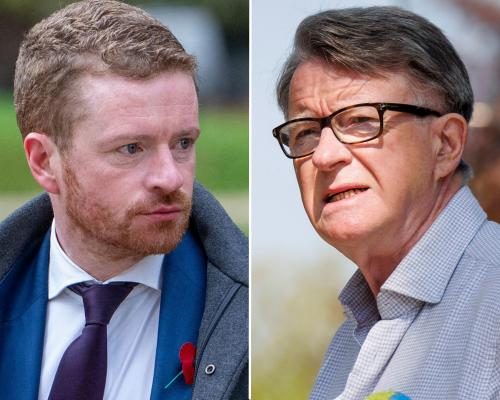
Peter Mandelson and Morgan McSweeney's political journey is deeply rooted in the history of Labour politics, beginning at Lambeth council in the late 1970s. Their partnership, which blossomed amid the complexities of local politics, ultimately aimed to reclaim the party from the leftist ideologies that had dominated during Jeremy Corbyn's Leadership. As McSweeney prepares to testify at the foreign affairs select committee, he faces the challenge of clarifying his relationship with Mandelson, especially regarding their differing political views.
Origins in Lambeth: A Divided Labour
Both Mandelson and McSweeney began their political careers at Lambeth council, a focal point for Labour's tumultuous history. In 1979, a young Mandelson, then in his mid-20s, served as a councillor under the controversial leadership of "Red" Ted Knight. He became increasingly disillusioned with the local Labour party, criticizing its leadership for failing to foster economic growth in south London and for prioritizing ideological battles over practical governance. Mandelson remarked that the leadership was "contributing very little to the economic development of south London, instead politicising everything, attacking the police and the Tory government, and making the council go broke." Originally reported by The Guardian.
Fast forward to 2002, the political landscape had shifted dramatically. McSweeney, then at a similar age, played a pivotal role in retaking control of the council from the Conservatives and Liberal Democrats, serving under Steve Reed. This marked the beginning of a strategic partnership that would later influence the national Labour narrative. Their joint efforts would ultimately lead to the establishment of Labour Together, aiming to reforge the party's identity and reclaim it from the left's grip.
McSweeney's Testimony: Setting the Record Straight
As McSweeney prepares to speak before the foreign affairs select committee, he aims to address misconceptions about his relationship with Mandelson, particularly the perception that he is merely a "protege." Allies assert that McSweeney is frustrated by Mandelson's portrayal, which they believe exaggerates his influence on the project. This upcoming testimony is crucial, as it may shed light on why the decision was made to appoint the twice-disgraced Mandelson as US ambassador, potentially undermining established protocols.
McSweeney's relationship with Mandelson has been characterized by a blend of professional collaboration and personal connection. The two were reintroduced around 2017 by Labour peer Roger Liddle, and their friendship flourished through regular communication. They maintained contact even during challenging times for Labour, including after losing the Hartlepool by-election, which was a significant blow for the party.
Contrasting Political Philosophies
Despite their collaboration, Mandelson and McSweeney have notably different political ideologies within the Labour framework. Mandelson's focus on internationalism and social liberalism often clashed with the Starmerite faction, which emphasized community and security. Mandelson openly criticized the Employment Rights Act, briefing against it to journalists, illustrating the ideological rift that exists within the party.
However, their mutual goal of dismantling the Labour left and pursuing electoral victories created a powerful alliance. McSweeney's ascent to chief of staff under Keir Starmer represented a significant moment for Labour, as many from the party's centrist and New Labour factions, including Tony Blair, had lost faith in the party's direction under Corbyn. Although Starmer initially appeared dismissive of the New Labour legacy, Mandelson's interest in the direction Starmer and McSweeney were charting stood out.
The Shadow of Influence: Mandelson's Role
Mandelson's presence in Starmer's orbit has raised eyebrows among Labour insiders. Despite his public disdain for Starmer's abilities, he remained influential due to his close ties with McSweeney. Concerns grew within Labour HQ about Mandelson's potential impact, particularly after his influence was reported in the media. Simon Fletcher, who worked under both Corbyn and Starmer, expressed alarm at Mandelson's growing prominence, indicating a fracture in the trust among Starmer's team.
As the party gears up for upcoming electoral challenges, the relationship between Mandelson, McSweeney, and Starmer will be closely scrutinized. The dynamics of their alliance will significantly impact Labour's strategy moving forward, particularly in light of the ongoing economic and political challenges facing the UK.
In the coming months, the Labour party's ability to unify its factions and present a coherent strategy will be critical. McSweeney's testimony could either reinforce the partnership between him and Mandelson or expose deeper divisions that may hinder Labour's efforts to regain traction in British politics.
Originally reported by The Guardian. View original.