
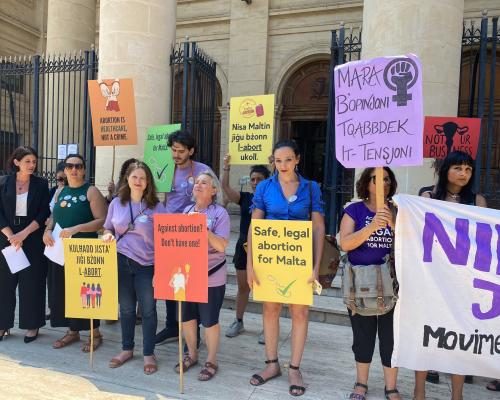
When it comes to pro-choice campaigners in malta create lockboxes containing abortion pills, in a bold move to address Malta's stringent abortion laws, pro-choice campaigners have installed 15 lockboxes containing abortion pills across the country. This initiative aims to assist women facing the EU's strictest abortion regulations, inviting those under nine weeks pregnant to request the pill's location and access codes via email. Within the first week, 16 women reached out, signaling a significant unmet need for abortion services in the Mediterranean island nation.
Understanding Pro-choice Campaigners In Malta Create Lockboxes Containing Abortion Pills
The campaign, led by Rebecca Gomperts, founder of Women on Waves, underscores the challenges women face in Malta, where abortion is only permissible if a woman's life or health is endangered. "It's just archaic, in that sense, compared with the rest of Europe," Gomperts stated. "It's such a violation of women's rights that's still happening there." The initiative has sparked controversy, prompting local anti-abortion groups to call for a police investigation into the campaign. Originally reported by The Guardian.
Despite the backlash, Gomperts emphasized the necessity of the lockbox initiative, likening it to global operations that send abortion pills through the mail. "The only thing that we did is to make sure that they're available there for women instead of having them wait for the mail," she explained. The urgency of this campaign is heightened by Malta's history; in 2022, an American woman faced life-threatening complications from a miscarriage while on holiday in Malta, ultimately requiring emergency evacuation to Spain for a safe abortion.
Legal Landscape and Recent Developments
Malta's legal framework surrounding abortion was modified in 2023, allowing terminations only when the mother's life is at risk, contingent upon the agreement of three doctors and only after exhausting alternative treatments. However, the law continues to exclude abortion in cases of rape, incest, or severe fetal abnormalities, setting Malta apart from its European counterparts.
Data from Doctors for Choice Malta reveals that the demand for abortions continues to grow. In 2025, two leading online providers shipped 667 packages of abortion pills to Malta, marking an almost 12% increase from the previous year. Isabel Stabile, co-founder of Doctors for Choice, characterized the current situation as "absolutely dire." She noted that hundreds of women are forced into precarious situations, with an average of two women per day reportedly seeking abortions.
Women's Rights Under Siege
The risks for women in Malta were starkly illustrated last month when a woman received a suspended prison sentence for self-inducing an abortion using pills. Although she did not formally confess, the court's decision was heavily influenced by the testimonies of healthcare workers involved in her case. Stabile pointed out that this was not an isolated incident; it marks the third known instance in recent years where a woman has been reported to authorities for seeking an abortion.
Stabile criticized the legal repercussions women face, questioning the rationale behind prosecuting those in desperate situations. "What sense does it make to put women through all of this torture of prosecution and then a court case?" she asked. Stabile advocates for decriminalizing abortion for women, arguing that it would facilitate easier access to post-abortion care. The restrictive nature of Malta's laws is compounded by a lack of comprehensive sex education and limited access to contraceptives, leaving women with minimal options.
Changing Attitudes and Future Prospects
Despite the current climate, there is a growing sense of hope among pro-choice advocates. A survey conducted in 2021-2022 indicated that a majority of post-secondary students in Malta support the right to choose. Stabile noted, "There is hope for the future. This is going to change. The question is, how soon can we make it happen?" As public sentiment shifts, campaigners remain committed to pushing for legislative reforms that prioritize women's health and autonomy.
The lockbox initiative represents not just a practical response to a pressing issue but also a catalyst for broader discussions about women's rights and reproductive health in Malta. As these debates unfold, the voices of advocates like Gomperts and Stabile will play a crucial role in shaping the future of abortion access in the country.
Originally reported by The Guardian. View original.