
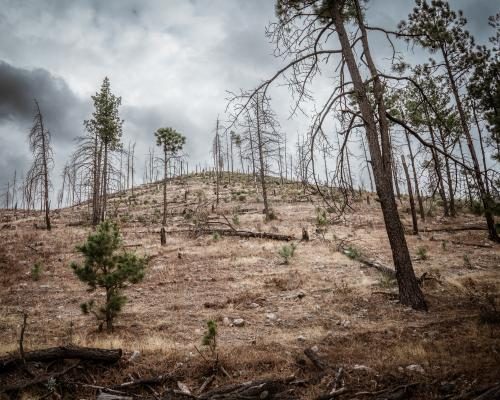
In the Sierra Tarahumara region of north-west Mexico, the lush forests that once provided joy and safety for children in the village of Rochéachi are now overshadowed by fear and violence. Over the past decade, criminal groups, particularly factions of the Sinaloa cartel, have intensified illegal logging operations, devastating the environment and terrorizing local communities.
A mother of three, who chose to remain anonymous, recalls a time when her children could collect fireflies in the forest at night. "We had peace. We used to walk and play and be together," she lamented. Today, the reality is starkly different. "Now, children can't go out to play. We don't know what might happen," she added, reflecting the pervasive fear that has gripped the community. Originally reported by The Guardian.
Illegal Logging and Environmental Devastation
Since the mid-2010s, illegal logging has surged in the Sierra Tarahumara, with criminal factions seizing communal land, known as ejidos, through intimidation and violence. According to the environmental organization Water and Forests for Life, an alarming 9,000 hectares (22,400 acres) of forest have been lost to illegal logging since 2001. The sawmills tied to these cartels often forge documents, enabling them to launder timber valued between $270 million and $978 million annually, as estimated by various sources.
The consequences of this rampant deforestation extend beyond mere loss of trees. The hydrological systems that sustain the region have been disrupted, leading to severe droughts, crop failures, and escalating food insecurity. The area surrounding Guachochi, a town about 20 miles from Rochéachi, is particularly hard-hit, as illegal logging activities closely intertwine with other criminal enterprises, including drug trafficking.
Fear and Intimidation in Local Communities
Isela González Díaz, 71, the director of Alianza Sierra Madre, which advocates for Indigenous rights in the region, noted that illegal logging has become a lucrative venture for criminal groups diversifying their operations. "In recent years, illegal logging has been most effective for them," she remarked, highlighting the urgent need for intervention.
The fear felt by the residents is palpable. The anonymous mother from Rochéachi described how criminal groups have infiltrated local leadership, exerting control over the ejidos. After she opposed extortion demands, her father was murdered in 2016, and she has since faced relentless threats. She moved to Guachochi for safety but continues to receive threats, the latest occurring in December. "They told me that if I didn't keep quiet or back off, the same thing would happen to me as to my father," she recounted.
Lack of Accountability and Government Inaction
Despite the severe risks, residents bravely file complaints against illegal logging activities, but the system designed to address these grievances is profoundly flawed. A legal officer at Community Technical Consultancy (Contec) explained, "The system for reporting, punishment and damage repair is extremely ineffective." The pervasive sense of impunity allows criminal activities to continue unabated, leaving communities in despair.
Local people have expressed frustration over the lack of anonymous reporting mechanisms for forest-related crimes. Allegations have surfaced that criminal groups maintain informants within Mexico's environmental ministry and the federal attorney's office for environmental protection (Profepa). The Rarámuri woman noted that after attempting to file a complaint at the ministry, she received a threatening call cautioning her against proceeding. The Contec legal officer confirmed that criminal groups appear to monitor complaints closely, creating a chilling effect on community members seeking justice.
Government Response and Future Prospects
Profepa acknowledges the threat illegal logging poses to rural communities but claims that addressing the issue goes beyond its administrative powers. The agency, however, denies any collusion with criminal organizations, asserting it is working to improve confidentiality in complaint processes. Plans are underway to invest 130 million pesos (£5.6 million) into forest protection in the Sierra Tarahumara.
Yet, the challenge remains daunting. The systemic weaknesses in governance, particularly concerning community forests within ejidos, impede meaningful progress. With more than half of the ejidos in Mexico grappling with similar issues, the path toward restoring safety and ecological balance in the Sierra Tarahumara seems fraught with obstacles.
As the situation continues to evolve, the resilience of communities like those in Rochéachi remains crucial. Their fight against illegal logging and cartel influence is not just about preserving their forests but also about reclaiming their right to safety and a peaceful existence. The international community watches closely, as the fate of these ancient forests hangs in the balance.
Originally reported by The Guardian. View original.