
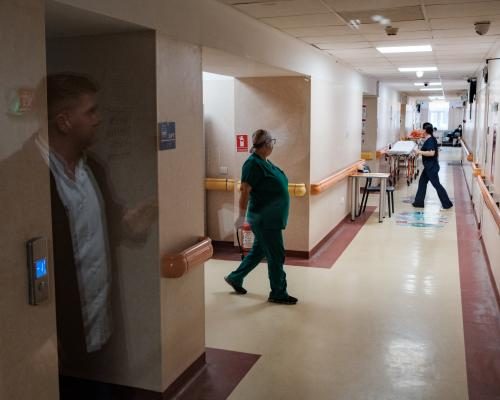
In Romania, a troubling trend has emerged as the country grapples with a severe measles crisis, leading the European Union in reported cases. In just two years, between 2023 and 2025, Romania recorded over 35,000 measles cases and at least 30 deaths, predominantly among infants unable to be vaccinated. The alarming decline in vaccination rates is at the heart of this public health emergency, creating a precarious situation for communities across the nation.
Clinic Crowded with Concerned Parents
On a spring morning in the Transylvanian town of Săcele, the local clinic was bustling with parents and children anxiously waiting to see Dr. Mirela Csabai. Serving a population of over 30,000, she's one of only seven general practitioners in the area. While most of that day's cases involved routine ailments, the calm was a stark contrast to the chaos of 2024, when a measles outbreak claimed the life of an unvaccinated toddler. Dr. Csabai warned, "As long as vaccination rates remain low, it's a powder keg. Once an epidemic starts, it is already too late to vaccinate. We need to act now." Originally reported by The Guardian.
Measles Epidemics on the Rise
Romania is currently facing the worst measles crisis in the EU, having experienced four epidemics since 2005. The latest outbreak in 2024 saw Brașov county emerge as the hardest hit, with the highest number of cases and four child fatalities. Shockingly, around 87% of all EU measles cases were reported in Romania during 2024, while Italy, the next most affected country, recorded just over 1,000 cases. Dr. Aurora Stanescu, an epidemiologist at the National Institute of Public Health, emphasized the gravity of the situation, stating, "A firm political commitment to limit the number of deaths is necessary. This is a national security issue."
Challenges in Vaccination Uptake
Despite the necessity of vaccinations, Romania's uptake rates have plummeted. The first dose of the MMR vaccine is recommended between 14 and 18 months, but while coverage rises to 81% by 18 months, it still falls short of the 95% threshold needed for herd immunity. The second dose, recommended at age five, sees uptake fall to just over 60% nationwide, with some communities reporting rates as low as 20%. This decline in vaccination rates, which began in 2010 when Romania's MMR rate was above the European average of 93%, has only worsened in the wake of the COVID-19 pandemic.
Barriers to Vaccination Access
Access to vaccinations remains a significant barrier, particularly for marginalized communities. Casandra Stoica, a 25-year-old mother from the Roma community, shared her experience after her two older daughters contracted measles during the 2024 outbreak. With limited access to healthcare, she had to travel to a neighboring county for treatment as the local hospital was overwhelmed. "I got scared when the girls fell ill and now I want to vaccinate them all," Stoica said. However, the conditions she lives in-without running water or electricity-make it difficult to keep up with vaccination schedules.
Gabriela Alexandrescu, country director for Save the Children, noted that the decision not to vaccinate doesn't always stem from parental choice. "The causes are also structural: poverty, medical deserts, and GPs without the time or resources to counsel hesitant families," she explained. Vaccination is not mandatory in Romania, and since 2015, the responsibility for administering vaccines has rested solely on GPs, adding to the bureaucratic burden.
Systemic Issues and Solutions
Dr. Simona Codreanu, who cares for over 3,000 patients, sees the consequences of this system firsthand. "The majority of children get vaccinated at birth, but then they never return for the full schedule," she noted, highlighting the gaps in care. Dr. Mihai Negrea, an epidemiologist from Târgu Mureș, pointed out that the over-reliance on GPs is a significant barrier to vaccination efforts. "The main cause is not just anti-vaccine views but bad management of the system," he said, advocating for community vaccination centers and expanding the right to vaccinate to other medical professionals.
As Romania continues to fight against measles, the urgent need for a comprehensive strategy to enhance vaccination coverage becomes ever more critical. Without decisive action, the nation risks facing another wave of preventable illnesses, jeopardizing the health of its most vulnerable populations.
Originally reported by The Guardian. View original.