
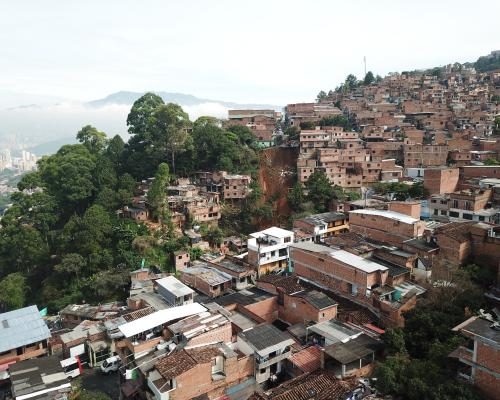
As Colombia battles the impacts of climate change, residents of the Golondrinas neighborhood in Medellín are spearheading initiatives that could reshape urban resilience across the city. Róbinson Velásquez Cartagena, a community leader, has designed a rainwater harvesting system to mitigate flooding and landslide risks in the densely populated area, which is home to around 150,000 people.
Innovative Solutions for a Vulnerable Community
Perched on a steep hillside, Golondrinas has long faced the threat of natural disasters due to inadequate infrastructure. In 1987, a catastrophic landslide claimed 500 lives, highlighting the urgent need for effective disaster management. Responding to this challenge, Velásquez Cartagena and fellow residents began developing an inclusive climate action plan in 2020, known as the Local Agreement for Inclusive Climate Action. Originally reported by The Guardian.
After three years of community engagement and planning, the agreement was officially launched in August 2023 in collaboration with Medellín's disaster risk management department (DAGRD), the housing committee for Comuna 8, and Heriot-Watt University in the UK. The initiative outlines eight critical measures aimed at addressing climate risks, including sustainable rainwater management, reforestation efforts, and the establishment of eco-gardens.
From Local Initiatives to Citywide Strategies
One significant feature of the plan is its adaptability; while it serves as a model for Medellín's 4 million residents, there are challenges in securing governmental backing and funding for grassroots projects. Velásquez Cartagena noted, "I started the rainwater harvesting system because I wanted to prove that it can reduce the risk of disasters by reducing the water that runs onto the streets, which can flood when it rains." His system collects rooftop rainwater, which is then repurposed for household uses, thereby alleviating some of the drainage issues.
The community's proactive measures extend beyond individual homes. In the El Pacifico neighborhood, Nancy Elena Quiros Correa manages a community tree nursery aimed at preventing landslides and enhancing biodiversity. "The nursery will prevent rocks from falling, soak up water when it rains, and increase biodiversity," Quiros Correa explained, reflecting on the changes in Medellín's climate that have intensified these risks.
Community Engagement and Educational Initiatives
Additionally, projects like the rainwater harvesting system at a local community center and ecological restoration gardens are vital components of the overall strategy. Harry Smith, a professor at Heriot-Watt University, emphasized the importance of these initiatives, stating, "The garden will restore nature and stabilize the land." These efforts not only aim to combat environmental degradation but also address issues related to illegal land invasions, as armed groups often exploit vulnerable areas for housing developments.
As the plan gained traction, community leaders wasted no time in implementing pilot projects to demonstrate their potential. "They wanted to do some pilot projects to show that they don't need to wait for the municipality to come along and do things," Smith noted. This grassroots momentum has been crucial in pushing the climate adaptation agenda forward.
A Blueprint for Future Resilience
Velásquez Cartagena is now collaborating with local leaders to create an accessible, visually engaging guide to the climate action plan. This guide aims to educate the community and promote the initiatives on social media platforms, ensuring widespread awareness and engagement. The work done in Comuna 8 has laid the groundwork for a comprehensive disaster risk and climate adaptation framework that could extend to all 21 comunas in Medellín.
Juan David Moreno, the head of the technical team at DAGRD, acknowledged the significance of the community's efforts as a pilot program. He stated, "The work in Comuna 8 was a pilot, and we developed it for the rest of the communities." However, he emphasized the importance of tailoring strategies to meet the unique needs of each community, considering varying terrain and hazards. "The main lesson from Comuna 8 was that we needed to work closely with the community to ensure the strategies were relevant and effective," Moreno concluded.
The collaborative approach taken by Golondrinas residents serves as a powerful example of how local action can lead to significant changes in urban climate resilience, providing a model for other cities grappling with similar challenges.
Originally reported by The Guardian. View original.