
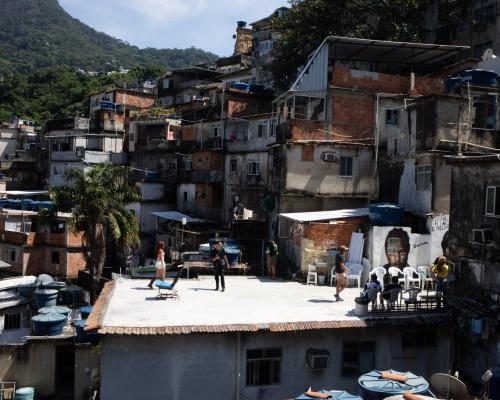
As the sun illuminated Rio de Janeiro's famous landscape, the Boswell family from Essex set off on their holiday adventure, choosing to explore an unconventional tourist destination. Rather than the iconic Christ the Redeemer or Copacabana beach, they were heading to the rooftop of Rocinha, the largest favela in Brazil, known as the "Porta do Céu" or "Gateway to Heaven." This spot has gained considerable fame due to viral drone videos showcasing breathtaking views of the favela and beyond.
Viral Fame Drives Tourism to Rocinha
Since 2025, the rooftop of Rocinha has transformed into a bustling tourist hotspot, attracting crowds eager to capture their own moments against the stunning backdrop. Videos featuring visitors dancing and posing through a metal door while a lively Brazilian soundtrack plays have garnered millions of views on social media. Vitor Hugo Oliveira da Conceição, a local guide, noted, "The rooftop has existed for ages..but since 2025 these drone videos have gone viral. In January there was one that got nearly 50m views on Instagram. It blew up." Originally reported by The Guardian.
The appeal of the rooftop has been further amplified by visits from influencers and celebrities, including Brazilian singer Anitta and Spanish pop star Rosalía, who have helped elevate the visibility of Rocinha. As a result, people from various countries, including China and Japan, have visited the favela, turning it into one of Rio's most discussed tourist attractions.
A Transformative Experience for Locals
Many local residents have embraced this surge in tourism, recognizing its potential to improve their lives. Vitor Hugo Oliveira da Conceição, who once faced significant hardships, now leads tours that promote a more positive narrative about favela life. "This flux of tourists is changing so many people's lives - mine included," he shared. Conceição's journey reflects a broader shift within the community, where tourism is beginning to replace old stigmas with new opportunities.
Victor Hugo de Jesus Ferreira, a 19-year-old drone operator, echoes this sentiment. He captures an impressive 100 videos each day, sharing the vibrancy of Rocinha with the world. "The favela is now one of Rio's main tourist attractions - [even more talked about] than Christ the Redeemer," he stated, highlighting the dramatic shift in perception surrounding favelas.
Tourist Experiences in Rocinha
For visitors like the Boswell family, the experience at Rocinha is unlike any other. Jack Kelly Boswell, 17, noted the stark differences in health and safety standards compared to the UK while navigating through the dense community. "I can imagine this is what London was like in the 1600s. It's crazy, isn't it?" he remarked, reflecting on the tightly packed homes and complex alleyways of the favela.
Tourists now find themselves part of a vibrant scene, often waiting in long queues just to access the rooftop. Marcelo Freixo, the president of Brazil's tourist board, Embratur, experienced the excitement firsthand, stating, "The day I visited the rooftop, there was a two-hour queue! It's incredible. Once again, you have the favela reinventing itself and creating its own solutions." Nearby, an alfresco waiting area has been established, allowing guests to unwind with a cold drink while enjoying panoramic views over Rio's beaches.
Shifting Perspectives on Favelas
Despite the previous criticism of "poverty tours" that often exploit the conditions in favelas, the current trend is redefining how tourists and locals engage with these communities. Priti Gomes, a tourist from Chelsea, expressed her desire to witness the resilience of Rocinha's residents, saying, "It's one of those lifetime things, isn't it? One of the seven wonders of the world, in a different way."
This evolving narrative is vital in helping to reshape the image of favelas, turning them into spaces of cultural exchange rather than mere points of curiosity. With more tourists flocking to places like Rocinha, the potential for economic growth and community support continues to swell, offering a brighter future for many residents.
As Rocinha continues to thrive as a tourist destination, it serves as a reminder of the power of community and creativity in transforming perceptions and lives. With each visit, tourists are not just witnessing a different side of Brazil; they are actively participating in a cultural renaissance that could redefine the future of favela tourism.
Originally reported by The Guardian. View original.