
The geopolitical landscape of the Middle East is increasingly fraught as tensions escalate following Iran's recent military maneuvers in the Strait of Hormuz. U.S. officials have confirmed that Iran began laying mines in this critical passageway on Thursday, a route through which approximately 20% of the world's oil supply is transported. This provocative action has sent oil prices soaring and raised alarms regarding the stability of global energy markets.
Iran's Strategic Maneuvers in the Gulf
Iran's decision to lay mines in the Strait of Hormuz comes despite claims by former President Donald Trump that U.S. military operations had effectively neutralized Iran's naval capabilities. However, sources indicate that Iran is reverting to smaller, more agile vessels to implement its strategy, which includes enforcing the closure of the strait against neighboring Gulf countries. The New York Times reported that this development caught the Trump administration off guard, with senior officials admitting they had not adequately prepared for a scenario where Iran would close the strait in retaliation to U.S. and Israeli strikes. Originally reported by The Guardian.
"Planning around preventing this exact scenario.. has been a bedrock principle of U.S. national security policy for decades," stated a former U.S. official familiar with the situation, expressing disbelief at the lack of foresight by current policymakers.
Ongoing Rescue Operations Following Aircraft Crash
Amid the rising tensions, U.S. Central Command has launched rescue operations after a military refueling aircraft, a KC-135, crashed in what officials described as "friendly airspace" in Iraq. The mishap involved two aircraft, with one safely landing while the other went down. Reports indicate that at least five crew members were onboard the downed aircraft, but officials have clarified that neither hostile nor friendly fire was responsible for the crash. The ongoing rescue efforts reflect the volatile conditions in the region, where military operations are increasingly precarious.
As the situation develops, U.S. forces are remaining vigilant. The Central Command has emphasized the importance of maintaining operational capabilities and is coordinating closely with allied forces in the area.
Strikes on Iran and Regional Implications
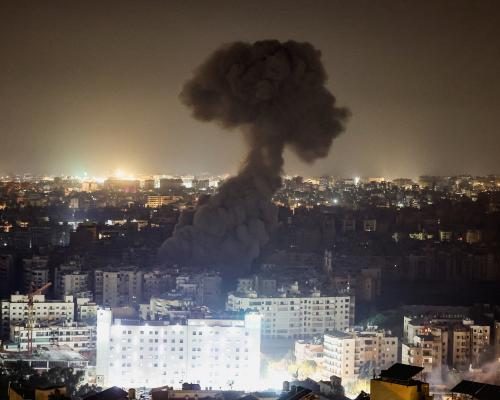
Israel has intensified its military action, launching fresh strikes targeting Tehran and Beirut. Trump has asserted that the U.S. military campaign against Iran is progressing rapidly, proclaiming, "It's doing very well," while labeling Iran as "a nation of terror and hate." Meanwhile, Israeli Prime Minister Benjamin Netanyahu has issued stark warnings, suggesting that Iran's new supreme leader should not count on any safety, stating, "I wouldn't take out life insurance policies" on key Iranian leaders.
Netanyahu justified the joint U.S.-Israeli operations by emphasizing the goal of thwarting Iran's nuclear and ballistic missile projects, claiming that some Israeli strikes have successfully eliminated prominent Iranian nuclear scientists.
International Response and Escalating Threats
In light of increasing hostilities, U.S. Treasury Secretary Scott Bessent announced plans for the U.S. Navy, potentially alongside an international coalition, to escort vessels through the Strait of Hormuz when militarily feasible. "We will proceed as soon as we have complete control of the skies and [Iran's] rebuilding capabilities for the missiles completely degraded," he explained in an interview with Sky News.
On a grim note, French President Emmanuel Macron confirmed the death of a French soldier in an attack in Iraq's autonomous Kurdistan region, marking the first French military casualty since the onset of the conflict. Several other soldiers sustained injuries during the drone strike, which occurred while they were engaged in training exercises with Iraqi partners.
Adding to the chaotic situation, an Iranian ballistic missile struck an open area in central Israel, fortunately causing no injuries, as confirmed by the Israeli military's home front command. Saudi Arabian defense forces intercepted a drone targeting the Shaybah oil field, amidst a spate of drone attacks in the region. Qatar's defense ministry also reported intercepting multiple missiles and drones launched from Iran.
The ongoing conflict and Iran's aggressive maneuvers in the Strait of Hormuz underscore the precarious balance of power in the Middle East. As military engagements continue and diplomatic efforts appear stalled, the region remains on edge. The implications of these developments are far-reaching not only for the nations directly involved but also for global energy markets and international relations.
Originally reported by The Guardian. View original.