
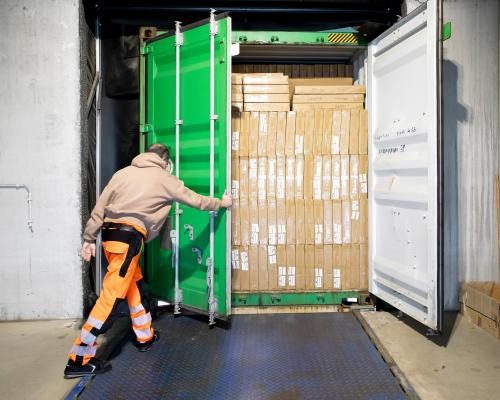
At the bustling port of Antwerp, Sara Van Cotthem, a customs officer, meticulously slices open a cardboard box revealing an aluminum stepladder imported from China. Under the harsh glow of fluorescent lights, she checks the paperwork and uses a magnet to confirm the material. This routine task is part of the daily operations at one of Europe's largest commercial gateways, which processed a staggering 13.6 million twenty-foot containers last year. While this particular shipment is legitimate, the customs team here faces a much graver challenge: the relentless smuggling of drugs, primarily cocaine, into Europe.
Antwerp has become a significant entry point for cocaine, with authorities seizing an astonishing 483 tonnes of the drug between January 2019 and June 2024. This figure marks the highest among the 17 ports monitored by the European Union Drugs Agency. The increase in cocaine production in South America, particularly Colombia, has coincided with Dutch drug gangs shifting their focus from Rotterdam to Antwerp, exacerbating the crisis. Although much of the seized cocaine is destined for the Netherlands, a substantial amount remains within Belgium, contributing to a growing domestic drug problem. Originally reported by The Guardian.
Escalating Threat of Drug Gangs
The power and influence of drug gangs in Belgium have escalated to alarming levels, prompting judges to warn that the country risks becoming a narco-state. The social implications of this booming illicit trade are profound, with authorities increasingly concerned about its potential to destabilize communities. Despite a decrease in cocaine seizures-55 tonnes recorded in 2025 compared to a record 121 tonnes in 2023-the situation remains dire. "It is like a cat and mouse game," says Van Cotthem, underscoring the adaptive tactics of smugglers who continuously develop new methods to evade detection.
To combat these sophisticated criminal enterprises, customs at Antwerp has invested in new technology, including six mobile scanners ready for 24/7 operations. This initiative is part of a broader strategy to enhance container inspections, ensuring that illicit goods can't be extracted before they reach control points. In 2025, customs scanned 65,000 high-risk containers, a notable increase from previous years, with an ambitious plan to eventually scan between 350,000 to 400,000 containers annually using fixed conveyor belt systems.
Innovative Smuggling Techniques
Smugglers are continuously evolving their tactics to outsmart customs officials. Initially, cocaine was often concealed within fruit shipments. However, recent discoveries have revealed a range of increasingly complex methods-cocaine has been found mixed with orange juice, hidden in fake pineapples, embedded in textiles, and even concealed within wooden beams and paving stones. Customs officers undergo rigorous training for at least a year to recognize subtle irregularities in scanned containers, such as breaks in patterns or anomalies within the cargo.
Additionally, traffickers are diversifying their routes, with an emerging trend of sending drugs via West Africa. In 2025, Ghana emerged as the third-largest source of drug seizures in Belgium, following Ecuador and Costa Rica, while Colombia's traditional dominance has diminished, slipping to fifth place. Smugglers are also resorting to dropping illegal cargo at sea, transferring cocaine from large vessels to smaller boats, or even tossing waterproof bundles with GPS trackers into the ocean for later retrieval.
Future Challenges and Strategies
The complexities of modern drug trafficking have prompted authorities to consider alternative interception methods, including monitoring aircraft, drones, and even submarines. Kristian Vanderwaeren, head of customs and excise in Belgium, highlighted the challenges of intercepting aerial shipments, recalling instances where Brazilian authorities intercepted cocaine-laden private jets destined for Belgium. The situation necessitates collaboration with military forces for effective enforcement.
In response to the growing threat, Belgium has bolstered its police presence at the port, including a specialized unit dedicated to combating smuggling. Authorities are committed to a tough stance against drug trafficking, employing a multi-faceted approach that includes advanced technology and enhanced training for customs personnel.
As the fight against drug smuggling intensifies, Belgium's customs officers remain vigilant, knowing that the next shipment could contain hidden dangers. The ongoing battle against drug gangs will require constant adaptation and innovation to safeguard not just the port of Antwerp, but the broader European community from the scourge of drug trafficking.
Originally reported by The Guardian. View original.