
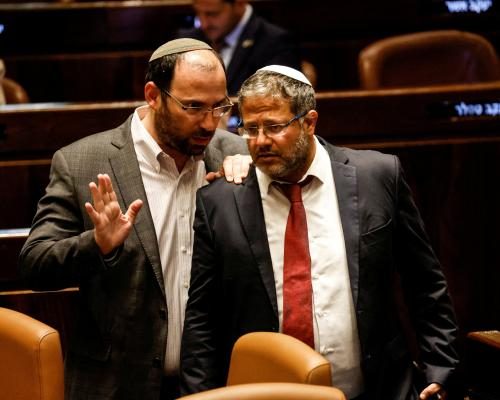
In a significant legislative move, Israeli lawmakers have voted overwhelmingly to establish a special tribunal with the authority to impose the death penalty on Palestinians involved in the deadly Hamas attacks of October 7, 2023, which triggered the ongoing conflict in Gaza. The Knesset, Israel's parliament, passed the measure with a vote of 93 to 0, indicating strong backing from the Jewish majority for holding accountable those responsible for what is considered the deadliest attack in Israeli history. The remaining 27 members were either absent or chose not to vote.
This new tribunal will operate under a livestream format, allowing public access to the proceedings, which has drawn both support and criticism. The legislation is distinct from an earlier law enacted in March that permits the death penalty for Palestinians convicted of murdering Israelis, a measure that has faced international condemnation for its discriminatory nature and perceived inhumanity. Originally reported by The Guardian.
Context of the October 7 Attack
The October 7 assault was orchestrated by Hamas's elite "Nukhba" forces and resulted in the deaths of at least 1,200 individuals, predominantly civilians. In the aftermath, Israeli forces apprehended approximately 300 alleged attackers, who have since been detained. The new tribunal will enable charges to be filed under Israel's 1950 law for the prevention of genocide, which carries the death penalty as a potential sentence.
Critics of the tribunal have raised alarms about the implications for due process and the potential for politicized trials. Ya'ara Mordecai, an international law expert at Yale Law School, expressed concerns that the military court setting could compromise the fairness of the legal proceedings, indicating a risk of these trials devolving into "show trials" rather than adhering to principles of justice.
Criticism and Concerns Over Fair Trials
Rights organizations have voiced strong opposition to the tribunal's formation. They argue that by making the death penalty more accessible and circumventing established legal procedures, the new measure threatens the right to a fair trial. Defendants will have the opportunity to appeal their sentences; however, those appeals will be heard by a designated special appeals court rather than traditional courts, which raises questions about impartiality.
Simcha Rothman, one of the bill's sponsors, emphasized the overwhelming consensus among Knesset members, asserting that this unity reflects a collective mission to seek justice for the victims of the October 7 attack. Nonetheless, opponents contend that livestreaming the trials prior to any determination of guilt risks transforming judicial proceedings into spectacles, undermining the seriousness of the legal process.
Historical Parallels and International Reactions
The tribunal's structure has drawn comparisons to the 1962 trial of Adolf Eichmann, a Nazi war criminal executed in Israel. Like Eichmann's trial, the new proceedings will be broadcast live, a decision that has raised eyebrows regarding the potential for sensationalism. While military courts previously had the authority to issue death sentences, such occurrences have been exceedingly rare, with the last known execution resulting from a military tribunal being commuted.
In light of these developments, rights groups such as HaMoked and Adalah have warned that while pursuing justice for the victims of the October 7 attack is urgent, accountability must not come at the cost of abandoning fundamental justice principles. They assert that any legal response must ensure fairness and due process.
International Scrutiny and Ongoing Investigations
The international community is closely monitoring Israel's actions in the ongoing conflict. The International Criminal Court (ICC) is investigating Israel's conduct during the Gaza war, issuing arrest warrants for several Israeli officials, including Prime Minister Benjamin Netanyahu and former Defense Minister Yoav Gallant. Concurrently, Israel is facing a genocide case at the International Court of Justice, which it has dismissed as politically motivated, arguing that its military operations target Hamas, not the Palestinian populace.
As the situation unfolds, the implications of this new tribunal and its approach to justice will be scrutinized both domestically and internationally. The establishment of this tribunal marks a pivotal moment in Israel's legal landscape, raising profound questions about the balance between justice, accountability, and human rights.
Originally reported by The Guardian. View original.