
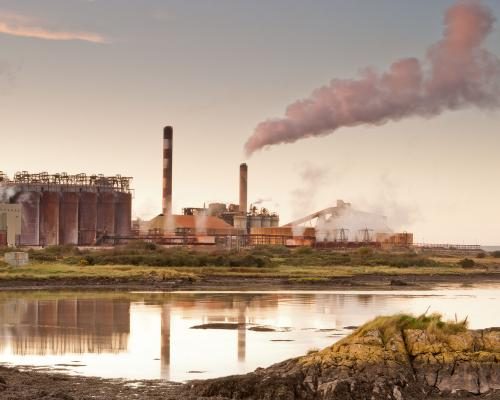
A recent investigation has revealed that Aughinish Alumina, Ireland's only alumina refinery, is linked to a global aluminium supply chain that potentially supports the Russian military in its ongoing conflict in Ukraine. Leaked documents and trade data indicate that alumina shipments from this facility, located on the Shannon estuary, have surged significantly since the onset of the war in February 2022. The refinery, owned by the Russian aluminium giant Rusal since 2006, saw exports of alumina to Russia escalate from $243 million in 2022 to an estimated $376 million in 2024, marking a 55% increase.
Escalating Trade with Russia
The data from the Observatory of Economic Complexity (OEC) reveals that Aughinish Alumina has become a pivotal player in the aluminium supply chain, exporting nearly 500,000 tonnes of alumina to Russian smelters in 2024 alone. This amount accounted for about two-thirds of the aluminium oxide imported by Rusal's Krasnoyarsk smelter, one of the largest in Siberia. This smelter, in turn, is crucial for producing aluminium that has numerous military applications. Originally reported by The Guardian.
Despite the rising trade with Russia, legal experts assert that these transactions do not breach current EU sanctions, as no restrictions have been placed on alumina itself. However, concerns have emerged about the broader implications of such trades, particularly regarding their potential contribution to the Russian war effort against Ukraine.
Political Reassurances Under Scrutiny
The revelations contradict earlier assurances made by Irish officials. In 2022, Patrick O'Donovan, then Minister of State for Public Expenditure, asserted in parliament that the Aughinish facility was "not in any way connected to a war machine." Following the emergence of the recent data, both Aughinish representatives and O'Donovan have remained silent when asked how the refinery ensures that its products do not support military efforts against Ukraine.
Prof. Aristides Matopoulos, a specialist in defence supply chains at Cranfield University, commented on the complexities of monitoring such supply chains. He stated, "Defence supply chains are inherently multi-tier and cross-border, which creates structural gaps that can render sanctions architecture not fully fit for purpose." This statement underscores the Challenges faced by regulatory bodies in tracing the end use of products originating from the EU.
Rusal's Strategic Maneuvers
Rusal's operations remain legally compliant with EU trade regulations, even as scrutiny of its ownership structure raises ethical questions. Approximately 25% of Rusal's shares are owned indirectly by Oleg Deripaska, a metals tycoon under sanctions from the US, UK, and EU. However, the company avoided sanctions after the US lifted embargoes following Deripaska's relinquishment of control over its largest shareholder, EN+.
Aughinish is a significant employer in the region, providing jobs for around 900 individuals and supplying approximately 30% of the EU's alumina, which is essential for a variety of industries, from electronics to healthcare. The plant was originally constructed in the 1970s by Alcan, a major global aluminium producer, before being acquired by Glencore and subsequently Rusal.
Challenges in Supply Chain Oversight
As the international community grapples with the implications of trade relationships with Russia, the situation at Aughinish illustrates the intricate and often opaque nature of global supply chains. Trade records show that alumina from Aughinish is processed in Russia and can potentially end up in products used by military manufacturers. This raises critical questions about the efficacy of existing sanctions and the ethical responsibilities of companies involved in such supply chains.
In response to inquiries, a spokesperson for Aughinish maintained that the company operates "in strict compliance with all applicable EU laws," claiming to have implemented a robust framework for sanctions compliance and due diligence throughout its supply chain.
As the conflict in Ukraine continues and the spotlight on international trade practices intensifies, the interplay between commerce and military support remains a contentious issue. It remains to be seen how regulators and governments will respond to the challenges posed by such complex supply chains, particularly concerning their role in global conflicts.
Originally reported by The Guardian. View original.