
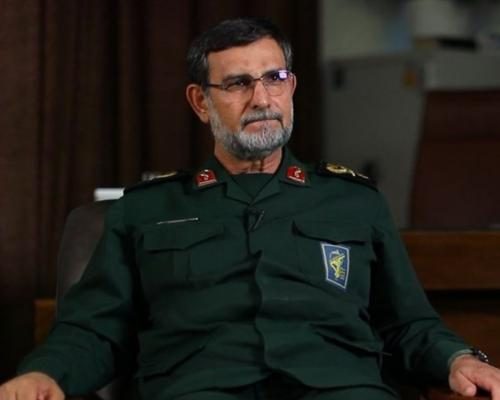
In a significant escalation of regional tensions, Alireza Tangsiri, the commander of the Islamic Revolutionary Guard Corps (IRGC) naval forces, was killed in an Israeli airstrike on Thursday in the port city of Bandar Abbas. Tangsiri, known for his hardline stance and understanding of the strategic importance of the Strait of Hormuz, played a pivotal role in Iran's naval operations and military strategy.
A Firebrand Leader with Military Acumen
Alireza Tangsiri was a veteran within the IRGC, rising through the ranks during the brutal Iran-Iraq War from 1980 to 1988. His experience in this conflict helped solidify his reputation as a committed hardliner, one who embraced fiery rhetoric to rally support for Iran's military objectives. Tangsiri became the IRGC's naval commander in 2018, where he focused on modernizing Iran's maritime capabilities. His leadership was characterized by a push for unconventional weapons, including fast boats and drones, which were crucial for Iran's ability to project power in the Persian Gulf. Originally reported by The Guardian.
In January, during naval exercises in the Gulf, Tangsiri stated that the Iranian revolution of 1979 marked "a turning point in the history of the Iranian nation and a new dawn for the awakening of the oppressed nations of the world." This quote encapsulates his belief in Iran's role as a regional power and protector of its interests against perceived aggressors.
The Strategic Significance of the Strait of Hormuz
The Strait of Hormuz is a critical maritime chokepoint, through which approximately one-fifth of the world's oil and gas passes. Tangsiri's understanding of this strategic waterway allowed him to advocate for military strategies that aimed to secure Iran's influence over it. Under his command, the IRGC Navy conducted tests of cruise missiles and developed armed drones capable of Threatening shipping lanes, demonstrating Iran's commitment to maintaining a strong presence in this vital region.
Following the airstrike that killed Tangsiri, U.S. Central Command Admiral Brad Cooper remarked that Tangsiri's death would "make the region safer." This comment underscores the belief among U.S. and allied military leaders that eliminating key IRGC figures could potentially diminish Iranian aggression in the area.
Reactions to the Strike and Tangsiri's Legacy
The airstrike not only resulted in Tangsiri's death but also claimed the life of Behnam Rezaei, the head of the IRGC Navy intelligence directorate. The implications of this operation were echoed by Israel's Defense Minister, Israel Katz, who stated that Tangsiri was responsible for numerous attacks that obstructed maritime traffic in the Strait of Hormuz. Katz characterized the strike as a clear "message" to the IRGC: "[Israel] will hunt you down and eliminate you one by one."
This statement highlights the ongoing tensions between Iran and Israel, particularly in the context of maritime security and regional dominance. Tangsiri's legacy as a military leader is likely to be viewed through the lens of this conflict, as his strategies and operations were integral to Iran's naval posture.
The Future of Iranian Naval Operations
In the wake of Tangsiri's death, questions arise regarding the future direction of Iran's naval strategy and its broader military objectives. His advocacy for fast boats and other unconventional weaponry was aimed at countering superior naval forces, particularly those of the United States. As Iran continues to face external pressures, including sanctions and military threats, the IRGC will likely seek to maintain its operational capabilities in the Strait of Hormuz.
Tangsiri's bold statements, including his recent challenge to the U.S. regarding potential ground assaults on Kharg Island-Iran's main oil export hub-reflect the high stakes involved in this geopolitical landscape. He had previously warned that such actions would have dire consequences for global oil prices, underscoring the interconnected nature of military actions and economic stability.
As Iran grapples with the loss of a key military figure, the broader implications for stability in the Persian Gulf and the Strait of Hormuz will remain closely monitored by international observers. The region's security dynamics are poised for further evolution, particularly as Iran adjusts its military strategies in response to ongoing threats.
Originally reported by The Guardian. View original.