
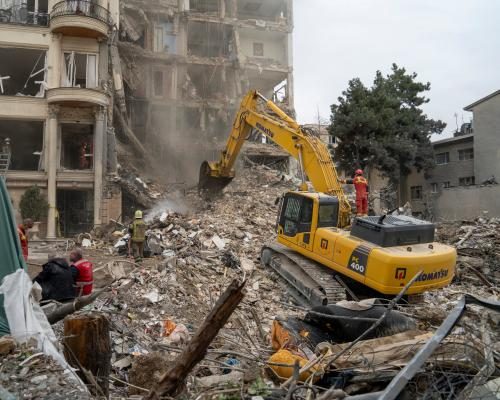
The escalating tensions in the Middle East have taken a dramatic turn as Iran rebuffs former President Donald Trump's assertions about ongoing negotiations. Meanwhile, European Commission President Ursula von der Leyen has characterized the global energy situation as 'critical,' amidst fears of further instability in the region. Reports indicate that the United States will maintain its military pressure on Iran, despite a temporary pause in strikes against its energy infrastructure.
US Military Strategy and Trump's Claims
A U.S. official, cited by Semafor, has revealed that while there will be a five-day halt on attacks targeting Iranian energy sites, military operations against Iran's military installations and naval capabilities will continue unabated. This announcement follows Donald Trump's claim that discussions with Iranian leaders have been 'productive.' The official emphasized, 'The stop on attacks for five days is only on their energy sites. It is not on the military sites and the navy, and the ballistic missiles, and the defence industrial base.' The report underscores that Israel has not been involved in the U.S.-Iran talks, and the information has yet to be independently verified. Originally reported by The Guardian.
Israeli Strikes Intensify in Lebanon
In a related development, the Israeli military has ramped up its operations in Lebanon, conducting numerous airstrikes targeting Hezbollah strongholds in southern Beirut. According to the Lebanese state media, Israeli warplanes executed seven air raids overnight, focusing on areas such as Bir al-Abed and Haret Hreik. As a result of these recent strikes, large fires have erupted in the region, with smoke plumes visible across the southern suburbs. The Israeli military's operations have reportedly resulted in over 1,000 fatalities in Lebanon and have displaced approximately 1 million residents, highlighting the humanitarian crisis that has intensified since the onset of the conflict.
Global Energy Crisis and Economic Implications
Amidst the unfolding crisis, global energy markets remain volatile. Ursula von der Leyen has described the current energy landscape as 'critical,' reflecting widespread concerns about the ramifications of the Middle East conflict on oil supplies. Following Trump's postponement of military action against Iran's power plants, oil prices experienced a temporary reprieve. Brent crude futures rose by 1% to $100.94 a barrel, while U.S. crude increased by 1.9% to $89.84. Traders reacted swiftly to the news, with Asian stocks rallying and the U.S. dollar experiencing declines. Chris Weston, head of research at Pepperstone, cautioned that while markets may have stabilized momentarily, 'Markets are not out of the woods,' indicating that Uncertainty persists.
New Zealand's Unprecedented Fuel Relief Package
In response to soaring fuel prices linked to the conflict in the Middle East, the New Zealand government has announced a unique fuel relief package aimed at assisting families. Prime Minister Christopher Luxon and Finance Minister Nicola Willis revealed that around 143,000 families with children will receive an additional NZ$50 ($29/£22) per week through an enhancement of the in-work tax credit. The initiative is set to last for one year or until the price of petrol drops below NZ$3 ($1.75/£1.30) per litre for four consecutive weeks. Petrol prices in New Zealand have surged by approximately 40 to 50 cents per litre since the onset of the Middle East conflict, prompting significant public concern and panic buying at gas stations.
As the situation evolves, the international community remains on high alert regarding further developments. The interplay of military actions, diplomatic negotiations, and economic implications continues to shape the narrative of this multifaceted crisis. With the deadline for potential military action against Iran looming, all eyes will be on Washington and Tehran as they navigate this precarious landscape.
Originally reported by The Guardian. View original.