
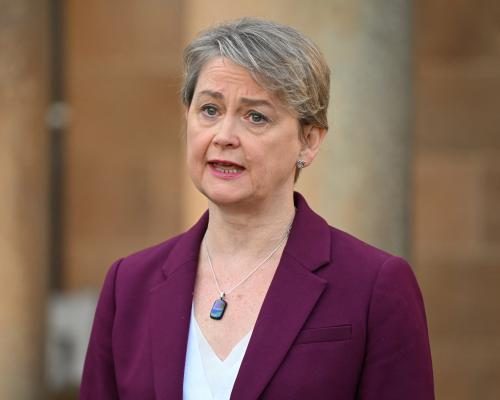
In a recent interview with Sky News, Yvette Cooper, the UK Foreign Secretary, expressed her deep concerns over the escalating violence in Lebanon, particularly the ongoing air strikes by Israel. She highlighted the dire humanitarian consequences, including mass displacement of people in the region. Cooper's comments come as she prepares to deliver a significant speech on foreign policy this evening. Meanwhile, Labour leader Keir Starmer is currently in the Gulf, where he is engaging in diplomatic discussions.
Escalating Tensions in Lebanon
Yvette Cooper stated, "I'm deeply troubled about the escalating attacks that we saw from Israel in Lebanon yesterday." The situation in Lebanon has raised alarm bells internationally, especially regarding the humanitarian crisis affecting thousands of civilians. Cooper emphasized that the international community must address this mounting crisis, advocating for Lebanon to be included in any ceasefire negotiations between the United States and Iran. Originally reported by The Guardian.
Cooper's remarks reflect the growing concern among Western leaders about the implications of the conflict for regional stability. The humanitarian situation has deteriorated rapidly, highlighting the urgent need for a diplomatic solution. "We've seen the humanitarian consequences, the huge mass displacement of people in Lebanon," Cooper added, signaling the UK government's commitment to addressing the humanitarian fallout of the conflict.
Iran's Proposed Shipping Toll
During her media engagement, Cooper also tackled the controversial issue of Iran's proposed shipping toll for oil tankers passing through the Strait Of Hormuz. Iran has suggested that it might charge a toll of $2 million per ship, a move that Cooper firmly opposed. In her view, such a toll would be unacceptable to the UK and contradict international maritime laws.
"The starting point here is this is an international transit route," Cooper asserted, emphasizing that the Strait of Hormuz is crucial for global trade and economy. She underscored that international shipping laws protect these routes, which cannot be unilaterally controlled or monetized by individual nations. Cooper's stance is particularly relevant amid rising tensions in the region, where the free passage of oil tankers is vital for the world economy.
International Law and Freedom of Navigation
Cooper articulated the UK's position on freedom of navigation, stating, "Countries cannot simply hijack those kinds of international transit routes and unilaterally apply tolls." This assertion serves as a reminder of the principles established by international maritime law and the United Nations conventions that govern the use of global shipping routes.
When pressed about Iran's claims that the Strait of Hormuz constitutes its territorial waters, Cooper reiterated that under international maritime law, it is recognized as a transit route between the high seas. She compared it to other critical maritime passages, such as the straits of Dover and Gibraltar, where international shipping principles apply, allowing for free navigation regardless of territorial claims.
Broader Implications for Global Trade
Protecting the freedom of navigation through the Strait of Hormuz is not merely a regional issue but a critical concern for the global economy. The strait is a key chokepoint for oil transport, with approximately 20% of the world's oil passing through it daily. Any disruptions to this route could have far-reaching implications, affecting oil prices and global markets.
Cooper's firm stance against Iran's toll proposal resonates with the UK government's broader strategy to ensure stability in international shipping lanes. It reflects a commitment to maintaining open trade routes essential for economic growth and security worldwide. As tensions in the region continue to rise, the need for a coordinated international response becomes increasingly apparent.
As Cooper prepares to deliver her foreign policy speech this evening, her comments underscore the delicate balance of diplomacy, security, and humanitarian considerations that the UK must navigate in the Middle East. With Keir Starmer engaged in discussions in the Gulf, the Labour Party seems poised to take a proactive role in shaping the UK's foreign policy approach to the ongoing conflicts in the region.
Originally reported by The Guardian. View original.