
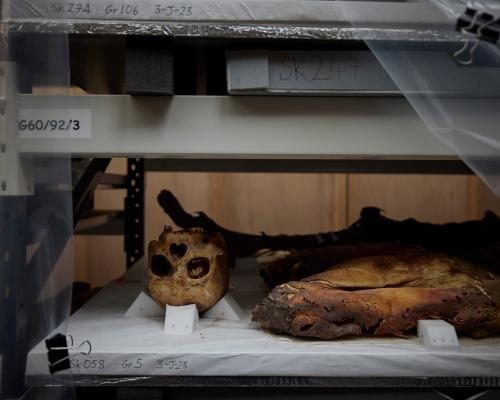
The number of human remains housed in UK museums, universities, and local authorities is astonishing. An investigation revealed that 241 institutions collectively possess over 263,228 items, including skeletons, body parts, and preserved bodies like Egyptian mummies. Experts believe that the actual total may be even higher due to incomplete records and the complex cataloging methods used by various institutions. This comprehensive guide covers which human remains are held in uk museums – and where? in detail.
Understanding Which Human Remains Are Held In UK Museums – And Where?
According to the findings, only 100 institutions provided precise or estimated counts of human remains, totaling around 79,334 individuals. The University of Cambridge did not offer specific numbers, citing challenges due to the commingled and fragmented nature of many remains. However, a 2003 report suggested that the Duckworth Laboratory at Cambridge holds the remains of approximately 18,000 individuals. This would bring the known total to around 97,334, highlighting a significant collection of human remains in the UK. Originally reported by The Guardian.
A spokesperson for the University of Cambridge acknowledged the families and descendants of the individuals whose remains are held in their collections, expressing empathy for their grief and uncertainty. The spokesperson also clarified that the Duckworth Collection does not contain remains of any first Chimurenga heroes from Zimbabwe, aiming to assuage concerns among the descendants.
Key Institutions and Their Collections
The Natural History Museum (NHM) in London reportedly maintains the largest collection of human remains, estimated to represent around 27,500 individuals. NHM has catalogued 27,864 records of human remains, each record potentially encompassing multiple individuals. This broad definition raises questions about the actual number of individuals represented. In contrast, the University of Cambridge's Duckworth Laboratory holds about 20,110 items, with 9,399 sourced from outside the UK.
The University of Bristol has estimated that it houses "well over" 20,000 items, representing roughly 2,000 individuals. Meanwhile, the University of Winchester reported 30,488 items, though this figure pertains to only 150 skeletons excavated within the UK. Additionally, the National Museums and Galleries of Wales possess 7,391 items, though the number of individuals represented remains undisclosed.
Geographical Origins of Human Remains
The investigation highlighted that a significant portion of the remains-166,124 items-are recorded as having originated from the UK, accounting for 63% of the known total. Among these, 122,747 items stem from UK archaeological excavations, amounting to less than half (47%) of all human remains held. Notably, the University of Winchester claims to hold a quarter of the items originating from UK excavations, while Armagh City, Banbridge, and Craigavon borough council in Northern Ireland reported 6,400 items, representing just 10 individuals.
Conversely, about 37,996 items of human remains are documented as originating from overseas, with another 16,236 items of unknown origin. Institutions across the UK hold 28,914 items from Africa, Asia, North and South America, and Oceania, illustrating the international dimensions of these collections.
Acquisition Methods of Overseas Remains
The means by which overseas human remains arrived in the UK vary significantly. A 2003 report from a government working group on human remains indicated that these items were acquired under a wide range of circumstances, including purchases and exchanges with other museums. The complexity of these acquisitions raises ethical questions surrounding the ownership and display of such remains.
Institutions like the University of Cambridge's Duckworth Laboratory hold a significant number of these overseas remains, with 6,223 items from Africa alone. Other institutions, like the NHM, have substantial collections from various continents, including 1,141 items from South America. The troubling history of colonialism and the manner in which these remains were obtained continue to spark debate among scholars and the public alike.
As the conversation about the ownership and rights over human remains evolves, institutions face pressure to reconsider their practices. The ongoing efforts to address the historical injustices surrounding these collections could lead to significant changes in how museums curate and present human remains in the future.
Originally reported by The Guardian. View original.