
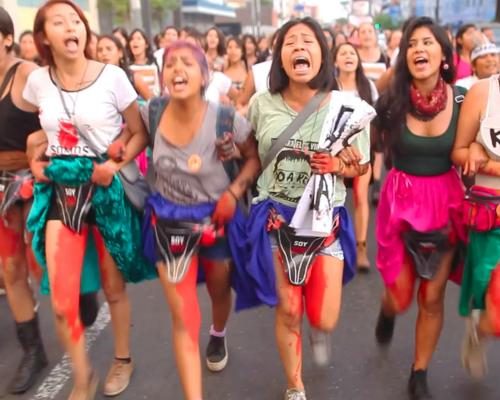
The Inter-American Court of Human Rights (IACHR) has made a historic ruling against the Peruvian state, holding it accountable for the death of Celia Ramos, who died at age 34 in 1997 after undergoing a forced sterilization procedure. This landmark decision, announced on Thursday, marks the first time the court has addressed the abuses associated with Peru's controversial sterilization program, which targeted impoverished, rural, and Indigenous women between 1996 and 2000.
Forced Sterilization Under Coercion
The court found that Celia Ramos was subjected to coercion by health personnel, leading her to undergo a tubal ligation on July 3, 1997. The operation took place in a makeshift facility lacking the necessary medical equipment and medications to assess risks or handle emergencies properly. Ramos, a mother of three, suffered a severe allergic reaction during the procedure and tragically died 19 days later. Originally reported by The Guardian.
In its ruling, the IACHR condemned the state for violating Ramos's rights to life, health, personal integrity, family, access to information, and equality under the law. The court highlighted the state's failure to conduct a thorough investigation into the circumstances surrounding her death and recognized the profound impact her passing had on her family, particularly her daughters.
A Systemic Violation of Rights
The case of Celia Ramos is emblematic of a much broader issue within Peru's forced sterilization program, which is considered one of the most egregious human rights violations committed during the tenure of former president Alberto Fujimori. The campaign reportedly resulted in the sterilization of over 314,000 women and 24,000 men, many of whom were subjected to procedures without valid consent. The program disproportionately affected Indigenous women and those living in poverty, raising serious ethical concerns about the government's reproductive health policies.
The IACHR's ruling explicitly stated that the Peruvian state is "internationally responsible" for the violations stemming from this program, which aimed to meet numerical targets for sterilizations set by the National Reproductive Health and Family Planning Programme. This systematic approach to reproductive health reflected a troubling disregard for the rights and autonomy of vulnerable populations.
Reactions to the Landmark Ruling
Catalina Martínez Coral, associate director at the Center for Reproductive Rights in New York, expressed her support for the ruling, calling it a significant victory for human rights not just in Peru but across the globe. During a press conference in Lima attended by two of Ramos's daughters, Martínez stated, "Yesterday, history was made not only for women in Peru but for the region and the world. The court recognizes, reiterates, and reinforces that sexual and reproductive rights are human rights."
Marisela Monzón Ramos, the eldest daughter of Celia, shared her emotional response to the ruling. "For us, with this sentence, we are reliving what we have carried for so many years. It is both difficult and comforting," she said. Monzón Ramos, who was only ten when her mother passed away, added, "Although we have obtained justice and recognition of the truth, it does not take away from the injustice that Celia Ramos and other women lost their lives."
Ongoing Struggles for Justice and Repair
María Ysabel Cedano, a lawyer for Demus, a Peruvian women's rights organization that initially brought the case to the Inter-American Commission on Human Rights in 2010, emphasized the broader implications of the ruling. "What happened to Celia Ramos is the story of thousands of victims," she remarked. In 2021, the IACHR previously recognized the Peruvian state's responsibility for Ramos's rights violations, recommending reparations and measures to prevent similar abuses in the future.
This landmark ruling serves as a reminder of the need for accountability in cases of human rights violations and the importance of safeguarding the reproductive rights of women. The ruling not only addresses the past injustices faced by Ramos and countless others but also calls for systemic changes to ensure that such abuses are never repeated. Peru's government now faces pressure to comply with the IACHR's recommendations for reparations and preventive measures, as the fight for justice continues.
Originally reported by The Guardian. View original.