
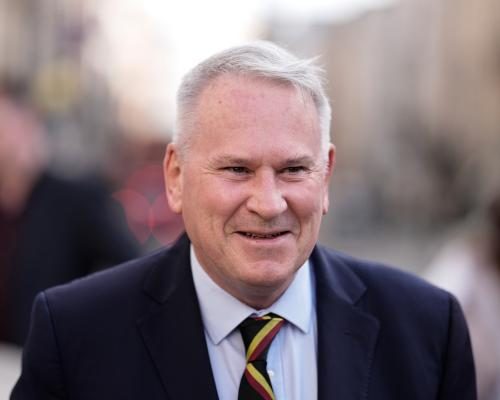
A former British army commander has declared it "inconceivable" that Gerry Adams, the former leader of Sinn Féin, was not involved in the authorization of IRA bombings during the Troubles. Richard Kemp made this assertion while testifying in a high-profile civil claim brought before the High Court on Wednesday. The claim involves three victims of IRA bombings, who are seeking symbolic damages of £1 each and allege Adams's membership in the paramilitary organization.
High Court Proceedings and Testimony
Kemp, who has extensive experience in military intelligence, provided evidence that he claims spans two decades. He stated that there is a wealth of intelligence that supports the assertion of Adams's involvement with the Provisional IRA (PIRA). Specifically, Kemp referenced the bombings at the Old Bailey in 1973, as well as the Docklands and Manchester bombings in 1996, all of which would have required approval from the IRA's army council. "This very high-profile activity simply could not have been carried out without the council's knowledge and approval," Kemp asserted. Originally reported by The Guardian.
His written witness statement emphasized that it is "inconceivable" that Adams would not have played a role in the decision-making process regarding these attacks. Kemp, who served as a commander during several tours in Northern Ireland, has been privy to intelligence that he believes corroborates Adams's involvement. "In my view and based on my knowledge of the PIRA and the intelligence I had access to, that Adams would not have been involved in this process and its ultimate authorisation," he stated.
Cross-Examination Insights
During cross-examination by James Robottom, who represents Adams, Kemp acknowledged a significant point: he did not possess direct evidence of Adams's involvement in these bombings. Robottom pointed out that the intelligence cited by Kemp could very well have originated from Adams's political adversaries, underscoring the potential unreliability of such information. Kemp conceded this, admitting that intelligence can be "wrong and unreliable." However, he maintained that the volume of intelligence over 20 years makes it unlikely that erroneous information would have been consistently reported.
In defending his assertions, Kemp noted, "I saw intelligence and was briefed on intelligence for a period of around 20 years, which made it clear that Mr. Adams was in the IRA." He expressed skepticism about the idea that such a consistent narrative could stem from inaccurate intelligence. Furthermore, he described Sinn Féin and the IRA as "two sides of the same organization," reinforcing his belief in the interconnectedness of the political party and the paramilitary group.
Kemp's Background and Controversial Remarks
Richard Kemp's background as a military commander and his later role in Afghan operations lend weight to his testimony. He completed seven tours in Northern Ireland from 1979 to 2001 and was specifically involved in military intelligence from 1992 to 1994. His extensive experience allows him a unique perspective on the events surrounding the Troubles, but it has also drawn scrutiny. Robottom highlighted that although Kemp had written extensively about various subjects, he had not previously documented any claims regarding Adams's IRA membership.
Further complicating matters, Robottom brought up a controversial tweet from 2017 in which Kemp used the term "taigs," a derogatory term for Catholics. Kemp, who identifies as Catholic himself, stated that he had been called this term by fellow soldiers during his service but did not realize its offensive nature at the time. He has since refrained from using it following public backlash.
Implications of the Case
The ongoing trial not only addresses the specific claims against Adams but also highlights broader questions about the legacy of the Troubles in Northern Ireland. As the legal proceedings unfold, they bring to light the complexities of involvement in paramilitary activities and the intersection of politics and violence in the region's history. The outcome may not only affect the individuals involved but could also influence public perceptions of historical figures like Adams.
As the case continues, both sides are expected to present further evidence and arguments. The implications of these testimonies and the findings of the court could resonate well beyond the immediate context, potentially shaping the narrative surrounding the Troubles and its enduring impact on Northern Irish society.
Originally reported by The Guardian. View original.