
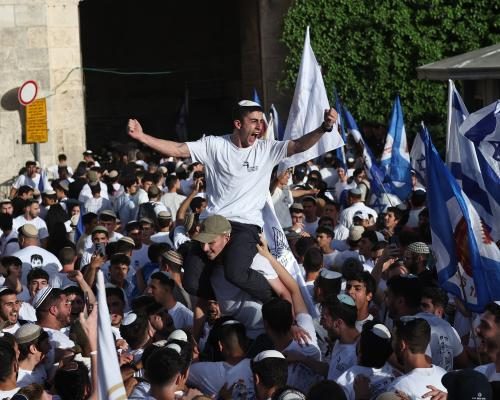
In a provocative display of nationalist fervor, thousands of Israeli demonstrators marched through Jerusalem on Thursday to commemorate the anniversary of the city's capture during the 1967 Six-Day War. The event, marking what is referred to as Jerusalem Day, has increasingly drawn controversy as it showcases escalating tensions between Israelis and Palestinians, particularly in the contested areas of East Jerusalem.
Chants of Incitement at the March
During the state-sponsored rally, participants shouted inflammatory slogans such as "Death to the Arabs," "May your villages burn," and "Gaza is a graveyard." The atmosphere was charged, reflecting a growing trend of radical nationalism in these annual commemorations. The event reached a climax when Itamar Ben-Gvir, Israel's national security minister, publicly unfurled an Israeli flag in front of the al-Aqsa Mosque, a site of profound religious significance for Muslims and Jews alike. Originally reported by The Guardian.
As the march commenced, many Palestinian residents in the Muslim quarter of the Old City opted to close their shops and retreat home, anticipating the tensions that often accompany such events. However, clashes erupted between radical Jewish groups and a few remaining Palestinian residents, resulting in a chaotic scene where both sides hurled chairs at each other before police intervened to restore order.
Government Support and Community Response
The Jerusalem municipality and various government ministries funded the extensive logistics of the march, which saw participants bused in from various locations across Israel and the West Bank settlements. Finance Minister Bezalel Smotrich was also present at the event, underscoring the governmental backing for this display of nationalist pride.
On the other side of the conflict, a counter-demonstration organized by the group Standing Together sought to protect Palestinian residents from potential violence. Suf Patishi, one of the group's organizers, noted that a record 400 volunteers arrived to monitor the situation. "We wanted to really cover each and every corner of the city to make sure that we prevent attacks against Palestinians," Patishi said, acknowledging the risks involved in the endeavor.
While the counter-protesters aimed to shield the Palestinian community, tensions were not solely between the two groups. Some religious Jews, disillusioned by the violent rhetoric of their compatriots, joined the counter-protest. One participant, an ultra-Orthodox man named David, expressed his dismay at the aggressive behavior exhibited by some in his community. "This is a desecration of God's name," he stated. "The only way to remedy that is to do the opposite, a Kiddush Hashem, a sanctification of God's name."
Escalating Tensions at Sacred Sites
The al-Aqsa compound, known to Jews as the Temple Mount, served as the backdrop for fiery displays of nationalism, with Ben-Gvir leading chants declaring "the Temple Mount is in our hands." His actions have raised alarms among Palestinians and their supporters, as they challenge longstanding arrangements that prohibit non-Muslims from praying at the site. This shift has been seen as part of a larger campaign to alter the status quo established nearly six decades ago.
In a statement shared on social media later that evening, Ben-Gvir proclaimed, "59 years after the liberation of Jerusalem, I raised the Israeli flag on the Temple Mount and we can proudly say: We have returned governance to the Temple Mount." This declaration has sparked outrage among many Palestinian and Arab leaders, who view such statements as provocative and inciting further discord.
Implications for Future Relations
The events of Jerusalem Day have broader implications for Israeli-Palestinian relations, particularly as tensions continue to simmer in the region. Many fear that the increasing radicalization of the nationalist marches could lead to further violence and unrest. Activists on both sides of the divide continue to grapple with the consequences of these demonstrations.
As both communities navigate this fraught landscape, many hope for a pathway toward de-escalation and dialogue. However, with national leaders like Ben-Gvir seemingly amplifying the rhetoric of division, the prospect for peace appears increasingly distant. Observers will be closely monitoring the situation in the coming days, especially as the aftermath of this year's Jerusalem Day unfolds.
Originally reported by The Guardian. View original.