
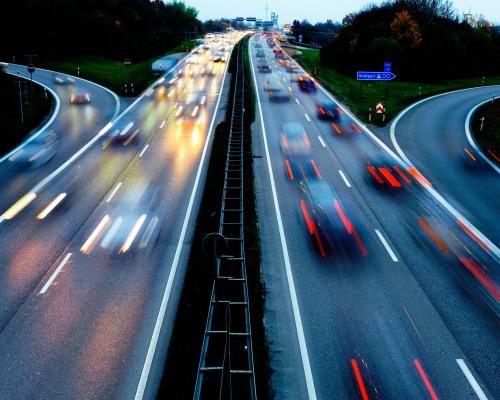
For many German drivers, the autobahn is more than just a highway; it's a symbol of freedom and technological prowess. Lutz Leif Linden, president of the Automobile Club of Germany (AvD), epitomizes this sentiment, having reached a staggering top speed of 400 km/h (249 mph). "It's like an airplane," he remarked, emphasizing the exhilaration associated with driving at such velocities. Despite calls from the International Energy Agency (IEA) for reduced speeds amid an energy crisis, the debate over speed limits continues to evoke deep-seated cultural values in Germany.
Defying Calls for a Speed Limit
Germany stands alone among democracies by not enforcing a universal speed limit on its motorways. While approximately 70% of the autobahn has speed restrictions, the remaining stretches allow drivers the freedom to exceed the 130 km/h (80 mph) guideline. This has led to a longstanding cultural debate about the merits of a blanket speed limit. Public opinion has been divided, with recent surveys indicating a slight majority favoring a speed limit. However, politically, the conversation remains stagnant. Originally reported by The Guardian.
The Christian Social Union (CSU), a conservative party from Bavaria, famously echoed an anti-nuclear campaign slogan in 2020 with the phrase: "Tempolimit? Nein, danke!" This sentiment was further bolstered by figures like Christian Lindner, a former finance minister, who dismissed the speed limit debate as "nonsensical" during the 2022 energy crisis. Such resistance highlights a complex relationship between cultural identity and environmental responsibility.
The Freedom of the Open Road
For many, driving fast is not merely about speed but a profound sense of liberation. Ariane Lattke, president of the German Women's Automobile Club, describes the experience as entering a "flow state" where drivers become intensely focused, navigating their environment with heightened clarity. This connection to driving is part of what keeps many Germans attached to the notion of unrestricted speed.
Opponents of a speed limit argue that the dangers associated with country roads far outweigh those of the autobahn. They advocate for a nuanced approach, suggesting that speed limits should be adjusted based on conditions such as traffic and weather. Proponents of unrestricted driving cite the time saved on long journeys and the intrinsic joy of driving as key reasons to maintain the current system.
Environmental Concerns and Societal Impact
Despite the cultural attachment to speed, researchers and environmental activists are increasingly making the case for a universal speed limit. A 2023 study suggested that implementing a limit of 130 km/h could yield societal benefits of nearly €1 billion annually. Additionally, the German Environment Agency reported that adopting such a speed limit could reduce greenhouse gas emissions from road transport by approximately 2.2%.
While the data suggests significant potential benefits, the political will to enact change seems lacking. A recent study indicated that a stricter limit of 120 km/h could lead to a 36% reduction in motorway fatalities. Public sentiment has shifted slightly in favor of speed limits, with a YouGov poll showing majority support among voters of several major parties, excluding the far-right Alternative für Deutschland and the market-liberal Free Democrats.
A Cultural Legacy in Flux
Germany's love affair with automobiles traces back to the late 1800s, when Carl Benz invented the first gas-powered vehicle. Post-World War II, the country's automotive industry flourished, solidifying cars within the national identity. The reputation of German engineering-synonymous with precision and quality-has been bolstered by the allure of high-speed driving on unrestricted motorways. Visitors often flock to Germany to experience this unique driving culture, only to return to countries where such speeds are unattainable.
Climate activists like Luisa Neubauer from Fridays for Future argue for a shift in mentality, stating, "the absence of [a speed limit] kills people, very plainly." The push for a speed limit reflects a broader struggle between environmental responsibility and cultural heritage. As civil society organizations rally for change, the ongoing debate serves as a litmus test for how Germany will balance personal freedom against societal and environmental needs.
As the conversation continues, the automotive landscape in Germany faces a turning point. The outcome could redefine the relationship between speed, freedom, and responsibility in a nation where cars have long been celebrated as symbols of progress.
Originally reported by The Guardian. View original.