
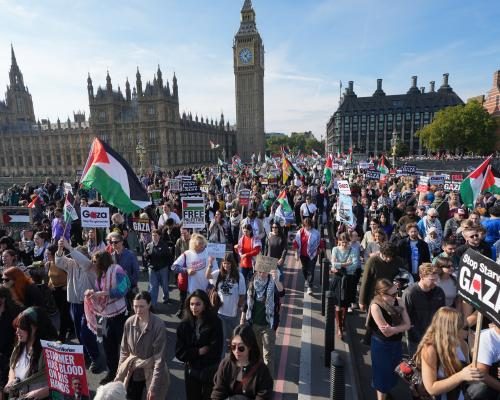
Tomorrow, London will witness the Together Alliance march, a significant gathering aimed at countering the growing influence of far-right ideologies in the UK. A diverse coalition of trade unions, campaign organizations, politicians, and cultural figures will converge to express their opposition to what they describe as a troubling trend of racism and xenophobia. With notable personalities like musicians Brian Eno and Self Esteem, as well as actors Christopher Eccleston and Maxine Peake, the event promises to blend political activism with cultural expression.
March Details and Expected Participation
The Together Alliance march is set to draw thousands of participants as they make their way through central London, culminating in a rally at Trafalgar Square. Organizers have coordinated with the Metropolitan Police to ensure a safe and secure environment for demonstrators, with stewards and volunteer marshals in place to manage the crowd. The political backing for this event is broad and inclusive, featuring representatives from various parties on the progressive left, including Labour figures like Jeremy Corbyn, Zarah Sultana, and Dawn Butler, as well as members from the Green Party, Liberal Democrats, SNP, and Plaid Cymru. Originally reported by The Guardian.
Interestingly, the march will not see participation from any Conservative Party members or the Labour frontbench, highlighting the event's positioning against the current political climate. As Robyn Vinter, a reporter covering the march, notes, "There's always a sense of unpredictability with these events. We don't really know what the turnout will be, but my instinct is that it's going to be very big." The atmosphere at the rally is expected to be vibrant, with speeches and performances from various campaigners and cultural figures, enhancing the sense of community among attendees.
Cultural and Political Significance
The Together Alliance march represents a pivotal moment for progressive politics in the UK, especially against the backdrop of increasing far-right activity. Organizers assert that the rise of anti-migrant sentiments and racist narratives has become more pronounced in recent years, often unjustly blaming migrants and asylum seekers for societal issues. This mobilization is not just an act of protest; it symbolizes a collective assertion of values that advocate for a more tolerant, multicultural society.
Robyn Vinter highlights the importance of this moment, stating, "Broadly, I think people on the progressive left have been a bit politically adrift for a while. During the Corbyn era, it felt like something was building, and since then there hasn't really been a clear movement for those kinds of politics. Now it feels like something might be coalescing again, and this march is part of that." This suggests a potential resurgence of progressive activism, as various communities come together to challenge the normalization of extremist views.
Context of Recent Protests
The call to action represented by the Together Alliance march comes amid a series of protests addressing issues related to the Gaza conflict, which have galvanized many on the left. Vinter notes that these previous demonstrations have helped forge connections among various activist networks that previously did not exist, creating a more robust framework for collective action. The march is not merely a reaction to the far right; it also serves as a broader call for solidarity among diverse communities in the UK.
With a festival-like atmosphere planned for Trafalgar Square, the event aims to attract a wide range of participants, from seasoned activists to those who may be attending a protest for the first time. Vinter emphasizes, "There's also a kind of festival element, with things happening in Trafalgar Square, and that will attract people." The involvement of well-known figures like Paloma Faith and Jessie Ware adds to the event's appeal, suggesting a multifaceted approach to political expression that combines entertainment with advocacy.
Looking Ahead: A Turning Point?
As the Together Alliance march unfolds, many will be watching closely to see if this mobilization signifies a turning point in the progressive response to the far right. The event could either catalyze a resurgence of organized activism or serve as a flashpoint that highlights the challenges facing the left in the current political landscape. Whatever the outcome, the willingness of diverse groups to unite against a common threat speaks volumes about the importance of solidarity in the face of rising extremism.
As the march proceeds, its impact will be felt not just in London but across the UK, potentially reshaping the discourse around immigration, racism, and community solidarity. The hope is that this collective effort will inspire ongoing engagement and activism, reinforcing the message that a united front against divisive ideologies is both necessary and achievable.
Originally reported by The Guardian. View original.