
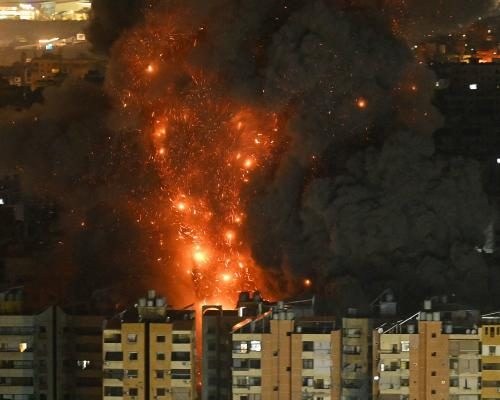
Iran's military escalated its confrontation with Israel on Wednesday, launching missiles aimed at targets in Haifa and other regions. In a post on social media platform X, Israel's military confirmed that its defense systems were actively working to intercept these threats, advising residents to adhere to emergency directives sent to their mobile devices. The Iranian Revolutionary Guards claimed responsibility, stating their intent to continue operations until achieving the enemy's complete surrender.
In a stark display of aggression, Iran's Revolutionary Guards announced the missile strikes targeted not only military bases in Israel but also US interests in the region, including facilities in Iraqi Kurdistan and the US Fifth Fleet naval base in Bahrain. "We will continue our sustained attacks with purpose and power," the Guards declared on their website, Sepah News. This marked a significant escalation in the ongoing conflict, which has seen a surge in military activities from both sides amidst rising geopolitical tensions. Originally reported by The Guardian.
US Military Actions: Targeting Iranian Naval Mines
In a parallel development, the US Central Command announced the destruction of 16 Iranian mine-laying vessels near the Strait of Hormuz, a crucial maritime route for global oil shipments. This operation came days after former President Donald Trump claimed the US had "completely destroyed" ten inactive mine-laying ships, warning Iran that any deployment of mines in the strait would lead to severe military repercussions. He emphasized that the situation must be addressed "IMMEDIATELY" to avoid consequences "at a level never seen before."
US officials had earlier indicated to CBS News that Iran was potentially preparing to lay additional naval mines in the strait, raising alarms about the security of this vital shipping lane. Reports from CNN suggested that a few dozen mines may have already been laid in recent days, further complicating an already tense maritime environment.
Domestic Repression: Iran's Warning to Protesters
As the military situation escalates, Iran's police chief, Ahmad-Reza Radan, issued a stern warning to citizens contemplating protests against the regime. In a televised address, Radan stated that anyone taking to the streets "at the enemy's request" would be treated as an enemy rather than a protester. "We will do to them what we do to enemies," he asserted, emphasizing that security forces are on high alert, "stationed in the streets day and night."
In recent weeks, calls from figures like Donald Trump and Israeli Prime Minister Benjamin Netanyahu urging Iranians to rise against their regime have been met with a fierce crackdown. The US-based Human Rights Activists News Agency reported that at least 7,000 people, including children and non-participants, have been killed in the violent repression of anti-establishment demonstrations since late December.
Casualties Mount Amidst Ongoing Strikes
The conflict has also taken a devastating toll on civilians. Reports from Lebanese health authorities indicate that Israeli airstrikes on the southern town of Qana resulted in five deaths and injuries to five others on Wednesday. The Israeli military confirmed it had initiated an "additional wave" of strikes targeting Iranian command centers in Tehran and Tabriz. This comes amid Iranian accusations against the US and Israel of deliberately targeting civilian areas, with claims that around 10,000 civilian sites, including 8,000 residential homes, have been struck, leading to over 1,300 civilian casualties.
Amir Saeid Iravani, Iran's ambassador to the UN, described the attacks as "horrific crimes," emphasizing the impact on populated residential areas and critical civilian infrastructure. The international community is increasingly concerned about the humanitarian implications of the ongoing conflict, which shows no signs of abating.
As tensions continue to escalate between Iran and Israel, the situation remains fluid and highly unpredictable. Both military actions and domestic responses are likely to shape the future trajectory of this conflict, with broader implications for regional stability and global security.
Originally reported by The Guardian. View original.