
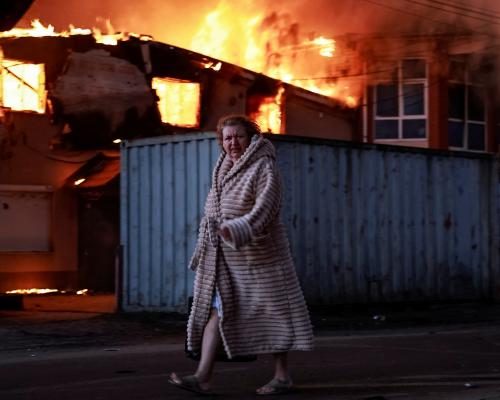
On Saturday, Ukraine endured a devastating wave of missile and drone attacks from Russia, resulting in the deaths of six individuals and significant damage across multiple regions. Ukrainian officials reported that five of the fatalities occurred in the Kyiv region, where President Volodymyr Zelenskyy stated that Russian forces specifically targeted energy infrastructure while also wreaking havoc on residential buildings, schools, and local businesses. The strikes left at least 15 people injured, amplifying the humanitarian crisis as winter approaches.
Casualties and Damage Across Regions
The morning assaults primarily focused on the Kyiv region, where air defenses managed to intercept many of the incoming threats. However, the attacks still caused tragic consequences. "The main target for the Russians was the energy infrastructure of the Kyiv region, but unfortunately, there were also direct hits on and damage to ordinary residential buildings, schools, and civilian businesses," said President Zelenskyy. In addition to the fatalities in Kyiv, a separate Russian strike later in the day hit a residential area in the Zaporizhzhia suburbs, killing one person and injuring 18 others, including two children. Originally reported by The Guardian.
Images captured by Reuters illustrated the aftermath of the attacks, with emergency crews working tirelessly to navigate through piles of debris and twisted metal. The destruction of windows and balconies in the affected areas highlighted the indiscriminate nature of the assault, raising concerns about civilians being caught in the crossfire.
Broader Impact on Energy Infrastructure
This wave of attacks is part of a broader Russian strategy to undermine Ukraine's energy infrastructure as winter approaches. Ukraine's energy ministry confirmed that six regions were left without electricity following the overnight strikes, exacerbating an already dire situation. With Moscow's troops continuing their offensive in eastern Ukraine, the targeting of energy facilities appears designed to weaken the resolve of the Ukrainian populace and government.
As temperatures drop, the question of how to sustain energy supplies becomes increasingly pressing. The Ukrainian government is under immense pressure to bolster air defenses to protect critical infrastructure, as Zelenskyy has reiterated calls for international partners to accelerate the production of air defense weaponry. These stocks have been dwindling as Western nations focus on various military commitments, including recent tensions In The Middle East.
International Reactions and Responses
The attacks prompted swift reactions from neighboring nations. Poland, a NATO member, scrambled jets to monitor its airspace during the assaults, although no violations were reported. Meanwhile, Moldova's foreign ministry condemned what it described as a breach of its airspace by a Russian drone, asserting that such actions threaten regional security and pose risks to its citizens.
In the UK, Prime Minister Keir Starmer is reportedly considering sending thousands of interceptor drones to the Middle East amid rising tensions with Iran. Reports suggest that military officials are exploring whether the "Octopus" interceptor anti-drone system, originally manufactured for Ukraine, can be adapted for British defense against Iranian drone threats.
Escalated Drone Warfare on Both Sides
As the conflict escalates, both sides are increasingly resorting to drone warfare. Throughout Saturday, Russian air defense units reportedly shot down 65 Ukrainian drones targeting Moscow. Mayor Sergei Sobyanin confirmed that the drones were intercepted over an 11-hour period, indicating a coordinated effort to disrupt Russian military operations.
In the Bryansk region, adjacent to the Ukrainian border, Governor Alexander Bogomaz reported that local units successfully downed 128 drones. While he did not provide a specific time frame for this figure, it underscores the intensity of aerial confrontations between the two nations as they vie for control on the battlefield.
The ongoing conflict shows no signs of abating, with both sides ramping up military operations. As Ukraine braces for further assaults amid dwindling energy supplies, the international community's response will be pivotal in shaping the country's immediate future.
With the winter months looming, the urgency for enhanced air defenses and humanitarian assistance becomes increasingly critical. As both sides prepare for continued hostilities, the prospect of peace remains elusive.
Originally reported by The Guardian. View original.