
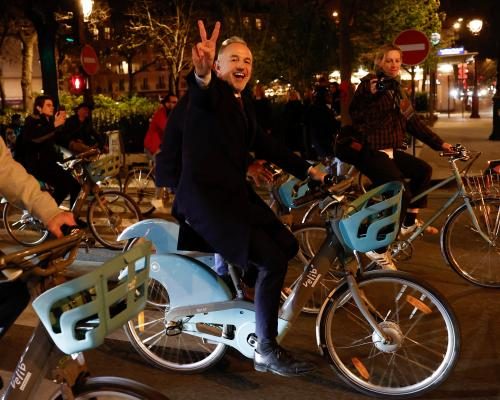
Emmanuel Grégoire, the newly elected mayor of Paris, has embarked on a mission to uphold the city's commitment to environmental initiatives while tackling pressing social issues. Grégoire, a 48-year-old leftist politician, celebrated his victory by biking through the capital, signaling his dedication to expanding bike lanes and reducing car traffic. His promise to maintain a focus on sustainable urban living comes as Paris grapples with critical challenges, including rising homelessness and a scandal involving child safety in schools.
Staying True to Environmental Commitments
Grégoire's election marks a continuation of Paris's pro-cycling policies, which he aims to enhance further. He has pledged to extend the city's network of bike lanes and implement stricter car limits, emphasizing the need to combat air pollution. In a statement, he described himself as being "of an absolute moral rigour," a claim that underscores his intention to maintain a humble approach in office. This commitment also includes reducing the lavish expense accounts of city officials and eliminating the use of chauffeur-driven vehicles. Originally reported by The Guardian.
His victory comes against the backdrop of a significant political landscape shift as he defeated right-wing candidate Rachida Dati, who sought to reclaim the mayoralty after 25 years of leftist leadership. Grégoire's win signifies the Socialists' fifth consecutive term in Paris and is viewed as a critical bellwether leading up to the 2027 presidential elections in France.
Addressing Child Safety Concerns
However, Grégoire steps into office amid a serious crisis surrounding child safety in municipal schools. Recent police investigations into allegations of sexual abuse involving school monitors have led to the suspension of at least 30 staff members. Grégoire has vowed to transform the oversight and recruitment processes for these positions, which are vital for child welfare during school lunchtimes and extracurricular activities.
In his campaign, he revealed that he had been a victim of sexual abuse as a child, which adds a personal dimension to his commitment to reforming the system. He has promised a "big bang" overhaul to address what he termed "major dysfunction" in the existing framework. This includes launching a citizens' consultation process next month to gather input on how best to implement these changes.
Confronting Homelessness and Housing Challenges
Grégoire's agenda also prioritizes tackling homelessness in Paris, where a distressing number of families with children face the threat of sleeping on the streets. He has stated firmly, "No more children should be sleeping rough," a pledge that places additional pressure on his administration to find viable solutions. Charitable organizations are closely monitoring the situation, underscoring the urgency of addressing this humanitarian crisis.
Additionally, the mayor has taken a strong stance against tourist rentals, specifically targeting platforms like Airbnb, which he has deemed "my enemy." He aims to address the housing shortages exacerbated by short-term rentals, which many believe have contributed to rising rents and a lack of affordable housing options.
Environmental Goals Amid Urban Challenges
Environmental issues remain at the forefront of Grégoire's agenda. While air quality in Paris has improved over the last two decades due to various local, national, and European initiatives, challenges remain. The mayor has committed to creating public gardens on ten boulevards and pedestrianizing 1,000 streets to enhance urban green spaces.
Grégoire's vision extends beyond immediate concerns, as he believes Paris can serve as a bastion against what he calls "Trumpian politics" in France, particularly in light of the rising influence of the far-right National Rally (RN). Even though the RN did not capture Marseille, they did increase their representation in local councils, which Grégoire views as a significant threat that must be countered.
As he begins this new chapter, Grégoire's leadership will be closely scrutinized by both supporters and critics. The coming months will be pivotal in determining whether his ideals of transparency, environmental sustainability, and social equity can withstand the pressures of governance in one of Europe's most vibrant cities.
Originally reported by The Guardian. View original.