
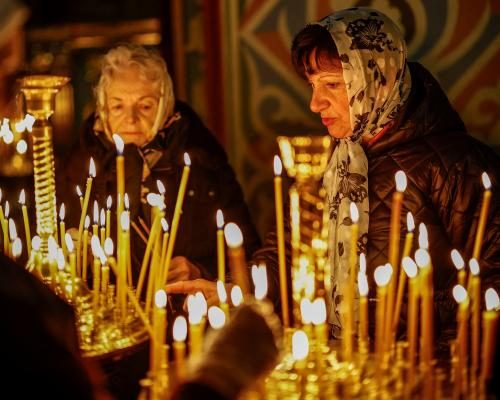
In a stark reminder of the ongoing conflict, both Russia and Ukraine accused each other of breaching a temporary ceasefire that was established to commemorate Orthodox Easter. This truce, which lasted only hours, was marred by allegations of drone attacks and shelling. Ukrainian military officials reported numerous ceasefire violations, while Russian governors claimed their regions were targeted by Ukrainian drones.
Accusations of Violations from Both Sides
On Saturday, the fragile ceasefire designed to mark the Orthodox Easter was quickly overshadowed by mutual accusations of aggression. The governors of Russia's Kursk and Belgorod regions stated that Ukrainian drones had struck various targets, injuring five individuals, including a baby. Meanwhile, Ukraine's military general staff claimed that Russian forces had not adhered to the ceasefire, citing assaults, artillery shelling, and drone strikes as violations. Originally reported by The Guardian.
By the end of the day, the Ukrainian military reported a staggering 469 ceasefire violations, which included 22 enemy assaults, 153 instances of shelling, and 19 strikes from attack drones. Additionally, they documented 275 strikes from FPV drones. Russia's activity was equally intense, with Ukraine noting that the day witnessed 57 airstrikes and the deployment of 3,928 drones, coupled with 2,454 artillery attacks targeting civilian areas and Ukrainian troop positions.
Prisoner Exchange Amidst the Conflict
Despite the escalating tensions and accusations, a significant prisoner exchange took place on Saturday. Both nations reportedly released 175 prisoners of war. Ukrainian President Volodymyr Zelenskyy announced the return of 175 servicemen and seven civilians from Russian captivity, with Andrii Yusov from Ukraine's defense intelligence stating that 163 of those freed had been detained since 2022. "This is a real success, a very significant achievement," Yusov emphasized, noting the challenging conditions faced by the returning prisoners.
Russia's defense ministry confirmed the exchange, stating that they had received 175 servicemen along with seven civilians from the Kursk region. The mediation for the exchange was reportedly facilitated by the United Arab Emirates. This development highlights a glimmer of humanitarian progress amid a backdrop of ongoing violence.
Leaders Address the Nation During Easter
On this Easter Sunday, Russian President Vladimir Putin participated in midnight services at the Christ the Saviour Cathedral in Moscow. In his Easter address, Putin referred to the holiday as the "triumph of love, good and justice," while expressing gratitude to Orthodox Patriarch Kirill for his support of the Russian military campaign, which is officially termed a "special military operation." He praised the assistance provided to military personnel and veterans involved in the conflict.
In contrast, President Zelenskyy, in his nightly video address, refrained from discussing the ceasefire violations. He reiterated Ukraine's commitment to the truce, expressing hope that it could be extended. "It would be right for the ceasefire to continue beyond this," he stated, suggesting that Ukraine had proposed an extension to Russia. Zelenskyy emphasized that if Russia opted for war over peace, it would reveal its true intentions to the world, particularly the United States.
Political Implications for Ukraine and Russia
The ongoing conflict continues to have significant geopolitical ramifications, especially as Hungary prepares for elections that could potentially alter its relationship with Ukraine. Prime Minister Viktor Orbán's potential defeat could lead to the unblocking of a €90 billion (approximately US$105 billion) European Union loan critical for Ukraine's war effort, while simultaneously diminishing Russia's influence within the EU.
As the conflict persists, the situation in Ukraine remains precarious. The fragile nature of the ceasefire and the subsequent violations underscore the complexities of achieving lasting peace. The prisoner exchange offers a moment of relief for the families of those affected but also serves as a stark reminder of the ongoing humanitarian crisis stemming from the war.
Moving forward, the international community will be closely monitoring the actions of both Russia and Ukraine as they navigate this turbulent period. The hope for a more permanent ceasefire remains, but with both sides entrenched in their positions, achieving lasting peace may prove to be a daunting challenge.
Originally reported by The Guardian. View original.