
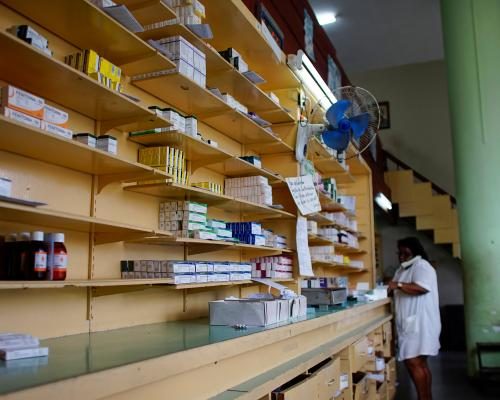
As Cuba grapples with an escalating mental health crisis exacerbated by economic and social turmoil, many residents are increasingly turning to prescription medications to cope. Cris Sánchez, who returned to Havana in 2018 to care for his ailing parents, reflects the struggles of countless Cubans navigating life under a U.S. oil blockade and years of economic decline.
Growing Dependence on Medication
Sánchez, who initially left Cuba for London in 1994, found himself resorting to prescription drugs to manage the stress of daily life. "Just to take the edge off things," he admits, highlighting a troubling trend across the island. Reports indicate that many families now include at least one member seeking antidepressants, mood stabilizers, or stimulants from the black market. The Cuban government has remained tight-lipped about official statistics, perhaps to maintain its narrative of resilience among the populace. Originally reported by The Guardian.
Healthcare professionals across Cuba, from the capital to the provinces, describe a dramatic increase in mental health issues. A psychology professor in Santiago de Cuba, who preferred to remain anonymous, stated, "We are experiencing an economic situation that has repercussions whether we like it or not." Daily challenges such as power outages, food shortages, and unreliable transportation contribute to heightened stress and anxiety, leading many to seek relief through medication.
Impact of the U.S. Oil Blockade
The U.S.-imposed oil blockade has intensified suffering on the island. Following a January 3, 2023, executive order from then-President Donald Trump imposing tariffs on countries supplying Cuba with fuel, the situation worsened. Blackouts have become more frequent, crippling daily life further. Most state offices are closed, leaving many without employment and forcing them to focus solely on survival.
President Miguel Díaz-Canel recently acknowledged the dire circumstances, declaring, "We are in difficult times, but also a defining time, and here is a people who prefer to die standing than living on their knees." Yet, for many Cubans, just getting out of bed has become a daunting task amid the pervasive uncertainty.
Historical Context of Drug Use
The current reliance on prescription medication isn't a new phenomenon in Cuba. It traces back to the early 1990s during the "Special Period," when the fall of the Soviet Union led to severe economic hardship. At that time, the government encouraged the production of psychoactive drugs, knowing well the dependence that would ensue. As one caregiver put it, authorities seemed content to keep the population calm through medication.
In the years leading up to the current crisis, Cuba's economy had already contracted by 17% since 2019, and the state pharmacy system is now nearly empty. With the government struggling financially, many Cubans are now turning to the black market for psychotropic medications. "There has been an increase in the number of people consuming psychotropic medications without a prescription," the psychology professor noted, emphasizing the urgency of the situation.
The Rise of the Black Market
The black market for medications has flourished, often delivering drugs within hours. A simple phone call can yield packages with labels in Cyrillic, Indian, or Chinese scripts, indicating the international routes these drugs take. But the cost is significant, further straining household finances in a country where many struggle to afford basic necessities.
Individuals like Cris Sánchez reflect the broader sentiment of despair. After returning to Cuba with the intent of caring for his mother, who suffers from Alzheimer's, he found himself inadvertently falling into a pattern of regular medication use. "I don't regret coming back to look after my parents, but there's very little I love about being in Cuba," he confessed. His experience underscores a painful irony: while seeking to support his family, he has faced the same struggles that many Cubans endure.
The Cuban people once held hope for a better future, particularly during the thaw in relations with the U.S. in 2016. However, renewed hostilities and the global pandemic have dashed such hopes, leaving many in a cycle of despair. As mental health issues rise, the reliance on medication as a coping mechanism continues to grow, painting a stark picture of life in contemporary Cuba.
Originally reported by The Guardian. View original.