
As tensions escalate, Iran's government appears to be adopting a more covert approach to its terror campaigns by outsourcing operations to criminal gangs and hired mercenaries. This strategy not only provides plausible deniability but also leverages the violent expertise of these groups, creating a chilling landscape for dissidents and vulnerable communities abroad.
Return of the Old Guard
Last March, Mohsen Rafighdoost, a former minister of the Islamic Revolutionary Guard Corps (IRGC), was filmed reflecting on his past orchestrations of assassinations across Europe. With a casual demeanor, he recalled the killings of several notable figures, including Prince Shahriar Shafiq, the last Shah of Iran's nephew, who was shot in Paris in 1979, and Shapour Bakhtiar, the final prime minister under the Shah, murdered in 1991. Rafighdoost mentioned that these operations were often executed by the Basque separatist group, showcasing a long history of Iran's reliance on external actors to carry out its dirty work. Originally reported by The Guardian.
His candid remarks have raised eyebrows, especially considering the IRGC later denied his claims, attributing them to confusion post-brain surgery. However, these revelations highlight a troubling trend of state-sponsored violence that has persisted for decades.
Recent Attacks and Rising Concerns
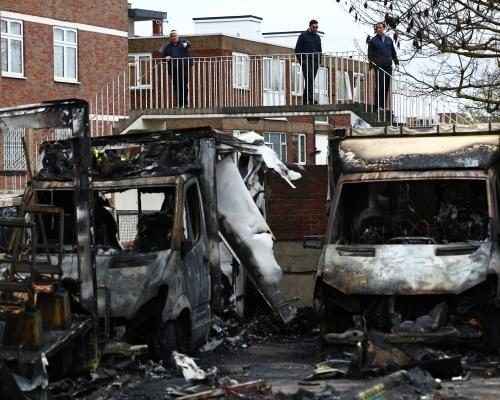
The recent firebombing of four ambulances belonging to a Jewish charity in Golders Green, north London, has renewed scrutiny on Iran's tactics. While two British nationals were arrested in connection with the attack, police have yet to confirm links to any state actor, including the Iranian regime. Nevertheless, experts suggest that the method of operation bears the hallmarks of Iranian involvement.
Kevan Jones, chair of the UK intelligence and security committee, noted a disturbing trend where Iran increasingly employs hired hands for various criminal activities. He stated, "They are doing this through organised crime and through individuals by paying them, and that's what it is more likely to be here - if it is indeed linked to Iran." This shift raises alarms about the potential for violence against dissidents and minority communities in the UK.
The Shift to Criminal Proxies
In recent years, Iranian activities in the UK have surged. MI5's director general, Ken McCallum, revealed that over the past year, the agency tracked more than 20 potential Iran-backed plots. Evidence presented to the intelligence committee indicated that Iran has been using sophisticated European criminal gangs to conduct operations. The former home secretary, Suella Braverman, described these groups as "very elusive, quite sophisticated, very brutal."
Reports have also surfaced of Iranian criminal syndicates, including those linked to drug trafficking, engaging in mercenary activities across Europe. In the United States, court records suggest that biker gangs like the Hells Angels have been utilized by Iran for carrying out violent tasks. This partnership with criminal organizations illustrates a marked shift in Iran's approach to international operations.
Making Use of a Criminal Gig Economy
Matthew Levitt, a former deputy assistant secretary for intelligence at the U.S. Department of the Treasury, explained that Iran's tactic of using criminal gangs isn't new. However, since a failed attack by an Iranian diplomat in 2018, Iran has increasingly recognized the benefits of plausible deniability through these proxies. "With criminal proxies, as long as you are willing to pay the price, which is not so much money, you are also getting someone who is not squeamish about doing things that involve violence because that is what they do," Levitt noted.
The Golders Green incident, if linked to Iran, would likely reflect this new strategy, where attacks may not be orchestrated by a formal terror group but rather a disorganized network of criminals operating within a "gig economy." This represents an alarming evolution in the nature of threats faced by communities in the UK.
Why is the UK becoming a focal point for these operations? Analysts suggest that the presence of a significant Jewish community and the UK's alliance with the United States make it an attractive target for Iranian aggression. As Levitt observed, "The Iranians are not intimidated by law enforcement and they will go where the targets are and where they have the resources."
In summary, Iran's strategy of outsourcing its terror campaigns to criminal organizations signifies a dangerous evolution in its approach to international relations and domestic dissent. The implications for security, particularly in the UK, are profound, as law enforcement grapples with the complexities of combating such decentralized and covert threats.
Originally reported by The Guardian. View original.