
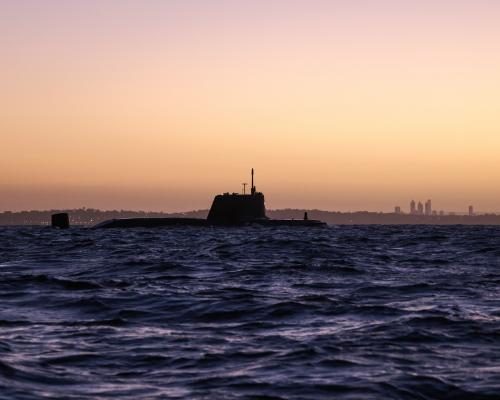
Australia's aspirations for a cutting-edge nuclear submarine fleet are fraught with complications, particularly regarding its reliance on the UK's submarine-building capabilities. The recent surfacing of the HMS Anson off Perth was initially celebrated as a milestone in the Aukus agreement, yet it highlighted the precarious state of Britain's own naval resources.
HMS Anson: A Mixed Symbol of Progress
The arrival of HMS Anson, a British nuclear submarine, off the coast of Perth last month was touted as a significant step forward for Australia in its journey towards acquiring a fleet of nuclear submarines. Supporters of the Aukus agreement, which includes the UK, the US, and Australia, viewed the Anson's presence as a demonstration of political commitment. Former US President Donald Trump had referred to the deal as being "full steam ahead." However, the reality surrounding the Anson's deployment is less rosy. Originally reported by The Guardian.
Currently, the Anson is the only operational attack submarine in the UK fleet, which is supposed to have six. The remaining submarines are either undergoing maintenance, undergoing refits, or have been stripped for parts to keep others operational. This raises questions about the viability of the UK's submarine program, with some analysts suggesting that local priorities might deserve more attention than foreign engagements.
Aukus Agreement: Promises vs. Reality
The Aukus pact is under intense scrutiny as Australia grapples with the expectations set forth. While the US has committed to providing three Virginia-class submarines to Australia starting in the early 2030s, the Congressional Research Office has indicated that this may not materialize as anticipated. One alternative discussed is the rotation of US submarines through Australian ports, but this is intended as a temporary measure.
For Australia, the crux of its nuclear submarine capability hinges on the UK's ability to design and construct the new SSN Aukus class submarines. The timeline for these submarines is ambitious, with the first expected to enter service for the Royal Navy in the late 2030s, while Australia will see its first vessel in the early 2040s. This timeline has been described as "demanding," raising concerns about the feasibility of such ambitious plans.
UK's Nuclear Submarine Industry in Crisis
Critics within the UK have expressed alarm over the state of the nation's nuclear submarine program. Rear Admiral Philip Mathias, a former director of nuclear policy at the Ministry of Defence, has pointed to "gross mismanagement" and a "catastrophic failure of succession and leadership planning" as reasons for the deterioration of the UK's capabilities. Even inquiries by the House of Commons have acknowledged the shame surrounding the treatment of the nuclear submarine industry, which has left Britain struggling to maintain its status.
Currently, the UK is focused on completing the Astute class submarines, including the recently commissioned Anson. Additionally, the construction of four Dreadnought class nuclear ballistic submarines, essential for the UK's nuclear deterrent, is underway at BAE Systems Submarines in Barrow-in-Furness. However, these projects take precedence over the Aukus agreement, placing Australia in a vulnerable position.
The Implications for Australia
Australia finds itself in a challenging predicament. With the potential unavailability of US Virginia-class submarines and delays in the construction of the Aukus class by the UK, the country risks being left without a viable nuclear submarine fleet. The aging Collins class submarines have already exceeded their intended operational lifespan, making Australia increasingly reliant on foreign support.
As Australia invests heavily-committing A$1.6 billion of a total A$4.7 billion to the US and A$452 million of A$4.6 billion to the UK-the nation faces the reality of being at the back of the queue for submarine development. This situation underscores the long-term neglect of the UK's shipbuilding capabilities, which cannot be rectified through mere political declarations.
Looking forward, the UK government has claimed it can produce Aukus submarines at a rate of one every 18 months, but given the pressing demands of other projects, skepticism remains. The success of the Aukus agreement will ultimately depend on the ability of both the US and UK to deliver on their promises, a situation that currently appears uncertain.
Originally reported by The Guardian. View original.