
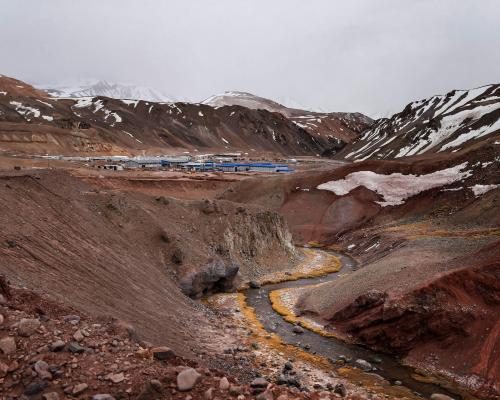
In a controversial move, Argentina's government has effectively dismantled its landmark glacier protection law, raising alarm among environmentalists and local communities regarding the future of drinking water supplies. This reform, championed by President Javier Milei, comes amid escalating tensions over water rights and mining interests, particularly in regions reliant on glaciers for freshwater.
Impact of Mining on Local Water Sources
Saul Zeballos, a resident of Jáchal, Argentina, has witnessed firsthand the adverse effects of mining on his hometown's water sources. Nestled in the foothills of the Andes, Jáchal relies on the river of the same name for drinking water. However, since the Veladero gold and silver mine began operations in 2005 in San Juan province, local water quality has been jeopardized. A significant cyanide spill in 2015 raised concerns about the contamination of downstream waterways in the Jáchal basin. While subsequent studies indicated that cyanide levels remained within safe limits, the shadow of mining operations lingers over the community. Originally reported by The Guardian.
In 2016 and 2017, further spills from Veladero were reported, contributing to ongoing investigations. Environmental advocates, including Zeballos, who has transitioned from accountant to activist at the age of 51, argue that the mine, operated by Barrick Gold Corporation and Shandong Gold, is functioning in violation of Argentina's Ley de Glaciares, or glacier law. This law was designed to safeguard glaciers, crucial for both ecosystems and drinking water supplies.
New Legislation and Its Repercussions
On Wednesday, the Argentine government approved a reform to the glacier law, which has been a cornerstone of environmental protection since its enactment in 2010. The new legislation, passed by a vote of 137 to 111 with three abstentions, empowers provincial authorities to determine which glaciers remain protected and which can be opened for mining activities based on their perceived importance for water resources.
President Milei contends that the reform will eliminate "ideological distortions and artificial obstacles that impede progress." He criticized the original law as "confusing" and asserted that it prohibited mining even in areas devoid of glaciers. However, opponents of the reform argue that it undermines a critical environmental standard that has been vital for preserving Argentina's natural resources. Andrés Nápoli, an environmental lawyer and executive director of the Foundation of Environment and Natural Resources (Farn), emphasized the stakes involved: "What is at stake is the protection of key water reserves in Argentina."
Public Outcry and Environmental Concerns
The modifications to the glacier law have ignited protests across the country. Activists from Greenpeace were detained during a demonstration at the National Congress, showcasing the public's discontent. Many fear that the changes will lead to the degradation of vital water sources for approximately 7 million Argentines, who rely on glaciers for their drinking water.
As glaciers continue to shrink-scientists report a 17% reduction in the last decade in Argentina's northwest-the urgency of protecting these water reserves grows. The newly approved law raises significant questions about the balance between economic development and environmental preservation. Critics argue that the premise of sacrificing glaciers for the sake of transitioning to cleaner energy is fundamentally flawed.
Mining Industry's Push for Deregulation
Mining companies have long viewed Argentina's glacier law as an obstacle to expanding their operations. The new reforms have garnered support from provincial governors who argue that the existing law is overly broad and hampers economic investment in areas that lack critical water resources. Luis Lucero, Argentina's mining secretary, dismissed the notion that mining and environmental protection are inherently opposed, stating, "To pit mining against the environment is an error that has no relation to reality."
The Milei administration is actively courting investment in the mining sector, offering tax incentives and other benefits to attract major players. For instance, Vicuña Corp, a joint venture between Australia's BHP and Canada's Lundin Mining, recently announced an ambitious investment of $18 billion in gold, copper, and silver projects in San Juan province.
The future of Argentina's glaciers hangs in the balance as the government pushes forward with its pro-mining agenda. While the country aims to position itself as a leading exporter of critical minerals, the implications for local communities and ecosystems could be profound.
Originally reported by The Guardian. View original.