
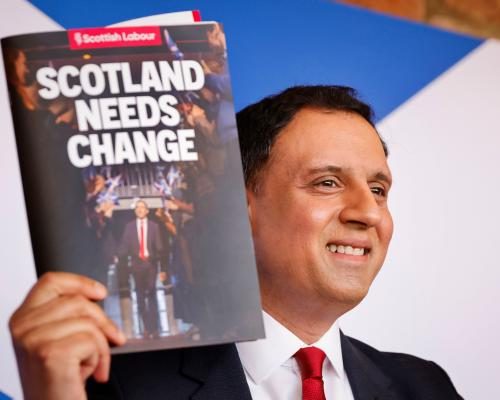
Scottish Labour leader Anas Sarwar has made a direct appeal to voters, urging them to grant his party five years to rectify what he describes as the "mess" left by the Scottish National Party (SNP). As Labour faces a significant decline in public support, Sarwar's call comes as part of a broader strategy to restore confidence ahead of the upcoming Holyrood election on May 7, 2024.
Labour's Vision for a Better Scotland
During a recent rally in Edinburgh, Sarwar outlined key components of Labour's ambitious manifesto. He emphasized the party's commitment to increasing the availability of affordable housing, proposing the construction of 52,300 new homes. Additionally, he promised tax cuts aimed at easing the financial burden on middle-income families and reducing business rates to stimulate economic growth. Sarwar stated, "I am asking you to give me five; five years to fix the SNP's mess." He criticized the current SNP government, led by John Swinney, for being "tired, full of excuses and out of ideas," a sentiment he believes voters will resonate with. Originally reported by The Guardian.
In light of recent polls indicating Labour's position has slipped to third or even fourth place behind the SNP, Reform UK, and the Scottish Greens, Sarwar's appeal seeks to reposition Labour as the viable alternative for disenchanted voters. He asserted that the party still has time to regain traction before voters head to the polls.
Specific Policy Proposals
Among the policies Sarwar unveiled, a £3,000 childcare tax break aims to alleviate pressures on families, while plans to lift property taxes for first-time buyers align with Labour's goal of promoting homeownership. Furthermore, the proposal to hire an additional 2,000 teachers is intended to enhance literacy and numeracy across Scotland. As Sarwar noted, "The people who created the mess cannot be the ones to fix it," underscoring the need for new leadership and fresh ideas.
Labour's shift in policy includes a notable pivot towards centrist economic strategies. Previously advocating for a progressive income tax regime, the party now aims to reduce tax rates, particularly for middle earners facing high marginal rates. Sarwar indicated that these changes would be implemented when Scotland's finances permit, reflecting a pragmatic approach to fiscal policy.
Streamlining Public Services
Further proposals from Labour involve reducing the number of quangos by a third and streamlining the National Health Service (NHS) bureaucracy. Sarwar's manifesto also emphasizes the establishment of a new Scottish Treasury unit dedicated to cutting public sector waste, alongside a board of trade to prioritize private sector investment. The party intends to break from the SNP's long-standing ban on new nuclear power stations, proposing new facilities as part of its energy strategy, which has gained positive feedback from business groups like CBI Scotland.
Labour's approach aims to free up hundreds of millions of pounds through cuts in some public services, redirecting these funds towards improving schools, hospitals, and local services. The Institute for Fiscal Studies has cautiously endorsed Labour's manifesto, highlighting its "relatively restrained" proposals and the absence of costly, unfunded commitments. David Phillips, the head of devolved and local government finances at the think tank, remarked that the lack of significant unfunded new proposals is a prudent move given the current fiscal situation.
Challenges Ahead for Labour
Despite Sarwar's optimism, the path ahead remains fraught with challenges. The anti-independence campaign group, Scotland in Union, has published a tactical voting guide urging voters from Labour, Conservative, and Liberal Democrat backgrounds to back whichever party is best positioned to block SNP candidates in their constituencies. This move highlights the competitive nature of the political landscape as Labour attempts to reclaim its position on the center-left.
Angus Robertson, the SNP's campaign director, dismissed Sarwar's pledges, asserting, "We've heard it all before from Labour - but we know exactly what we get with them. Broken promise after broken promise." The SNP's criticism underscores the uphill battle Labour faces in convincing voters of its commitment to change.
As the election date approaches, Sarwar's Labour party is determined to position itself as the beacon of hope for a disillusioned electorate. By focusing on practical solutions and a vision for a stronger economy, Labour hopes to reverse its fortunes and regain the trust of the Scottish people.
Originally reported by The Guardian. View original.