
In a significant shift affecting healthcare access, Novlyn Ebanks, a 73-year-old Jamaican, has found herself unable to schedule vital eye surgery at St Joseph's Hospital in Kingston. This follows Jamaica's unilateral decision in March to terminate a nearly 30-year agreement with Cuba that provided medical personnel, leading to a severe staffing shortage at the hospital's ophthalmology center. Many Cuban doctors had already departed, leaving patients like Ebanks scrambling to find alternative, often costly, options.
Healthcare Access Erodes for Jamaica's Most Vulnerable
Ebanks was set to undergo the surgery free of charge, but now faces the daunting prospect of private treatment that could cost her 350,000 Jamaican dollars, approximately £1,600. "I'm really disturbed and concerned," she expressed, highlighting the fear and uncertainty many feel as the healthcare landscape shifts dramatically. The recent surge of countries across Latin America and the Caribbean ending their medical agreements with Cuba places an additional strain on already vulnerable populations. Originally reported by The Guardian.
The U.S. government has exerted pressure on these nations, claiming the medical agreements amount to "forced labor" for Cuban doctors, as the Cuban government retains a substantial portion of their salaries. However, Cuba refutes these allegations, arguing that the U.S. is using them as a pretext to undermine its economy and force regime change. The consequences of this political maneuvering are stark, particularly for the poorest communities that depend on the healthcare services traditionally provided by Cuban medical professionals.
The Ripple Effect of U.S. Policy on Regional Health Services
As the U.S. continues its campaign against Cuba's medical program, numerous countries, including Jamaica, Guatemala, Guyana, Honduras, Antigua and Barbuda, and Paraguay, have either immediately or gradually dismantled their healthcare partnerships with Cuba. Damion Gordon, a lecturer at the University of the West Indies, noted, "We did not get sufficient time to come up with or put in place a contingency. It just happened suddenly, which created a sudden gap.. and a crisis for those communities." This abrupt transition has left many patients unable to access the care they need.
John Kirk, a professor emeritus at Dalhousie University in Canada, pointed out that rural populations, typically the hardest hit by healthcare shortages, will suffer the most from this withdrawal. The Cuban medical program, which began in 1960, has deployed over 600,000 healthcare professionals to more than 160 countries, focusing on underserved areas. With the U.S. threatening visa cancellations for officials connected to the program, the future of medical collaboration in the region remains uncertain.
Cuban Medical Workforce: A Source of Revenue and Controversy
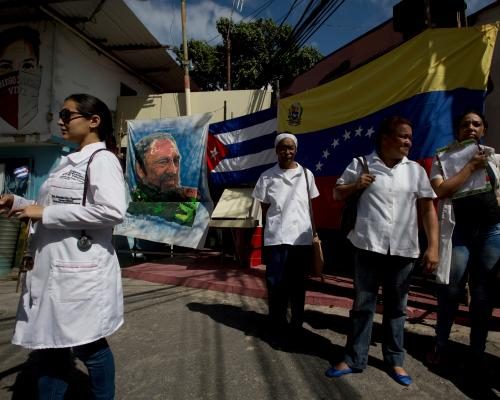
The Cuban medical program, especially prominent in Venezuela, has generated significant revenue for the island, estimated at about $5 billion annually. This funding is crucial for sustaining Cuba's free healthcare and education systems. While the U.S. accuses Cuba of engaging in modern slavery through its retention of doctors' salaries-reportedly around 80%-many Cuban healthcare workers defend their participation in the program as a means of financial stability.
Yanili Magdariaga Menéndez, a Cuban doctor who worked abroad, shared her experience, stating, "I joined the program because I realized that, in Cuba, I couldn't give my family what I wanted to." Despite acknowledging that the salary retention isn't entirely fair, she emphasized the program's role in supporting Cuba's social services. However, the departure of Cuban doctors from countries like Venezuela, spurred by U.S. sanctions, threatens to undermine the healthcare systems in those regions.
The Future of Medical Collaborations in Latin America
While several Caribbean and Central American nations have succumbed to U.S. pressure, Mexico stands as a notable exception. President Claudia Sheinbaum has expressed strong support for the Cuban medical personnel, recognizing their invaluable assistance in rural areas with limited healthcare access. As Kirk noted, the current geopolitical climate poses a serious threat to healthcare in underserved regions, making it imperative for nations to reconsider their partnerships carefully.
As more countries reassess their agreements with Cuba amid U.S. pressures, the implications for public health could be dire. The loss of Cuban doctors, who fill critical gaps in healthcare systems, particularly in rural and marginalized communities, raises urgent questions about who will bear the brunt of these political maneuvers. With the healthcare crisis deepening, communities like those in Jamaica face an uncertain future.
Originally reported by The Guardian. View original.