
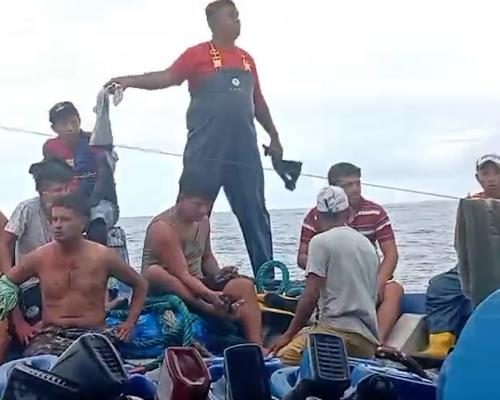
In a distressing account of survival, a group of Ecuadorian fishers have recounted their terrifying experience of a drone strike by a US patrol vessel while working off the coast of the Galápagos Islands. The incident, which occurred on March 26, left several crew members injured and raised serious questions about the legality of US military actions in international waters.
Explosion and Chaos at Sea
As the sun began to set over the Pacific Ocean, the crew of the fishing boat Don Maca was preparing to end their long day of catching swordfish and albacore. Jhonny Sebastián Palacios, a crew member, described the atmosphere as calm and routine until it was shattered by a sudden explosion. "There was a sudden crash - boom! It came from a drone," he told the Guardian. The blast, which tore through the boat, shattered glass and injured several crew members. Palacios recounted his harrowing experience, saying, "I ran upstairs and saw the boat destroyed.. The whole ship was stripped bare." Originally reported by The Guardian.
This attack on the Don Maca is part of a broader military campaign against alleged drug trafficking in the region. Since the campaign began in September, at least 178 individuals have been reported killed in US military airstrikes across the Caribbean and Pacific, raising alarms about the potential targeting of civilians. Legal experts and human rights organizations have voiced their concerns, asserting that these actions may constitute extrajudicial killings, especially given the lack of evidence linking the attacked vessels to drug activities.
From Fishermen to Hostages
On the fateful day of the attack, the Don Maca was approximately 200 miles northwest of the Galápagos Islands when it was struck. The crew, consisting of 20 members from coastal communities such as San Mateo and Jaramijó, had seen a US military vessel earlier that day but thought nothing of it. Palacios noted, "They did not signal to us, so we just carried on fishing." However, the first drone strike hit the bow of their boat, and a second strike rendered their communication systems inoperable.
Following the explosions, the crew was in a state of panic, fearing another drone strike. Eyewitness accounts reveal a scene of chaos, with crew members huddled at the stern, desperately waving a white shirt to signal for help. Video footage captured the immediate aftermath: one man, bloodied from shrapnel wounds, struggled to regain composure amid the alarm bells. Shortly thereafter, a US patrol boat approached and ordered the crew to board.
Harsh Treatment and Unanswered Questions
Once aboard the US patrol vessel, the Ecuadorian fishers faced alarming treatment. Palacios recounted how they were threatened at gunpoint, handcuffed, and had hoods placed over their heads. "From the moment we arrived on the US patrol boat, they were pointing guns at us, shouting, 'Get in, get in,'" he said. The crew's phones were confiscated, and much of their photographic evidence was erased. Palacios observed as US personnel boarded the Don Maca and looted their supplies, stealing food and beer before setting the vessel ablaze.
The crew was held for several hours before being transferred to a Salvadoran patrol boat. After days at sea, they arrived in El Salvador where they were questioned at a military base before being handed over to immigration authorities. Eventually, they were taken to a United Nations shelter, while their families back home conducted desperate searches for information. Upon their return to Ecuador, the crew was released without any charges.
Legal Implications and Public Outcry
Legal representatives for the crew argue that their treatment constitutes serious violations of international law. The Pentagon and White House have yet to respond to inquiries about the incident, while the US Southern Command has stated it has "no information to provide regarding any US government personnel involvement" in the event. Palacios emphasized the cruel nature of their ordeal, saying, "Thank God we're alive! What they did to us was very cruel." He also noted that the Salvadoran authorities acknowledged the mishandling of the situation.
This incident has sparked outrage and raised critical questions about the extent of US military operations in international waters and their impact on civilian lives. As the international community watches closely, the voices of those like Palacios serve as harrowing reminders of the human cost of military actions purportedly aimed at combating drug trafficking. The crew's experiences underscore the urgent need for accountability and transparency in military operations that affect innocent lives.
Originally reported by The Guardian. View original.