
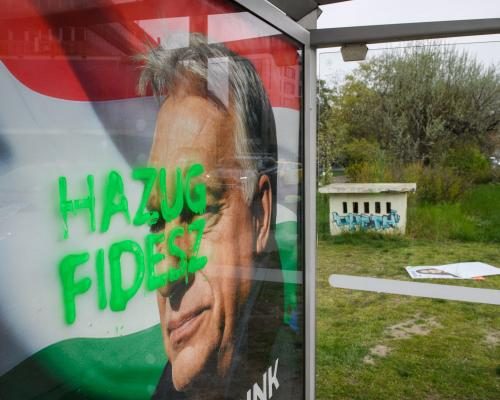
In a stunning electoral upset, Hungary's Prime Minister Viktor Orbán, a prominent figure in Europe's far-right movement, was defeated after 16 years in power. His center-right challenger, Péter Magyar, secured a two-thirds majority in the parliamentary elections held on Sunday, signaling a potential shift in political dynamics. Yet, analysts caution that this result may not herald the end of far-right politics across Europe.
A Symbolic Blow to Authoritarianism
Poland's Donald Tusk described Orbán's loss as a sign that the global political landscape could move away from authoritarian regimes. Similarly, Germany's Chancellor Friedrich Merz interpreted the election results as a clear message against right-wing populism, asserting that "the pendulum is swinging back." However, experts like Sarah de Lange from Leiden University warn against overestimating the implications of this defeat. While Orbán's fall is undoubtedly symbolic-marking the end of Europe's longest-serving far-right leader-de Lange emphasized that it does not signify a complete rejection of his illiberal model of governance. Originally reported by The Guardian.
The underlying motivations for Hungary's voters were largely practical. Citizens expressed their discontent with high prices, stagnant wages, and a lack of effective public services, particularly in education and healthcare. Frustration with corruption benefiting Orbán's inner circle also played a crucial role in the election outcome. Thus, while the defeat may momentarily dampen the spirits of the far-right, it is not a definitive blow to their ideology.
The Future of Conservative Think Tanks
As Magyar prepares to assume office, he has promised to limit funding to influential conservative think tanks like the Mathias Corvinus Collegium (MCC) and the Danube Institute, which Orbán had generously endowed. These institutions have been pivotal in shaping right-wing narratives across Europe, with the MCC being described as the best-funded think tank on the continent. Gabriela Greilinger, a doctoral researcher at the University of Georgia, noted that the MCC actively seeks to influence European policy and funds high-profile conservative researchers internationally.
If Magyar follows through on his pledge to curtail this financial support, it could significantly impact the far-right's strategy and outreach. The MCC's extensive connections, including ties to British right-wing figures like Matt Goodwin, underline its influential role in shaping conservative discourse. As the new government takes shape, the extent to which these networks are disrupted could determine the future trajectory of far-right politics in Hungary and beyond.
Tensions Among European Nationalists
The election results may also spark tensions within Europe's far-right factions regarding their leadership. Analysts suggest that the defeat of Orbán could lead to a power struggle over who will emerge as the next figurehead for nationalists. Potential candidates range from mainstream figures like Italy's Giorgia Meloni to more confrontational leaders in the style of Orbán, raising questions about the future unity of far-right movements across the continent.
Despite the symbolic significance of Orbán's defeat, Stijn van Kessel from Queen Mary University cautioned that it does not provide a clear roadmap for defeating far-right parties in other nations. The dynamics of national politics are complex, and it remains challenging to draw direct lines between electoral outcomes in different countries.
Mixed Reactions from Far-Right Leaders
Responses from far-right leaders across Europe have varied in the wake of Orbán's loss. Some, like Belgium's Defense Minister Theo Francken and members of Alternative für Deutschland (AfD), attributed the defeat to Orbán's close ties with Donald Trump, whose popularity has waned in Europe. Others within the AfD argue that it was the corruption allegations and economic mismanagement under Orbán that ultimately led to his downfall. Meanwhile, Italian leader Matteo Salvini has suggested that the European Union's freezing of funds contributed to the electoral setback.
In contrast, some far-right figures expressed dismay at Orbán's loss, indicating he would be missed by those who champion "freedom, sovereignty, and traditional values." This sentiment underscores the fragmented nature of far-right responses, reflecting the varied priorities and strategies among nationalist factions.
As Hungary transitions into a new political era, the implications of Orbán's defeat will be closely monitored. While it may represent a significant moment for Hungary, the broader challenges and appeal of far-right populism in Europe remain unresolved.
Originally reported by The Guardian. View original.