
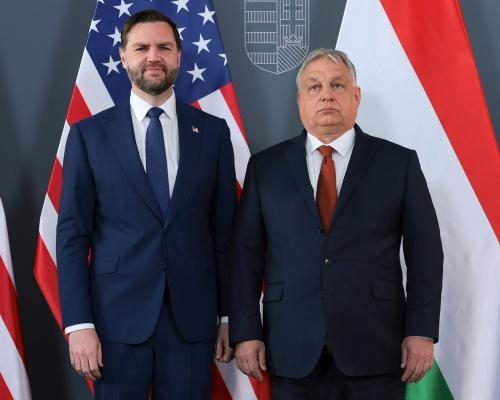
JD Vance, the U.S. Vice President, has arrived in Budapest to lend support to Viktor Orbán ahead of the critical parliamentary elections set for Sunday. Accusing the European Union of significant meddling in Hungary's electoral process, Vance's remarks underscore the high stakes of this election, where Orbán faces a formidable challenge after 16 years in power.
Vance's Accusations Against the EU
Shortly after landing in Budapest on Tuesday, Vance did not hold back in his criticism of the EU. He labeled the bloc's actions as "one of the worst examples of foreign election interference" he had ever witnessed. Vance remarked, "The bureaucrats in Brussels have tried to destroy the economy of Hungary," pointing fingers at EU officials for undermining Orbán's administration. Originally reported by The Guardian.
His comments included pointed accusations that the EU was intent on diminishing Hungary's energy independence and inflating costs for consumers. "They've done it all because they hate this guy," he added, referring to Orbán. Vance's arrival comes just days before a pivotal election that could shift the balance of power in Hungary.
The Election Landscape
This Sunday, Hungarian voters will decide between Viktor Orbán's Fidesz party and a rising opposition led by Péter Magyar, a former top official within Fidesz. The stakes are monumental, as Orbán attempts to portray his leadership as essential to safeguarding Hungary from external threats, particularly the ongoing war in Ukraine.
While Orbán and his party emphasize the need for strong leadership in the face of instability, Magyar's Tisza party advocates for addressing pressing domestic issues such as economic stagnation and corruption. Vance's presence in Hungary certainly boosts Orbán's campaign, as he publicly expresses his desire to assist the prime minister during this critical election season.
Ukraine's Role in Hungary's Politics
During the press conference, Vance echoed Orbán's framing of Ukraine as a significant threat to Hungary. He suggested that Ukrainian intelligence was trying to influence American elections, stating, "This is just what they do." Standing beside Orbán, Vance pointed out individuals in the Ukrainian government who had previously allied with Democrats in the U.S.
The backdrop to these comments is Orbán's controversial relationship with Russia, which has come under scrutiny, particularly given allegations of Russian interference in the upcoming election. Reports indicate that Orbán recently told Vladimir Putin that he is "at your service," highlighting Hungary's dependence on Russian energy resources. The Hungarian government's ties to Moscow could further complicate the electoral landscape.
Hungary's Energy Dependency and EU Relations
Vance praised Orbán's approach to energy security, describing him as a "great example" in Europe. His comments come as Hungary's reliance on Russian oil and gas has surged, now accounting for 93% of the country's crude oil imports, up from 61% in 2021. This dependency raises questions about Hungary's alignment with EU sanctions against Russia.
Despite the EU's push to cut ties with Russian energy, Vance criticized European leaders for making a "huge mistake" in severing connections with the East. His remarks coincided with a Bloomberg report detailing Orbán's recent communications with Putin, where he reportedly expressed his willingness to assist Russia, suggesting a complicated dynamic in Hungary's foreign relations.
As the elections draw near, Vance's confidence in Orbán's victory was evident. He stated, "Viktor Orbán is going to win the next election in Hungary, so I feel very confident about that and about our continued positive relationship." With the election results looming, the relationship between Hungary, the EU, and the U.S. remains a focal point of international attention.
With the election just days away, all eyes will be on Hungary to see if Orbán can fend off the challenges posed by the opposition. Vance's visit not only highlights the U.S. administration's support for Orbán but also raises broader questions about the nature of foreign influence in electoral processes.
Originally reported by The Guardian. View original.