
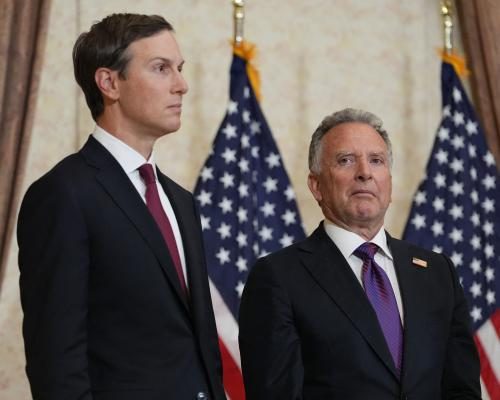
The United States imposed sanctions on Friday against Hengli Petrochemical (Dalian) Refinery, a Chinese "teapot" refinery accused of purchasing billions of dollars in Iranian oil. This action coincides with a planned peace negotiation meeting between US emissaries Steve Witkoff and Jared Kushner and Iranian representatives in Pakistan this weekend, aimed at reviving discussions amid ongoing tensions.
Sanctions Target Key Players in Iranian Oil Trade
The US Treasury Department's Office of Foreign Assets Control announced sanctions against Hengli Petrochemical, identifying it as one of Iran's largest buyers of crude oil and petroleum products. The sanctions also extend to approximately 40 shipping companies and vessels associated with Iran's shadow fleet, a network used to circumvent international restrictions. This aggressive move underscores the US's commitment to maintaining pressure on Iran as both countries head into critical negotiations. Originally reported by The Guardian.
China's response to the sanctions was swift, with its embassy in Washington denouncing the unilateral measures and asserting that normal trade should not be disrupted. The embassy called on the US to refrain from abusing sanctions against Chinese firms, highlighting the ongoing tension between the two nations over economic policies.
High-Stakes Peace Negotiations in Pakistan
In a development that raises cautious optimism, emissaries Witkoff and Kushner are set to arrive in Pakistan for talks with Iranian Foreign Minister Abbas Araghchi, who landed in Islamabad late Friday. The White House expressed hope for a productive dialogue aimed at advancing US-Iran relations. However, Iranian state media dampened expectations, indicating that direct negotiations with American representatives were not anticipated during this visit.
Foreign ministry spokesperson Esmael Baqaei clarified on the social media platform X that no meeting between Iranian and US officials is planned. Instead, he stated that Pakistani officials would act as intermediaries to convey messages between the two delegations. This arrangement reflects the complexities and sensitivities surrounding US-Iran relations, particularly in light of the recent ceasefire extension announced by former President Trump.
Global Implications of the Ongoing Conflict
The backdrop of these negotiations is a conflict that has severely impacted global energy markets, particularly through the strategic Strait of Hormuz, where a significant portion of the world's oil and natural gas is transported. The ongoing hostilities have led to numerous casualties and have raised alarms about a humanitarian crisis in the region. European Council President António Costa emphasized the importance of opening the Strait of Hormuz without restrictions, stating it is vital for global energy Security.
The World Food Programme has also warned that continued disruption in this key shipping lane could result in food insecurity for 45 million people, exacerbating an already dire situation. The international community is watching closely as the risks of further escalation remain high.
Pakistan's Role in Mediating US-Iran Relations
Pakistan is positioning itself as a crucial mediator in the US-Iran talks, responding to a request from the US for additional time to pursue diplomatic outreach. Despite the extension of the ceasefire, tensions remain palpable, particularly as Iran continues to assert control over maritime traffic in the Strait of Hormuz. Recent incidents include attacks on three vessels, highlighting the volatility of the situation.
In a bid to mitigate tensions, the US has enforced a blockade on Iranian ports, while former President Trump has issued orders for military action against small boats suspected of laying mines in the region. The complexity of the situation demands a delicate approach, as any missteps could lead to a wider conflict.
As talks are set to unfold this weekend, all eyes will be on the outcomes of these discussions. With negotiators navigating a web of geopolitical interests, the potential for a breakthrough remains uncertain but critically important.
The upcoming negotiations symbolize a crucial moment for both US-Iran relations and broader regional stability. Should the talks yield positive results, it may pave the way for a more stable peace in the Middle East. However, the road ahead is fraught with challenges, and the international community remains hopeful for a resolution to the ongoing crisis.
Originally reported by The Guardian. View original.