
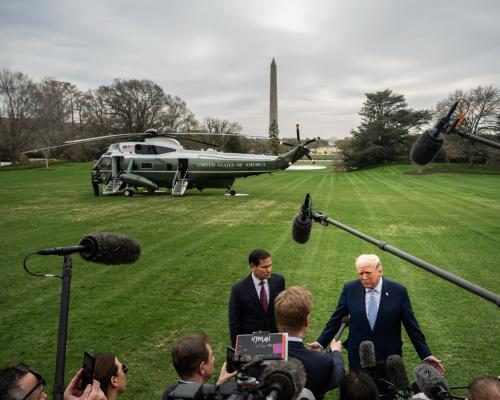
In a dramatic escalation of tensions, former President Donald Trump has set a 48-hour deadline for Iran to reopen the Strait of Hormuz to shipping. Failure to comply, he warned, would result in the obliteration of Iranian power plants. This ultimatum comes amid ongoing hostilities in the region, particularly following a devastating missile attack by Iran on Israel, marking one of the most significant escalations since the onset of the conflict three weeks ago.
Missile Strikes Intensify Conflict Dynamics
The situation escalated sharply when two Iranian missiles struck southern Israel, injuring over 100 people. This attack, described as the most destructive since the war began, prompted Israeli Prime Minister Benjamin Netanyahu to vow retaliation "on all fronts." The missiles breached Israel's missile defense systems, causing severe damage in cities like Arad and Dimona, the latter believed to host a nuclear facility, although Israel has never publicly confirmed its nuclear arsenal. Reports indicated that 84 individuals were injured in Arad, including ten seriously, while another 33 were wounded in Dimona, where a significant impact site was reported. Originally reported by The Guardian.
Netanyahu's government responded quickly to these provocations, launching a series of airstrikes targeting Iranian assets. The Israeli military reported direct hits on buildings in Dimona and other locations, reinforcing Israel's commitment to striking back against Iranian aggression.
Trump's Bold Ultimatum on the Strait of Hormuz
As tensions mounted, Trump took to Truth Social to announce his ultimatum, emphasizing that the U.S. would "hit and obliterate" Iran's energy infrastructure if the Strait of Hormuz was not fully reopened within the specified timeframe. According to Trump, the deadline is set for 23:44 GMT on the upcoming Monday. Iran's Foreign Minister, Abbas Araghchi, responded by stating that the restrictions imposed by Tehran are aimed solely at vessels from countries involved in the conflict, while humanitarian shipping would continue unhindered.
This confrontation has significant implications for global oil markets, as the Strait of Hormuz is a critical passage for approximately a fifth of the world's crude oil. The ongoing standoff has already led to a sharp increase in oil prices, with North Sea Brent crude trading above $105 a barrel. The international community is closely monitoring these developments, as a prolonged closure could have profound economic repercussions.
Regional Reactions and Military Movements
In response to Trump's threats and Iran's actions, the Iranian army has promised to target energy and desalination infrastructure linked to U.S. interests in the region. This rhetoric signals a potential escalation in hostilities, with both sides bracing for further conflict. The U.S. is reinforcing its military presence in the Middle East, with thousands of Marines being deployed as a precautionary measure.
The United Arab Emirates (UAE) has also found itself in the crosshairs, facing aerial threats from Iran after being warned against allowing attacks from its territory. Countries including the UK, France, Italy, Germany, South Korea, Australia, the UAE, and Bahrain have condemned the "de facto closure" of the Strait of Hormuz, expressing readiness to assist in ensuring safe passage through this vital waterway.
Global Implications and Future Prospects
The escalating conflict has raised alarms among global leaders, with many countries calling for restraint to avoid a wider military confrontation. Japan has indicated it might consider deploying its military for minesweeping operations in the Strait of Hormuz, contingent upon a ceasefire. Japan relies heavily on this route for approximately 90% of its oil shipments, underscoring the strategic importance of maintaining access.
As the situation develops, the potential for military action looms large, with both Iran and Israel prepared to defend their interests. The stakes are high, not just for the immediate region, but for global economic stability as well. With the international community watching closely, the next 48 hours could prove pivotal in determining the course of this escalating crisis.
Originally reported by The Guardian. View original.