
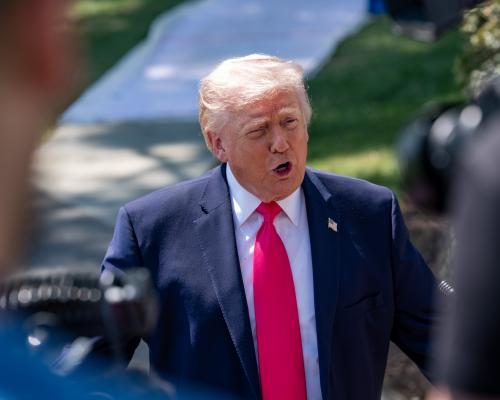
Former President Donald Trump on Friday proclaimed a significant victory following a military engagement with Iran that has lasted around six weeks. His statements, reminiscent of George W. Bush's controversial "mission accomplished" declaration, suggest a triumph in what many believe has not gone as planned.
Speaking on his Truth Social platform, Trump insisted that major issues had been resolved in advance of renewed peace talks in Islamabad. He described the day as a "great and brilliant day for the world" in his characteristic bold font, emphasizing the reopening of the Strait of Hormuz. This vital waterway, through which approximately 20% of the world's energy supplies typically flow, had been blocked by Iran in retaliation for the conflict. Originally reported by The Guardian.
Trump claimed that Iran had begun removing mines it had placed in the strait and would not use its closure as a military tactic again. This assertion raises eyebrows, considering that the strait was fully operational before the military actions began. Critics argue that this rhetoric serves as a flimsy basis for a victory announcement, especially given Iran's demonstrated capacity to disrupt international shipping.
Claims of Ceasefire and Regional Stability
In addition to the reopening of the Strait of Hormuz, Trump asserted there was a 10-day ceasefire in Lebanon involving Israel and Hezbollah, a group long supported by Iran. He declared that Israel is now "PROHIBITED from bombing Lebanon" due to U.S. intervention, a claim that remains unverified by Iranian officials. Iranian Foreign Minister Abbas Araghchi confirmed the strait's status as "completely open" for commercial shipping but did not address Trump's broader assertions.
Despite Trump's enthusiastic declarations, the absence of confirmation from Tehran casts doubt on the claims of stability. Iran's historical commitment to its regional alliances and the "axis of resistance" against the West complicates the narrative of a simple resolution to long-standing tensions.
Nuclear Program Negotiations: A Dubious Resolution
Trump's statements regarding Iran's nuclear program also raised questions. He referenced the destruction of Iran's stockpile of highly enriched uranium, a critical factor in the ongoing dispute over the nation's nuclear ambitions. He claimed that the U.S. would recover the nuclear materials using advanced military capabilities and that no financial exchanges would occur in the process.
Moreover, Trump told Reuters that Iran had agreed to indefinitely suspend its nuclear program and cooperate with the U.S. on recovering the enriched uranium. Such a sudden resolution seems implausible, given the complexities surrounding Iran's nuclear activities, which have been the subject of negotiations for decades. The 2015 nuclear agreement, crafted under President Barack Obama, took years to finalize before Trump unilaterally withdrew from it three years later.
The Uncertain Future of U.S.-Iran Relations
The potential for reconciliation between the U.S. and Iran appears tenuous at best. Trump's claims of a significant diplomatic breakthrough contrast sharply with the reality of Iran's resilience. Despite the military pressures and targeted attacks on its leadership, the Islamic regime remains intact and continues to pursue its strategic goals.
As Trump lauds victories that many experts deem questionable, the question arises: how likely is it that these two nations are on the path to genuine peace? The complexities of the geopolitical landscape suggest that while the rhetoric might signal optimism, the underlying tensions remain unresolved.
So, Trump's celebratory tone following the military engagement with Iran echoes past declarations that have since been deemed overly optimistic. With critical issues still at play, including Iran's nuclear ambitions and regional influence, the future of U.S.-Iran relations remains uncertain. As talks proceed, both nations will need to navigate their historical animosities and current realities to forge any lasting agreements.
Originally reported by The Guardian. View original.