
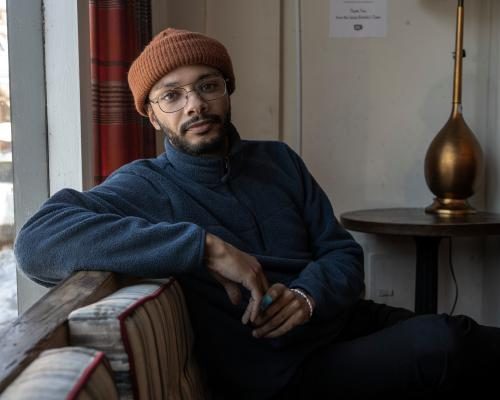
In early December 2023, James Luckey, a 28-year-old from New York, embarked on a backpacking journey across South America, aiming to reach the majestic Mount Roraima in Venezuela. However, within hours of entering the border town of Santa Elena de Uairén, his adventure turned into a nightmare. Stopped at a military checkpoint, Luckey was detained by counter-intelligence agents who suspected him of espionage. Instead of trekking through the breathtaking landscapes of Venezuela, he found himself on a harrowing journey that led to the infamous General Directorate of Military Counterintelligence (DGCIM) headquarters in Caracas.
Luckey's account of his experience is chilling. Upon arrival at the DGCIM facility, he was subjected to solitary confinement, forced to sleep on a concrete slab, and denied food. He detailed the physical abuse he endured, stating, "They beat me, chained me up," highlighting the brutal conditions faced by those detained under the Maduro regime. His nightmare continued as he was subsequently transferred to El Rodeo, a notorious overcrowded prison near the capital, where he feared for his life. Originally reported by The Guardian.
Life Inside El Rodeo: A Survivor's Tale
After being led into El Rodeo in chains and forced to his knees, Luckey felt certain that he would not leave alive. "Oh yeah, they're gonna execute me here," he remembers thinking as guards shaved his head. For a month, he endured life on a flea-infested mattress in a facility known for its harsh conditions, shared with numerous other inmates. Luckey's release finally came on January 13, 2024, ten days after a significant U.S. intervention involving the abduction of Venezuelan President Nicolás Maduro.
Luckey's ordeal is part of a larger pattern of human rights abuses in Venezuela, particularly against perceived political dissidents. Since the U.S. intervention, approximately 700 political prisoners have reportedly emerged from Venezuelan prisons, raising alarms among human rights organizations. Many of these individuals, including citizens from Argentina, France, Israel, Italy, and Spain, have been reluctant to share their experiences, fearing reprisal or due to restrictive release conditions. However, some, like Luckey, have begun to speak out, revealing the harsh realities of life under Maduro's authoritarian rule.
Testimonies of Torture and Misery
Former prisoners have begun to share their harrowing experiences, shedding light on the systematic torture inflicted on dissenters. Yerwin Torrealba, a youth leader from Venezuela's Yaracuy state, was released a day before Luckey after enduring over a year of imprisonment. Captured by armed forces in December 2024, he claimed he was wrongfully accused of terrorism, treason, and organized delinquency due to his political activism. Torrealba recounted the deplorable conditions of his cell, shared with 60 other inmates, stating, "The conditions were the worst imaginable.. There wasn't even space to walk around."
His suffering included a near-fatal episode where he was denied medical treatment for severe abdominal pain, leading to an emergency appendectomy. "This is what the regime does: anyone they see as a threat.. they try to silence in this way," Torrealba said. Such testimonies reveal a pattern of abuse targeting those who dare to oppose the government.
The Psychological Toll of Imprisonment
Psychological trauma from imprisonment is another facet of the suffering inflicted by the Venezuelan regime. Jesús Armas, a prominent opposition politician detained in El Helicoide, reported extreme psychological mistreatment, despite not being physically abused. He described the relentless interrogations designed to break him, saying, "There were weeks and weeks of these interrogations." Armas recalled the harrowing experience of being blindfolded and handcuffed for five consecutive days, during which time his captors used torture methods to extract information about his political activities.
The stark realities of life in Venezuelan prisons extend beyond physical scars. Many former inmates, like Óscar Castañeda, who spent 17 months in El Helicoide, struggle to reintegrate into society. Viral footage showed Castañeda struggling to walk and unable to recognize family members upon his release, illustrating the profound impact of his incarceration.
As the international community grapples with the ongoing human rights crisis in Venezuela, the stories of individuals like James Luckey and others serve as a haunting reminder of the regime's brutality. Their courage in speaking out is crucial in bringing global attention to the plight of political prisoners in Venezuela.
Originally reported by The Guardian. View original.