
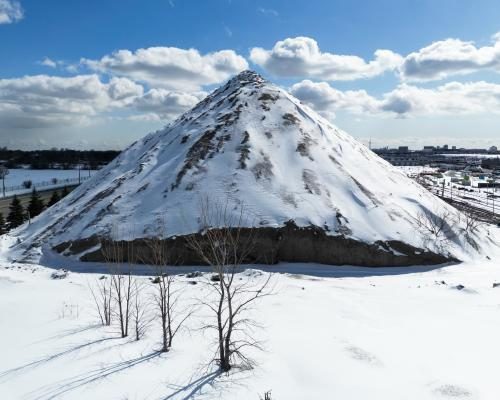
Toronto is facing an unusual winter challenge as towering snow mountains formed rapidly from recent storms, posing significant environmental hazards. These makeshift peaks, built from snow mixed with pollutants, have become a pressing concern for city officials and environmentalists alike.
A New Kind of Mountain
Most mountains take millions of years to develop, but Toronto's latest peaks emerged in just a matter of days. These towering snow formations, some reaching heights of nearly 100 feet-equivalent to a 10-story building-are not composed of natural elements like limestone or granite. Instead, they consist of heaps of snow contaminated with a toxic mix of road salt, antifreeze, oil, discarded coffee cups, and even lost keys. This accumulation represents the aftermath of a relentless winter that has pummeled the city over recent weeks, creating a daunting environmental challenge. Originally reported by The Guardian.
In late January, Toronto experienced what many experts deemed the heaviest snowfall in the city's history. Some areas recorded nearly 23 inches of snow in a single day due to a collision of weather systems. By mid-February, city crews had removed an astounding 264,000 tonnes of snow from 1,100 kilometers (680 miles) of roadways, sidewalks, and bike lanes, continuing to manage the aftermath of the relentless winter.
Snow Disposal Challenges
Major cities like Toronto have long grappled with the reality that snow cannot remain on streets and sidewalks for extended periods. The solution often involves trucking the snow away to designated storage sites in the city's outskirts. Currently, Toronto has established six snow mountains scattered throughout the urban landscape, many of which are hidden to deter illegal dumping.
One notable site, located on the northwestern outskirts of the city, is visible to drivers along a major highway. Spanning two acres, it can hold up to 144,000 cubic meters of snow. Here, yellow excavators work in tandem to manage the snow piles, reminiscent of an Italian marble quarry. Overhead, plumes of steam rise from industrial melters-large machines that gradually reduce the mountain's size. During severe storms, these machines operate around the clock, underscoring the urgency of snow removal efforts.
Environmental Concerns
While snow removal is essential for public safety, experts warn of the environmental implications. Donald Jackson, a professor of ecology at the University of Toronto, highlighted the need to balance snow removal with the potential impact on aquatic ecosystems. Toronto has invested over C$1 billion in the past decade to restore the natural flood mitigation capabilities of the Don River, aiming to revive an ecosystem that had previously been neglected.
The city employs various strategies to prevent contaminants, such as automotive oil, from entering water systems. However, road salt remains a persistent adversary, often bypassing stormwater treatment systems. This winter alone, Toronto has utilized more than 130,000 tonnes of salt, and local governments are currently facing shortages. This is particularly concerning given that the largest salt mine in the world is located just 150 miles west of the city.
"We know cities are trying to reduce their usage and reliance on salt. But it works," Jackson stated. "While we know roughly how much the city uses, we have no idea how much is being used to salt private driveways and places like grocery store parking lots." He pointed out that private operators often overuse salt due to concerns over legal liability.
Impact on Aquatic Life
The sodium chloride used on roadways is chemically identical to table salt, but its environmental effects differ significantly. High concentrations of chloride can be toxic to fish and other aquatic life. Recent tests conducted by Jackson and doctoral researcher Lauren Lawson revealed alarming chloride levels at 30% of testing sites, with many exceeding federal guidelines. In regions relying on wells for drinking water, increasing sodium levels present long-term health risks.
As John McPhee noted in his book, "Annals of the Former World," the composition of mountains isn't always what defines their impact. A recent thaw has exacerbated the problem, eroding parts of Toronto's snow mountains and pushing substantial amounts of salt into local waterways. Jackson explained that salt concentrations can reach levels 10 to 100 times higher than background levels, with some areas surpassing seawater concentrations.
Experts predict that climate change will lead to more intense storms, similar to those that have disrupted infrastructure in Toronto and other major cities. These storms will likely necessitate increased salt usage, compounding the existing environmental challenges. "The trajectory isn't good," Jackson cautioned. "We're looking at increasing concentrations that we see in our rivers, in our lakes. And there isn't any reason to expect that to stop."
Originally reported by The Guardian. View original.