
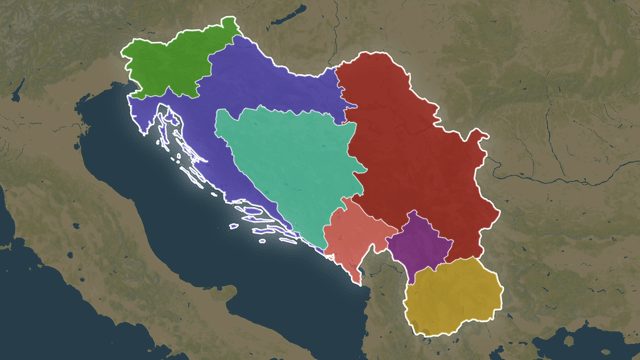
The collapse of Yugoslavia in the 1990s resulted in the emergence of seven independent nations: Serbia, Croatia, Bosnia & Herzegovina, Slovenia, North Macedonia, Montenegro, and Kosovo. This significant geopolitical shift reshaped not only the Balkan region but also affected the broader European landscape. Today, as global dynamics continue to evolve, questions arise about whether other nations might face similar fragmentation due to internal diversity and conflict.
Historical Context of Yugoslavia's Breakup
The disintegration of Yugoslavia was a complex process marked by ethnic tensions, political strife, and economic turmoil. Following the death of President Josip Broz Tito in 1980, the federation began to unravel as nationalist sentiments grew among its constituent republics. The wars that ensued in the 1990s were brutal, with ethnic cleansing, mass displacement, and a humanitarian crisis that left lasting scars on the region. Originally reported by r/MapPorn.
This breakup was not merely a series of political decisions but a reflection of deep-rooted historical grievances among various ethnic groups. The rise of nationalism and the desire for self-determination led to declarations of independence by several republics, ultimately culminating in the violent conflicts that followed. Understanding this historical backdrop is essential when considering which contemporary nations might face similar fates.
Current Nations with Potential for Division
Several countries today exhibit characteristics that could lead to fragmentation along ethnic or regional lines. One prominent example is Spain, where the Catalonia region has long sought independence. The Catalan independence movement gained momentum in recent years, culminating in a controversial referendum in 2017. Despite opposition from the Spanish government, the desire for autonomy remains strong, raising questions about Spain's territorial integrity.
Another country worth examining is the United Kingdom, particularly in light of the ongoing discussions surrounding Scottish independence. The 2014 referendum saw a significant portion of the Scottish population favoring independence, and with the shifting political climate, calls for another vote have intensified. If Scotland were to break away, it could set a precedent for other regions, further complicating the UK's national identity.
Ethnic Diversity as a Double-Edged Sword
Ethnic diversity can be both a strength and a challenge for nations. Countries like Belgium and Nigeria, with multiple ethnic groups vying for power and recognition, face ongoing tensions. In Belgium, the divide between the Flemish and Walloon communities has led to lengthy political stalemates and demands for greater autonomy. Similarly, Nigeria grapples with ethnic and regional disparities, which have occasionally resulted in violence and calls for secession, particularly from the southeastern region known as Biafra.
This diversity, while enriching, can also create friction. Leaders in these nations must navigate the complex landscape of identity politics, balancing the demands of various groups while striving to maintain national unity. Failure to do so could lead to escalated tensions, risking fragmentation similar to that seen in Yugoslavia.
The Role of External Influences
International dynamics also play a crucial role in the potential for national fragmentation. Geopolitical interests often shape internal conflicts, as seen in Ukraine, where external influences have exacerbated divisions. The annexation of Crimea by Russia in 2014 and ongoing tensions in Eastern Ukraine highlight how external actors can exploit internal fissures for their own gains.
Moreover, the rise of populism and nationalism across Europe and North America has created a more volatile political environment. Leaders leveraging divisive rhetoric can deepen existing divides, leading to calls for independence or autonomy in various regions. As the world becomes increasingly interconnected, the repercussions of these movements can resonate far beyond national borders.
So, while the landscape of modern nations is fraught with complexities, the potential for fragmentation remains a relevant concern. Nations like Spain and the UK showcase how internal divisions, fueled by historical grievances and modern political dynamics, could lead to significant shifts. As global tensions rise and ethnic identities become more pronounced, the possibility of new nations emerging from established states can't be dismissed. The lessons from Yugoslavia serve as a stark reminder of how fragile national unity can be.
Originally reported by r/MapPorn. View original.