
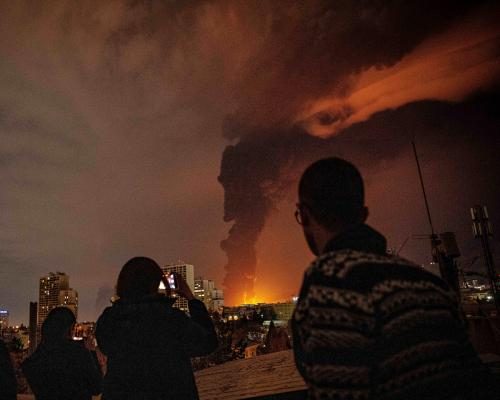
Thick black smoke loomed over Tehran on Sunday morning, painting the skies a grim shade of despair following a night of devastating airstrikes targeting the city's oil depots. As daylight broke, residents emerged to find streets coated in soot and the air thick with toxins, with many describing the scene as "apocalyptic." Local authorities reported that four oil depots and a petroleum logistics site were struck, resulting in six fatalities and 20 injuries at one of the locations. Videos circulated by citizen journalists depicted massive flames lighting up the Tehran skyline as smoke continued to billow from the storage facilities.
The aftermath was compounded by rain, which authorities warned could lead to toxic acid rain. Many residents woke up with sore throats and burning eyes, further exacerbating their fears. Negin, an activist and former political prisoner, conveyed her harrowing experience via voice notes to the Guardian, stating, "The situation is so frightening it's hard to describe. Smoke has covered the entire city. I have severe shortness of breath and burning in my eyes and throat, and many others feel the same. But people still have to go outside because they have no choice." As citizens grappled with a lack of options, the urgency of their plight became clear. Originally reported by The Guardian.
Health Risks and Environmental Concerns Amplified
Tehran's environmental agency promptly advised residents to remain indoors to avoid exposure to the hazardous air. The Iranian Red Crescent warned that the chemicals released could result in skin and lung damage, urging people to refrain from using air conditioning or venturing outside immediately after rainfall. Dr. Shahram Kordasti, a UK-based Iranian haemato-oncologist, highlighted the potential health implications of the toxic gases, noting they could worsen pre-existing conditions like asthma and heart disease, while also increasing cancer risks.
Negin, who ventured out to secure a mask and inhaler, lamented, "Even masks are becoming difficult to find. This is a huge mistake. I ask those who have the ability, especially foreign media, to reflect on this situation. What are people supposed to do under these conditions? This is truly a crime against humanity." Her words reflect a growing sentiment among Tehran's residents-that they are bearing the brunt of conflicts that often overlook civilian safety and well-being.
Desperation and Economic Strain in the Capital
The economic ramifications of the strikes are already being felt. Negin noted that prices are skyrocketing, sharing that she purchased an inhaler for 850,000 tomans (approximately £4.50). "Where are people supposed to get this money? Many people in Tehran are daily workers who haven't had work for a long time. Food is becoming extremely expensive, and many things are becoming scarce," she said. The economic strain is compounded by fuel shortages, with reports indicating that residents are now receiving only five liters of gasoline at a time. Negin expressed her helplessness, remarking, "The pressure inside the country is becoming enormous. There are shortages of basic goods. The situation is extremely painful."
Residents' Fears Echo Pandemic Anxiety
The pervasive fear in Tehran resembles sentiments experienced during the COVID-19 pandemic. Mehdi, a 42-year-old restaurant owner living in the western part of the city, echoed this sentiment. "We are so scared to even clean the windows and balconies. There's soot everywhere, and we don't even want to touch it with gloves. My eyes are burning, and I look outside and see people without masks going on with their daily lives. I am not so brave. There's this smell in the air I can't explain," he shared.
Mehdi is contemplating leaving the city, feeling it's unsafe to serve food in his restaurant until he knows the water supply is secure. His thoughts reflect a growing cynicism towards the regime: "Trust me, we are on our own. This regime doesn't care about us, so why would I make a plea to a foreign power to care for us?" His frustrations resonate in a society feeling neglected amidst escalating violence and environmental disasters.
The situation in Tehran remains dire, with residents caught in a cycle of fear, economic hardship, and health threats. As the airstrikes continue to wreak havoc, the call for international attention grows louder, with citizens like Negin urging the world to recognize their plight. The people of Tehran are not merely victims of geopolitical conflicts; they are individuals enduring a daily struggle for survival in a rapidly deteriorating environment.
Originally reported by The Guardian. View original.