
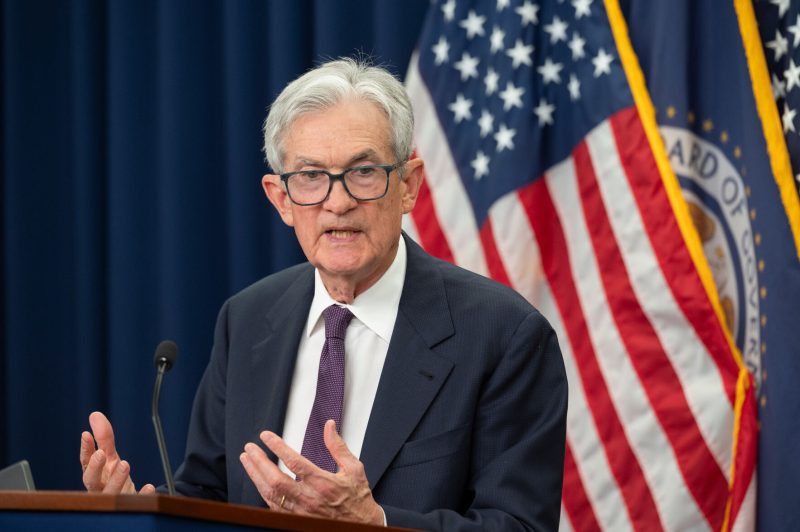
Jerome Powell's leadership as chair of the Federal Reserve has been characterized by a fierce commitment to maintaining the central bank's independence while grappling with the daunting challenge of rising inflation. Since taking the helm in February 2018, Powell has navigated the financial landscape through significant economic disruptions and a relentless battle against inflationary pressures.
Inflation Surge and Policy Response
Inflation surged to a 40-year high in mid-2022, with the consumer price index hitting 9.1% in June of that year. This spike prompted Powell to pivot from the Fed's historically low interest rates, which were set between 0% and 0.25% during the pandemic, to a series of aggressive rate hikes aimed at curbing inflation. By September 2022, the Fed had raised rates to a range of 3% to 3.25%, the highest level since 2008. Learn more on Investopedia.
These increases came amid fears that unchecked inflation could undermine economic recovery. Powell's approach emphasized the Fed's dual mandate: to promote maximum employment and stable prices. However, as inflation persisted, Powell acknowledged the economic pain that higher rates can cause, emphasizing the need for a delicate balance between curbing inflation and supporting growth.
Challenges to Independence
Throughout his tenure, Powell has faced political pressures that challenged the Fed's independence. Criticism from both sides of the political aisle, particularly during election cycles, has underscored the delicate nature of the Fed's role. Former President Donald Trump was notably vocal about his dissatisfaction with Powell's policies, often expressing his desire for lower interest rates to fuel economic growth.
Despite these pressures, Powell has maintained a steadfast commitment to the Fed's independence. He has repeatedly stated that decisions about monetary policy will be based on economic data rather than political considerations. This resolve is crucial for maintaining public trust in the institution, especially as the Fed navigates complex economic conditions.
Market Reactions and Economic Indicators
The financial markets have reacted sharply to Powell's policy decisions, with stock prices fluctuating significantly in response to rate hikes. After the Fed's aggressive monetary tightening, the S&P 500 index saw a decline of more than 20% from its peak in January 2022, reflecting investor anxiety over the potential for a recession. Additionally, bond markets responded to the Fed's actions, with yields on U.S. Treasury bonds rising as expectations of further rate hikes grew.
As Powell steers the Fed, he has also had to consider the broader economic indicators. Unemployment rates, while low at 3.5% in September 2022, reflect a tight labor market that complicates inflation control efforts. The Fed is now tasked with ensuring that economic growth continues while also addressing the persistent inflation that has eroded purchasing power for many Americans.
Future Prospects for Monetary Policy
Looking ahead, Powell's ability to navigate these turbulent waters will be critical. The Fed has signaled a cautious approach to future rate hikes, emphasizing the need for careful observation of economic indicators before making further adjustments. Powell has reiterated that the journey to achieve stable prices is ongoing, with inflation still above the Fed's long-term target of 2%.
Moreover, Powell has acknowledged that the path forward may involve difficult trade-offs. The Fed's decisions will need to balance the risk of recession with the necessity of controlling inflation, a balancing act that economists will closely monitor. As he continues to lead the Fed, Powell's emphasis on data-driven decisions will remain paramount in shaping the future of U.S. monetary policy.
So, Jerome Powell's tenure as Fed chair has been marked by significant challenges and critical decisions that will have long-lasting implications for the U.S. economy. As he faces the ongoing fight against inflation while preserving the independence of the Federal Reserve, Powell's leadership will undoubtedly remain under scrutiny in the months ahead.
Originally reported by Thedailyreview.com. View original.