
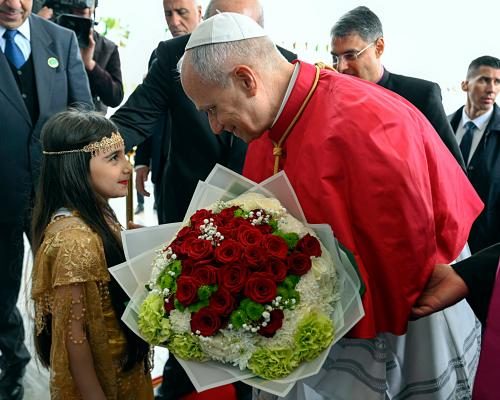
Pope Leo XIV has embarked on a groundbreaking journey to Algeria, marking the first papal visit to the North African nation. His arrival signals a significant commitment to peace and highlights the growing importance of Africa to the Catholic Church. This 11-day trip, which will also include visits to Cameroon, Angola, and Equatorial Guinea, is the longest undertaken by Pope Leo since his election in May 2022.
Acknowledging Africa's Role in Catholicism
The choice to prioritize Africa during this early stage of his pontificate sends a clear message about the continent's significance within the Church. Scholars and theologians emphasize the demographic shift occurring within Catholicism, noting that Africa is home to one of the fastest-growing Catholic populations, comprising approximately 20% of Catholics worldwide. Adriaan van Klinken, a professor of religion and African studies at the University of Leeds, pointed out that while the Catholic population in Western Europe is experiencing decline, Africa is becoming a beacon of vitality and growth. "Africa is the site of vitality, of growth, of the future of the church," he remarked. Originally reported by The Guardian.
In just the past year, the Church has established 14 new dioceses across Africa, contributing to a rise in the Catholic population by 7 million, according to John Pontifex from the charity Aid to the Church in Need UK. He stated, "A focus on Africa this early on in Pope Leo's pontificate no doubt reflects a sense that in terms of Catholicism this is a continent that is coming of age."
Strengthening Interfaith Relations in Algeria
Upon his arrival at Algiers International Airport, Pope Leo was welcomed by Algerian President Abdelmadjid Tebboune. His first engagement included a visit to the Maqam Echahid, a prominent monument commemorating those who perished during the Algerian war for independence from French colonial rule (1954-1962). Father Peter Claver Kogh, rector of the Basilica of Our Lady of Africa in Algiers, emphasized that the Pope's visit aims to strengthen ties between Christian and Muslim communities, fostering a climate of peace and tolerance.
"That is what the world needs now - a world of fraternal living and living in harmony," Kogh noted. The visit is not only significant for Christians and Muslims in Algeria but also resonates globally, reflecting a broader desire for coexistence. Austen Ivereigh, a biographer of Pope Francis, suggested that this trip aligns with the priorities of Leo's predecessor, noting the importance of the "human fraternity" document signed by Francis in 2019 with Muslim leaders.
A Commitment to Religious Freedom
While interfaith dialogue remains a focal point, the Pope's journey also underscores his dedication to religious freedom. John Pontifex highlighted concerns regarding declining religious freedoms in Algeria for Christians and other marginalized groups. "His visit comes at a time when religious freedom in Algeria, be it for Christians, Ahmadi Muslims and more liberal Muslims, has declined in recent years," he said.
The trip presents a unique opportunity to shine a light on communities historically marginalized and often overlooked by Western narratives. Lucy Esipila, regional coordinator for Caritas Africa, expressed optimism about the potential impact of the Pope's visit on local Catholic communities. "At a time when many African nations continue to face conflict, debt burdens, and widening inequalities, this apostolic journey is a powerful expression of synodality, of 'walking together' as a global church that listens to voices from the peripheries," she stated.
Algeria: A Historical and Theological Landmark
Algeria stands out as the only Muslim-majority country on Pope Leo's itinerary, but its significance extends beyond demographics. It is historically important because it is the birthplace of Saint Augustine, a pivotal figure in early Christianity. As the first pontiff from the Augustinian order, Pope Leo's connection to Algeria runs deep, emphasizing a commitment to harmony and coexistence.
Professor Anna Rowlands from Durham University noted that starting the visit in Algeria showcases the ancient legacy of African Christianity. "North Africa was home to some of the earliest Christian communities before the arrival of Islam and remains central to the church's intellectual and theological heritage," she explained. Pope Leo, known for his familiarity with African communities, is likely to connect with the diverse realities of the continent.
This focus on Africa, coupled with the decision to forego a visit to the United States, sends a strong message about the evolving priorities of the papacy. As Dr. Miles Pattenden, a historian of the Catholic Church at the University of Oxford, pointed out, the Pope's choice to visit the Italian island of Lampedusa on the Fourth of July highlights the plight of many Africans making perilous journeys across the Mediterranean.
Pope Leo XIV's visit to Algeria is a significant milestone, reinforcing the Church's commitment to peace, interfaith dialogue, and the recognition of Africa's integral role in the future of Catholicism. As this journey unfolds, it is poised to foster deeper connections and understanding among diverse communities.
Originally reported by The Guardian. View original.