
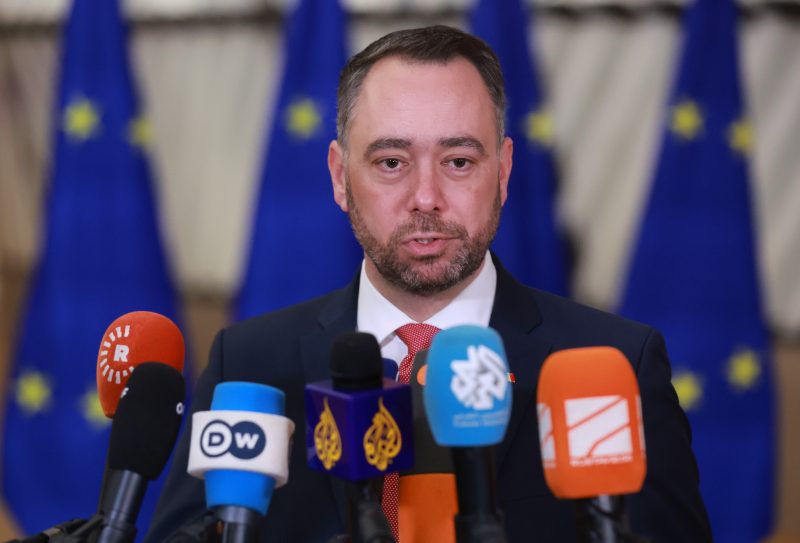
Belgium's Foreign Minister Maxime Prevot has publicly rebuked Israel, accusing it of misrepresenting the nation's stance regarding anti-Semitism in a dispute tied to an investigation of ritual circumcision practices in Antwerp. The escalating tension highlights a complex interplay between foreign policy and domestic law.
The controversy began after Prevot's office summoned the US Ambassador to Belgium, Bill White, over a social media post that criticized Belgium's legal actions against three Jewish religious figures known as mohels. White's message, which was shared on X (formerly Twitter), implied that Belgium's prosecution was both "ridiculous and anti-Semitic." The incident has underscored the delicate balance Belgium seeks to maintain in protecting its Jewish community while upholding its legal obligations.
Ritual Circumcision Under Scrutiny
The root of the dispute stems from a complaint filed in 2024 by a dissident rabbi in Antwerp, alleging that six mohels were using unsafe methods during circumcision procedures. This complaint has reignited a long-standing debate over the legality of traditional practices within the Haredi community, which strictly adheres to Jewish law. In Belgium, all medical procedures, including circumcision, must be conducted by licensed medical professionals, placing the mohels in a precarious position.
Prevot expressed his frustration over the situation, stating that the ongoing investigation has turned into a political weapon. He emphasized that Belgium has a proud history of supporting its Jewish population, asserting that any claims of anti-Semitism are "false, offensive, and unacceptable." He highlighted that tens of thousands of ritual circumcisions are performed legally in the country each year, which indicates a level of acceptance and integration into Belgian society.
International Repercussions and Israel's Response
In response to the situation, Israeli Foreign Minister Gideon Saar weighed in on the debate, directing his comments toward Prevot on social media. He pointed to a perceived increase in anti-Semitism in Belgium, hinting that the Belgian government should reflect on the criticisms raised by Ambassador White. Saar's remarks suggest that Belgium's legal actions are part of a broader trend of hostility towards Jewish practices.
The Israeli government has framed the actions against the mohels as part of a targeted campaign against the Jewish community. Saar specifically referenced Belgium's recent decision to limit consular services to citizens residing in illegal Israeli settlements in the occupied Palestinian territories. This decision aligns with the International Court of Justice's advisory opinion, which urged countries not to assist in perpetuating Israel's illegal presence in these territories.
Mischaracterization of Legal Principles
Prevot firmly rejected Saar's assertions, claiming that Israeli leaders are conflating Belgium's principled stance on international law with anti-Semitism. He accused them of creating a "false narrative" to deflect from genuine legal discussions. His comments reflect Belgium's commitment to uphold international norms while ensuring the safety and dignity of its Jewish population.
As a member of the international community, Belgium has often taken a stand against violations of international law, a position that has sometimes put it at odds with Israel. Most recently, Belgium was one of 84 countries that condemned Israel's decision to allow land registration in the West Bank, a move critics argue could facilitate annexation efforts. Prevot reiterated the importance of distinguishing between legitimate legal concerns and unfounded accusations of anti-Semitism, urging both sides to engage in constructive dialogue.
The diplomatic spat highlights the challenges nations face in navigating complex cultural and legal landscapes amid rising tensions. For Belgium, the situation is particularly sensitive as it seeks to balance its commitment to international law with the need to protect its diverse communities.
Belgium's Foreign Minister concluded by asserting the country's dedication to combating anti-Semitism while reaffirming the importance of legal integrity. As the investigation progresses, it remains to be seen how this conflict will evolve and what implications it may have for Belgium's relationship with Israel and its Jewish community.